
The 22nd edition of the Kinoteka Polish Film Festival starts today in London, with the UK premiere of Agnieszka Holland's Green Border. I wrote a preview of some of the highlights of the festival, which you can read here.
The 22nd edition of the Kinoteka Polish Film Festival starts today in London, with the UK premiere of Agnieszka Holland's Green Border. I wrote a preview of some of the highlights of the festival, which you can read here.

 |
| Leszek Kopeć and Joanna Łapińska (Fot. Sylvia Olszewska) |

 |
| Doppelgänger. Sobowtór |
 |
| Ultima Thule |
 |
| Życie w błocie się złoci |
 |
| Freestyle |
 |
| Horror Story |
 |
| Tyle co nic |
 |
| Chłopi |
 |
| Kos |
 |
| Kos |
 |
| Święto ognia |
 |
| Lęk |
 |
| Sny pełne dymu |
 |
| Imago |


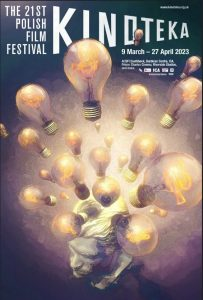
The 21st edition of Kinoteka Polish Film Festival in London takes place 9 March - 27 April. I wrote a preview of the festival which you can read here.
Last year's Polish Film Festival in Gdynia - the festival's return to an in-person event after 2020's was held exclusively online - proved a particularly satisfying edition of Poland's primary showcase for its national cinema. Reflecting the careful curation of artistic director Tomasz Kolankiewicz, the diverse programme encompassed commercial and arthouse films, autobiographical family comedies (Zupa Nic), winking, retro musicals (Bo we mnie jest seks) and epically-scaled political dramas (Leave No Traces) across the Main and Microbudget Competitions, alongside an expanded "Pure Classics" section, the Short Film Competition, and a wide set of industry events.
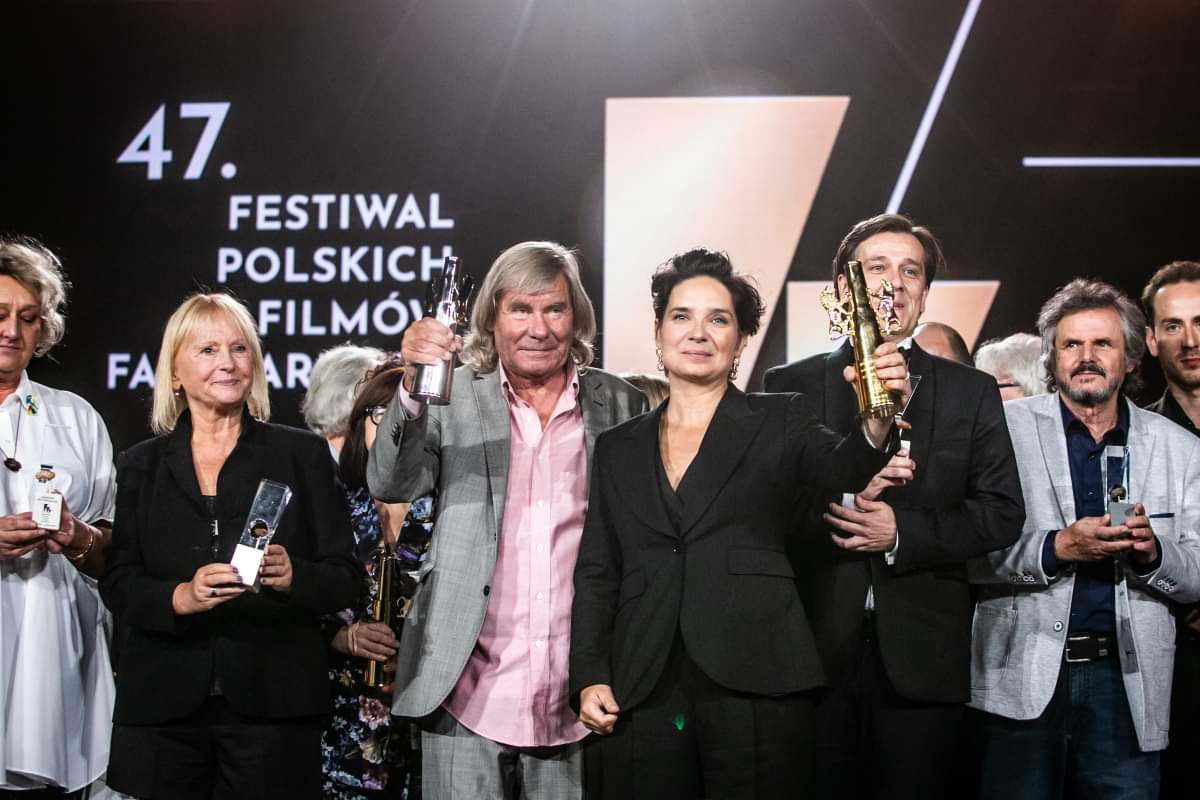 |
| Dorota Pomykała, Filip Bajon, Agnieszka Smoczyńska, and other winners of the 47th edition (Fot. Krzysztof Mystkowski/KFP/SFP) |
In terms of diversity of selection, the just-concluded 47th edition of the festival pretty much maintained the momentum of last year. Quality control, though, was somewhat patchier this time around. At a whopping 20 films (13 by men and 7 by women, gender watchers), the Main Competition felt overstuffed, to say the least. This is, in part, a result of the festival's decision to dispense with the Visions Apart competition - the Un Certain Regard-esque sidebar inaugurated by former artistic director Michał Oleszczyk in 2014 that showcased more experimental productions, and for which the current, very erratic Microbudget Comp doesn't serve as a substitute. (Oddly, the Visions Apart "Golden Claw" prize has been retained, while the sidebar itself has not.)
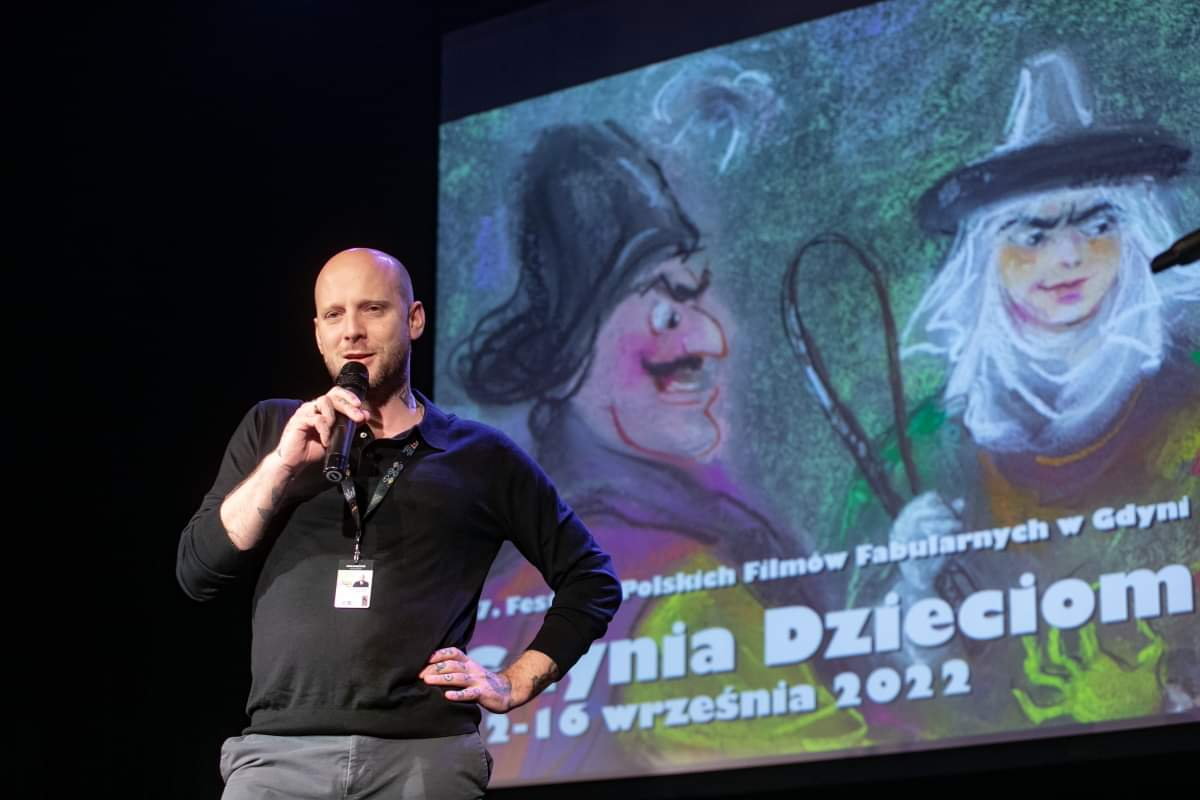 |
| Tomasz Kolankiewicz (Fot. Krzysztof Mystkowski/KFP/SFP) |
Still, the latest edition of FPFF yielded several worthwhile films, some of which suggested a healthy broadening of perspective - at least to some extent - in Polish cinema. In this report, I won't focus on the larger-scaled international co-productions that I'll write about in detail elsewhere - such as Agnieszka Smoczyńska's The Silent Twins (winner of this year's main Golden Lions prize) and Jerzy Skolimowski's mighty EO (bizarrely awarded no prizes at all by the jury) - but rather on some of the other titles I saw that equally deserve some attention.
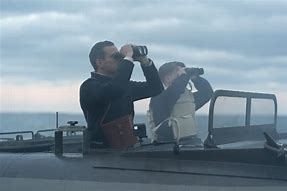 |
| Orzeł. Ostatni patrol |
 |
| Brigitte Bardot Cudowna |
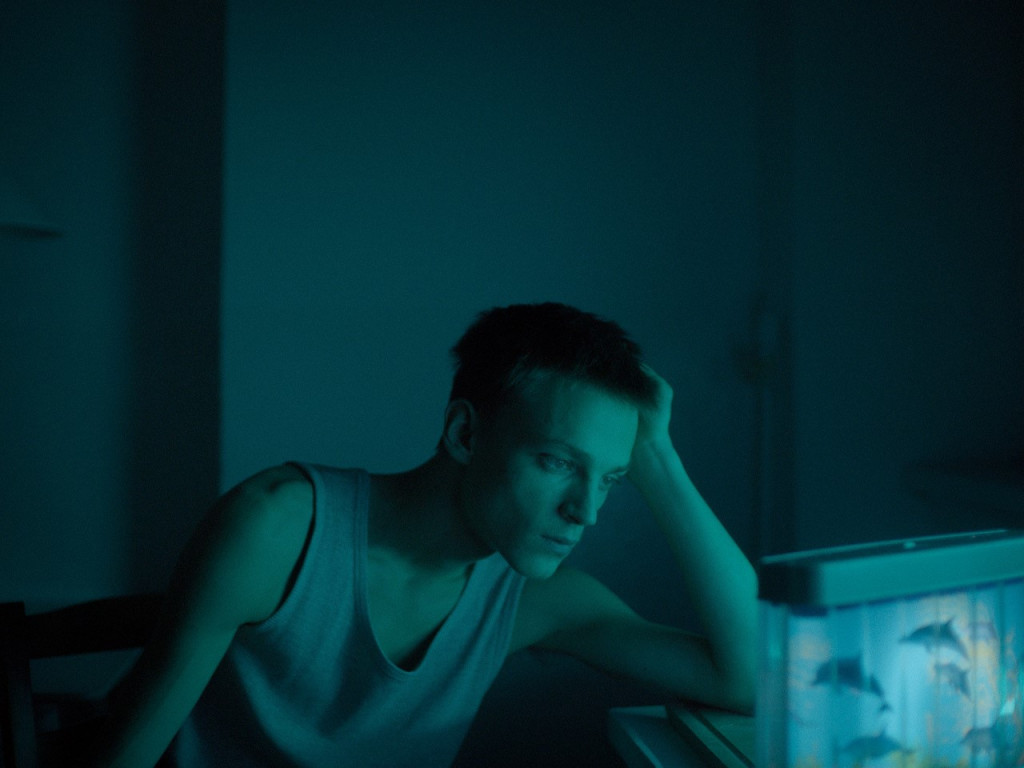
By far the most idiosyncratic of the films set in the past was Lech Majewski's Brigitte Bardot Cudowna (The Wonderful Brigitte Bardot), a highly personal work with wide, playfully employed mythic resonances. The plot revolves around the imaginative search of a teenage boy (Kacper Olszewski, of Król and Baby Bump) for his missing father, who never returned to Poland after fighting in the UK in WWII. It's a journey that takes the protagonist far from the reality of '60s PRL Katowice and down various rabbit holes that bring him into contact with multiple mentors and icons of pop and high culture, among them The Beatles, The Saint's Simon Templar (Piotr Pacek), Bardot (Joanna Opozda), Cezanne (Eryk Lubos) and Rabindranath Tagore (Igor Kujawski), who critiques the whole notion of the quest that the hero has embarked on.
Unfashionably referential and allusive - a homage to Godard felt particularly touching, as news of the director's death reached the festival - Majewski's film gets more unfocused as it progresses. But its vivid design, intellectual wit and capacity to confound make it a rich and distinctive work that's likely to yield more and more on repeated viewings. Unfortunately, like Skolimowski's's EO, the film was completely snubbed in terms of awards, suggesting that this particular jury was quite resistant to honouring veteran mavericks still producing vital, ambitious films in their later years.
 |
| Matecznik |
The work of one talented young writer-director, Grzegorz Mołda, appeared in both Competitions. Mołda's first feature Matecznik (The Hatcher) was part of the Microbudget set, while his Zadra (Splinter) was presented in the Main Comp. Very different but with aesthetics carefully suited to their subjects, the films were both highlights of their respective sections.
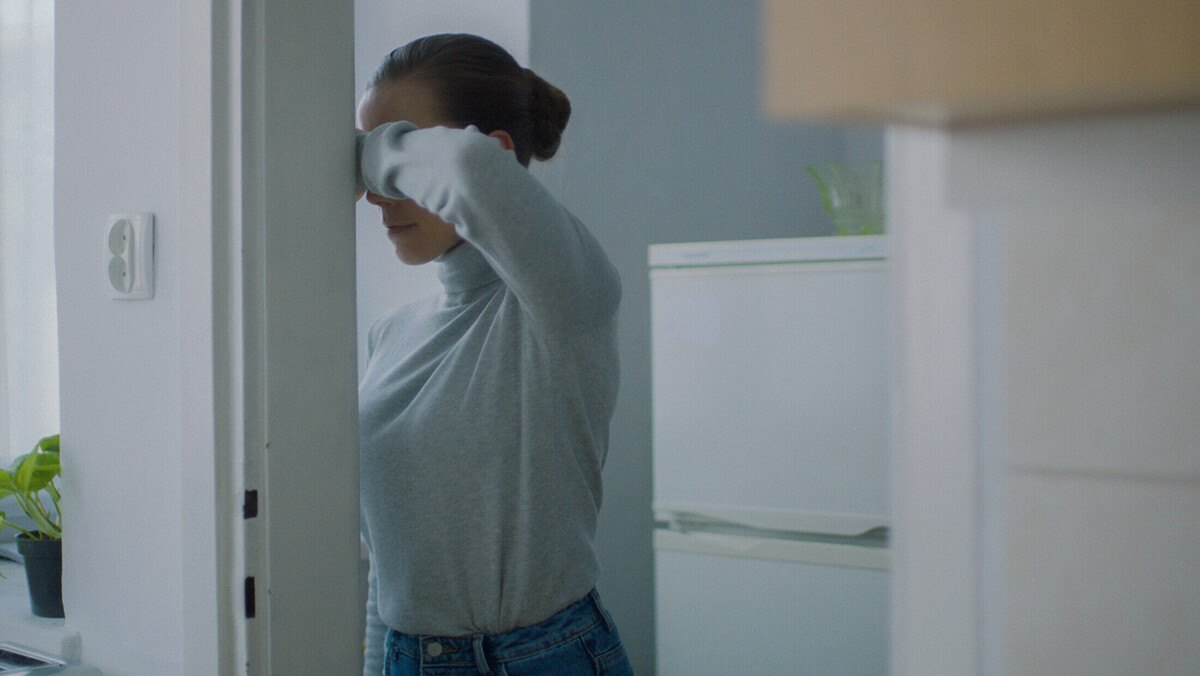 |
| Matecznik |
Matecznik focuses on the dynamic between a young offender (Michał Zielinski) and the "tutor" (Agnieszka Kryst) who is preparing him for reintegration into society, and who appears to view her role as a combination of warden, mother, lover, playmate, parole officer, and priest. As the pair's exercises take on increasingly perverse, coercive undertones - with the introduction of a crying doll named Nola and the dispensing of marks for masturbation - the film centres subtle shifts in the scenario, while seemingly expressing a certain anxiety about female power.
Reminiscent of Yorgos Lanthimos's early work in its framing and "cinema of sadism" inclinations, Matecznik remains compelling thanks to strong performances and Mołda's confident sense of rhythm and pace. Aided by the razor-sharp editing of the brilliant duo Piasek & Wójcik (whose work I first noticed in Ewa Podgorska's Diagnosis), the film succeeds in sustaining a chilly, claustrophobic ambience.
 |
| Zadra |
In contrast to Matecznik's deliberate mood of restrained unease, Mołda's second film, Zadra, leaps of the screen with infectious energy and a very different kind of heroine. The story of an aspiring rapper (Magdalena Wieczorek) encountering an established star (Jakub Gierszał) who might help her career, the film tips its baseball cap to earlier films focusing on the experiences of female performers in the music world, from A Star is Born and Wild Rose to Tomasz Habowski's Piosenki o miłości (Songs About Love), shown at last year's festival. The second half defaults somewhat to moral melodrama illustrating the perils of success. But Mołda shows great skill in integrating the music (including in an exhilarating sequence of car destruction), which all serve a narrative purpose and avoid the monotony of tone that marred last year's acclaimed hip hop musical Inni ludzie. Intelligent and exciting at its best, Zadra deserves to be a hit.
 |
| Johnny |
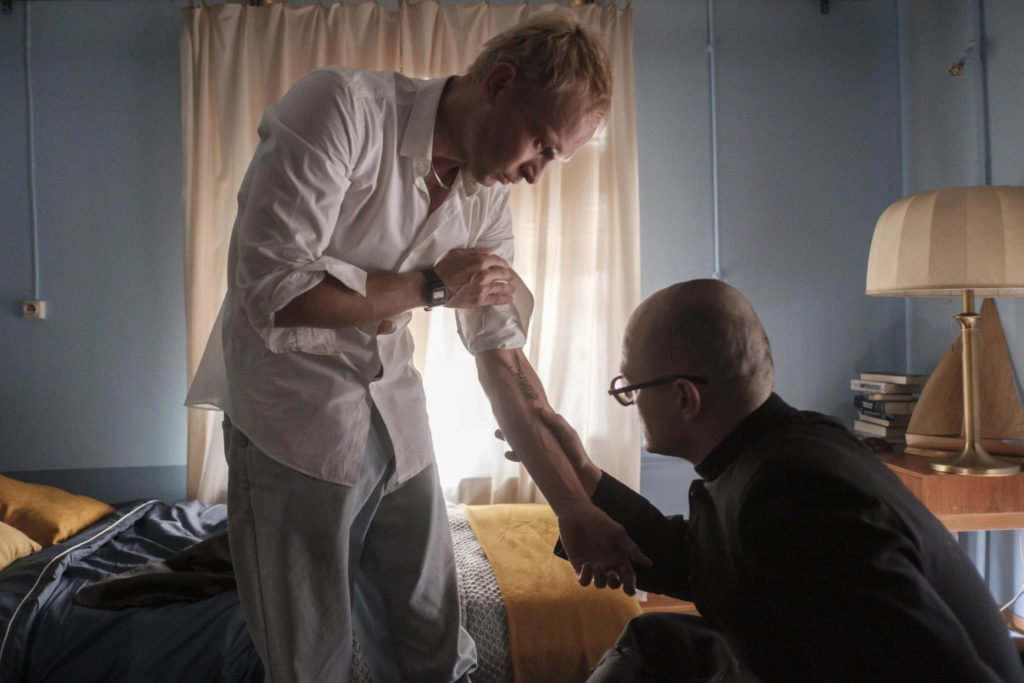
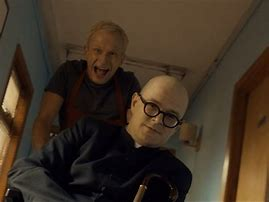
I wouldn't say the same for another Main Competition entry, Daniel Jaroszek's Johnny; however, it seems that the film already gained plenty of admirers, since it won with this year's Audience Award. Yet Jaroszek's debut feature feels totally synthetic in its account of the real-life relationship between the priest Father Jan Kaczkowski (Dawid Ogrodnik) and the drug-taking thief Patryk Galewski (Piotr Trojan), on whom the former's unflagging spirit, wit and wisdom soon have a redemptive impact.
 |
| Johnny |
Very crude in its depiction of its maverick hero's conflicts with the Church establishment, the film doesn't even succeed in making the relationship between its leads very appealing; Maciej Kraszewski's script relies on sitcom-ish comedy and mushy sentiment by turns. Ogrodnik, though highly skilled, seems to have fallen into the Michael Sheen trap of constantly playing real people, so his performances are essentially being judged on their effectiveness as impersonations. Trojan, an actor who can bring an edge of theatrical intensity to even a small role (such as his scene in last year's Hyacinth), also fails to thrive here, despite winning the Best Actor prize (his second, following his win for 25 lat niewinności. Sprawa Tomka Komendy just two years ago). Jaroszek's background in commercials and pop promos is evident in some manic cross-cutting and obvious music cues; overall, Johnny has the same kind of forced energy and emotional fakery as 2011's The Intouchables, another broad-strokes buddy movie that became a big box office success.
 |
| Apokawixa |
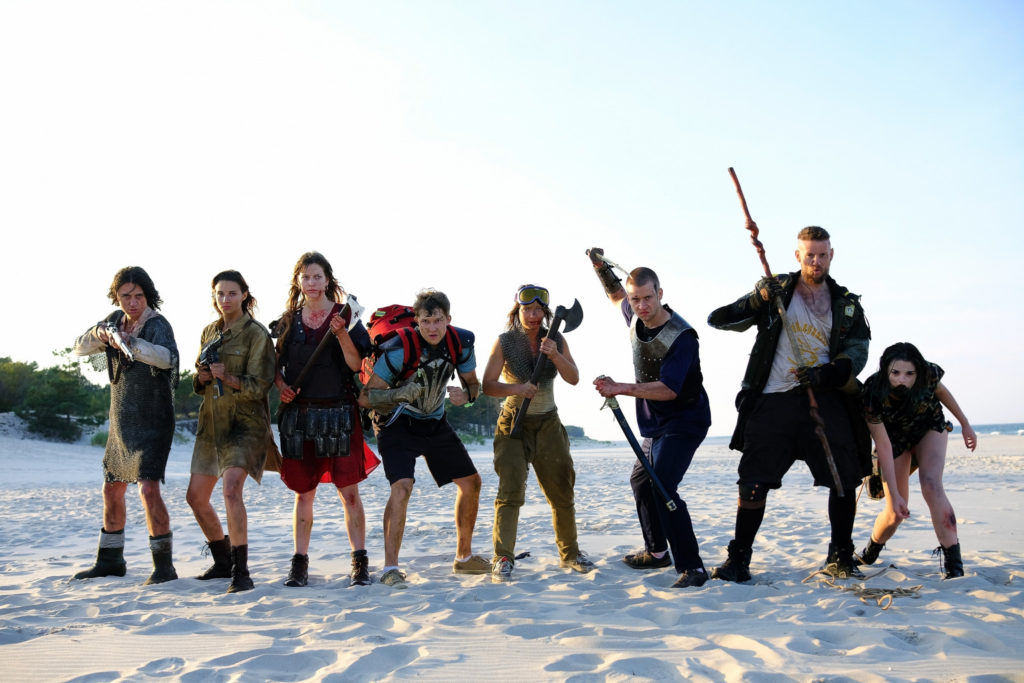
Winner of the Golden Claw, Xawery Żuławski's Apokawixa certainly stood out as the Main Competition's wild card. Championed as Poland's first zombie film, Żuławski's film seems a tailor-made cult item, with the director mobilising the genre to comment on a range of current topics - Covid, climate change, generational conflicts - and doing so with plenty of wild humour and just about enough gore. In part, the film seemed to be acclaimed more for what viewers wanted it to be than what it's actually ended up as, since its clunky cross-cutting and sometimes strained silliness make for a rather long two hours. But the movie boasts some high spots, not least a memorably unhinged turn from an off-the-leash Sebastian Fabijański.
 |
| Słoń |
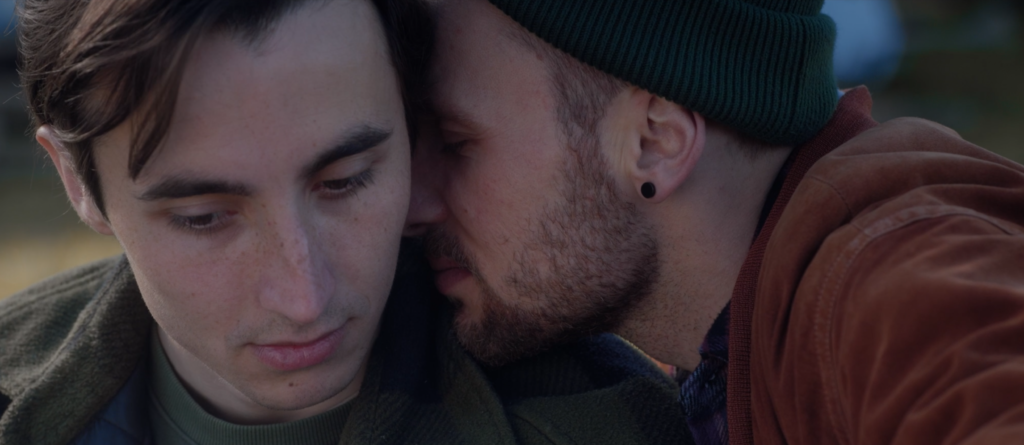
The antithesis of Apokawixa's brashness, humour and flash, Kamil Krawczycki's Słoń (Elephant) offers a modest, low-key, realist take on the experiences of its young protagonist. Following the success of Wszystkie nasze strachy (Fears) and Hyacinth last year, Krawczycki's debut film is another addition to Poland's growing canon of LGBTQ+ cinema, and overall it's a welcome one. The film focuses on the romance that develops between a country boy, Bartek (Jan Hyrnkiewicz, who previously made an impression as the caustic nationalist in Nic Nie Ginie), who is diligently working on his family farm in Podhale, and Dawid (Pawel Tomaszewski), a neighbour who rejected country life years before but who returns to the village for his father's funeral.
The influence of Francis Lee's God's Own Country (2017) and Catherine Corsini's Summertime (2015) (among others) is felt in Słoń, while a scene of homophobic graffiti scrawled on a wall even harks all the way back to Victim (1961). Still, the film succeeds in involving us on its own terms. Krawczycki is at his best in bringing out intimate, contemplative moments and the film is quite insightful in its attention to the choice between familial responsibility and desire for something different that Dawid awakens in Bartek, a conflict compellingly evoked through the sensitivity and strength of Hyrnkiewicz's performance. The conclusion is less satisfying than the set-up, but, having won the Microbudget Prize, Krawczycki's touching film looks highly likely to find a home at festivals outside of Poland in the coming year.
 |
| Głupcy |
 |
| Kobieta na dachu |
The best film focusing on a female lead was Anna Jadowska's superb Kobieta na dachu (Woman on the Roof), for which Dorota Pomykała, already awarded at Tribeca, was a deserved recipient of this year's Best Actress prize. Pomykała plays Mirka, a depressed, recessive 60-year-old midwife (the same profession as Marlena in Głupcy, and evidently chosen for its symbolic cultural associations) whose reasons for attempting to rob a bank with a kitchen knife are unfolded as the film progresses.
Shot in light, exposing tones as Mirka moves through various institutions, or interacts with her bullish husband (Bogdan Koca) and sympathetic son (Adam Bobik), the film makes its social points without stridency, delicately creating a picture of a woman who has suppressed her voice and needs in the service of others for many years. Kobieta na dachu initially evokes Mike Leigh's work: shot from certain angles (the film often favours profile portraits of its heroine), Pomykała bears something of a resemblance to Brenda Blethyn, while an early scene in which the police arrive at the family flat has strong Vera Drake (2004) vibes.
Yet nothing feels overly familiar or forced here; scenes often don't progress as you expect - a sequence depicting a therapeutic New Age greetings ritual is a case in point - and Pomykała subtly finds many shades in the role as she charts the character's understated awakening. Funny, moving and humane, Kobieta na dachu ranks alongside Daria Woszek's more stylised Marygoround (2020) as one of the best female portraits in recent cinema, Polish or otherwise.
 |
| Cicha ziemia |
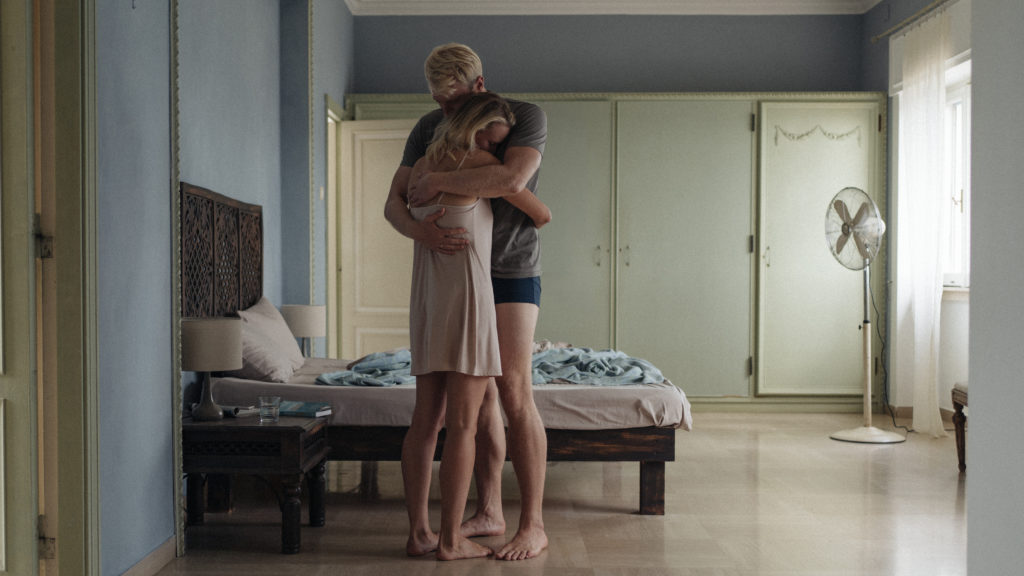
Finally, two extremely accomplished films, both bearing a Michael Haneke influence, explored the relations of Polish characters with ethnic "others": one on home turf and one abroad. Aga Woszczyńska's Cicha ziemia (Silent Land), about the Sardinian vacation of a Polish couple, Adam and Anna, being disrupted by the death of a Middle Eastern migrant worker in their villa's swimming pool, didn't seem to stir much interest. That's possibly because the film already opened in Polish cinemas and screened at festivals abroad, where it was generally critiqued for superficiality and a too obviously harsh perspective on its privileged protagonists (the perfectly complementary flaxen duo of Agnieszka Żulewska and Dobromir Dymecki, who previously appeared as these characters in in Woszczyńska's Cannes-featured graduation film Fragments).
But the film's take on Adam and Anna finally seems more open and ambivalent than detractors have allowed, and Cicha ziemia proves particularly compelling in exploring the couple's emotional states as they shift through indifference, fear, callousness and remorse. Aided by Bartosz Świnarski's lensing, the film's mix of sensuality and chill casts a hypnotic spell. It's released in UK cinemas on 23rd September, and I thoroughly recommend it.
 |
| Chleb i sól |
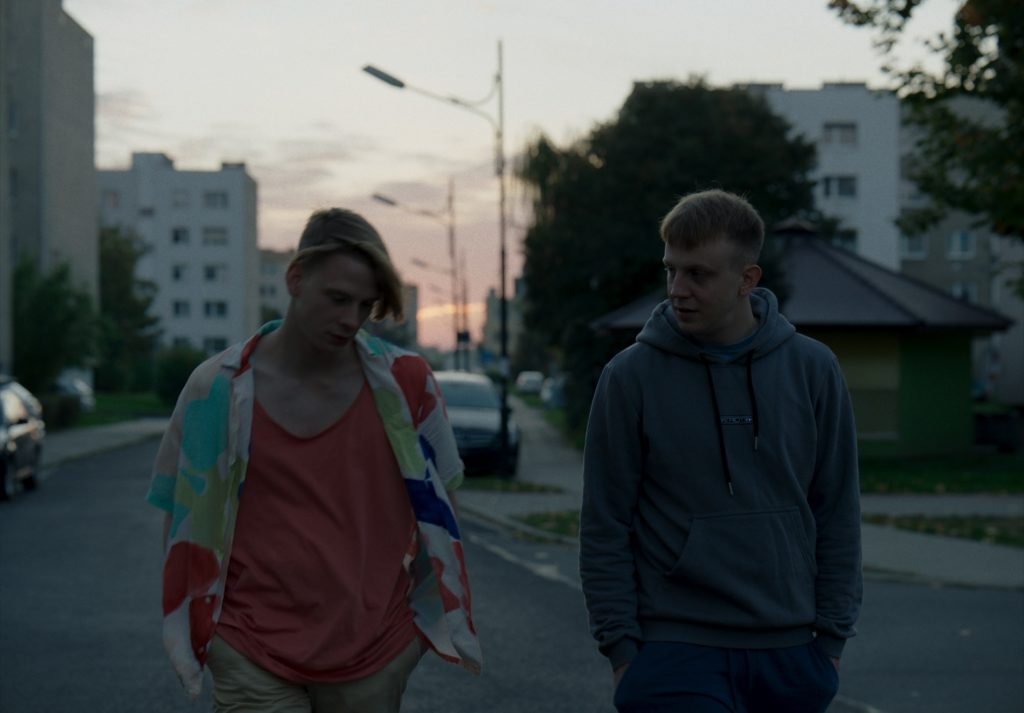
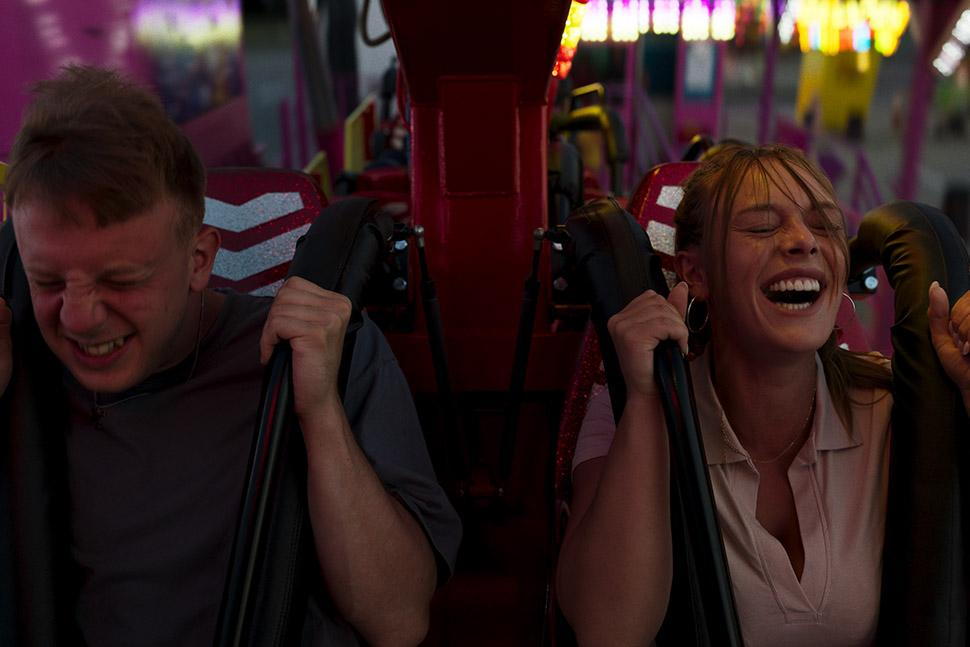
Following its recent win of Venice's Orrizonti competition, Chleb i sól, the debut feature by Damian Kocur, was much more warmly welcomed by critics and audiences - even though it also failed to find favour with the unpredictable jury. Inspired by real events, the film's focus is the return of Tymek, a young pianist and student at Warsaw University of Music, to his hometown of Strzelce Opolskie for the holidays, where he's met by his brother (the real life sibling duo of Tymoteusz and Jacek Bies take these roles) and spends time with his old friends.
Tymek's new perspective on this crew is a bit disdainful: for him, they're too content to plot their futures in the town and pass their time just hanging out, including at the local kebab joint. It's this location that becomes a focal point of the film, as Tymek observes the growing tension between his friends and the Arab owners, while nursing his own ambiguous interest in one of them, Yousef (Nadim Suleiman).
 |
| Chleb i sól |
Kocur's film is exceptionally intelligent: it creates a thoroughly authentic atmosphere that allows the viewer plenty of interpretive space. With an excellent cast comprised of non-professionals, Chleb i sól presents the interactions and personalities of the friends in a holistic way, showing them as capable of casual cruelty, insight and emotional depth, and it doesn't fall into the trap of merely allowing its main protagonist a superior vantage point. Having expressed interest in Yousef - "Did they welcome you with bread and salt?" he asks, referring to the symbolic expression of greeting and hospitality linking many cultures - Tymek, both outsider and insider, gradually backs away from his own feelings, opting for the security of the group.
 |
| Chleb i sól |
At one moment the film's debt to Haneke is a bit too overt: a scene of racist harassment on a night bus, through effective in context, comes straight from the famed subway scene in Code Unknown (2000). Still, Chleb i sól's control of pace and tone, and the authenticity of its social portrait gesturing to wider concerns, makes the film one of the year's most important Polish productions.
For all their strengths, Cicha ziemia and Chleb i sól both have a drawback - namely, the way in which their non-white characters ultimately serve as ciphers: representative figures for the Polish protagonists' fears, projections, curiosity, hostility, or fantasies.
Along with the important addition of The Silent Twins, the inclusion of both films could be said to constitute an advance on last year - in which the only significant non-white character to feature in the festival's films was the Senegalese online scammer played by Mamadou Ba in Andrzej Mańkowski's Po miłość / Pour l'amour (although, on the other hand, Ba's character at least had plenty of dialogue and the opportunity to articulate a perspective on events). Clearly, the creation of films centring migrants as protagonists is still one of the challenges facing contemporary Polish cinema, which is yet to present such characters as complicated, fully realised individuals, welcomed to the screen with bread and salt.
The 47th Polish Film Festival in Gdynia took place between 12-17 September. A full list of films screened can be found here.
Related reading: Review of last year's festival

 |
| Jacek Bromski and Agnieszka Holland (Photo: PAP Adam Warzawa) |
 |
| Tomasz Kolankiewicz (Photo: Materialy Prasowe) |


 |
| Zupa Nic |
 |
| Powrót do Legolandu |
 |
| Hyacinth © Bartosz Mrozowski |
Gay Times and Country Life
A highlight of New Horizons, where it premiered last month, Piotr Domalewski's Netflix-produced Hyacinth (which won Marcin Ciastoń this year's best screenplay prize) exemplifies the kind of "untold story" to which Matuszyński referred in its focus on the targeted campaign against homosexuals in mid-80s Poland known as "Akcja Hiacynt". Also concerned with police brutality, and boasting another fine performance from Tomasz Ziętek, this time on the other side of the law (for a while, at least), the film stood up extremely well to a second viewing, revealing beneath its police procedural trappings a love story between two protagonists who are each concealing the whole truth from the other.
 |
| Wszystkie nasze strachy |
As a film about Polish LGBTQ+ experience Hyacinth was joined in the FPFF Main Competition by Wszystkie nasze strachy (Fears) directed by Łukasz Ronduda and Łukasz Gutt, which was the eventual winner of the top Golden Lions prize for Best Film. The film is inspired by the life of Daniel Rycharski, the gay Catholic artist from the village of Kurówka. It makes the suicide of an (underwritten) lesbian friend the catalyst for the decision of Rycharski (played by Dawid Ogrodnik with the artist's signature bleached blonde hair and rainbow-striped tracksuit) to suggest a Way of the Cross for his friend as a redemptive action undertaken by the whole community whom he sees as implicated in her death.
 |
| Daniel Rycharski & Dawid Ogrodnik. (Fot. Jarosław Sosiński) |
Compromised by several aspects including the miscasting of Ogrodnik, a generally uncritical acceptance of Rycharski's own self-image, and an overreliance on choral vocalising to whip up an emotional response, Wszystkie nasze strachy's scooping of the main prize surely represented a politically-motivated gesture of LGBTQ+ solidarity on the jury's part. Lacking an objective stance on its hero, the film still scores in some of its intimate scenes (the protagonist's interactions with his supportive babcia are a crowd-pleasing highlight), its beautiful cinematography (by Gutt), and the subtler moments in which the screenplay by Ronduda, Katarzyna Sarnowska and Michał Oleszczyk attends a bit to the contradictions inherent in Rycharski's position as a figure self-consciously bridging contemporary Poland's polarisation.

Here and Now, Black and White
A less high-profile but intriguing exploration of the Polish province, religion and desire came courtesy of Po miłość / Pour l'amour, which screened in the Microbudget Competition. Andrzej Mańkowski's decidedly odd drama puts Jowita Budnik (who also makes the most of a small role as the grieving mother in Wszystkie nasze strachy) through the physical and emotional mill. Here Budnik plays a school cleaner, Marlena, who finds herself caught between an abominable husband with a drinking problem and a smooth-talking Senegalese scammer (Mamadou Ba) who contacts her via a social media app.
Much concerned with the escapist and exploitative potential of Internet interaction - which it also explores via a not-too-subtly-developed subplot involving Budnik's young colleague (Patrycja Ziniewicz) who ends up slut-shamed by the rural community - the film begins promisingly. But its attempt to blend social realism with fantasy in sequences in which Marlena visualises her online beau as present with her (accompanied by jaunty "African" music, natch) proves ill-advised.
Budnik's powerful performance holds the film together, though the shrill climax, which literalises the heroine's position as a trapped woman, is painfully over-extended. Undoubtedly feminist, the film is a bit more problematic when it comes to race issues. The topic of African online scammers is one that Western liberal filmmakers, obsessively dedicated to portraits of Black heroism or victimhood at the moment, would be sure to shy away from, and Ba (an actor known for his work with Warsaw's Teatr Powszechny) manages to bring some subtler shadings to the role later on. But the fact that the only non-white character to feature in the some 17 films I saw at this year's festival is, at base, a negative stereotype indicates (like the brief moment of racist caricaturing that cropped up in Smarzowski's Kler three years ago) that Polish cinema has a long way to go when it comes to effectively broadening its scope of ethnic representation.

As Po miłość and Wszystkie nasze strachy show, the films at FPFF 2021 didn't ignore the contemporary world. Several more took on social topics, such as Michał Otłowski's Lokatorka (The Tenant. You Can't Burn Us All), a blunt critique of "wild privatisation" that uncovers a web of corruption beneath the recent removals of social housing tenants from buildings reclaimed by their owners. The film's highlighting of the disparagement of such tenants as worthless wastrels within capitalist society is certainly well-intentioned (one envisages Ken Loach nodding approval) but the style and execution are basic, to say the least.

At the other end of the scale of creativity was Filip Jan Rymsza's Mosquito State, an ambitious blend of bio/body horror and corporate black comedy in which the consequences of a mosquito bite become less a threat than a liberation for the socially awkward Wall Street hero (Beau Knapp). Its title evoking both a personal condition and a parasitic social system, the film offers an idiosyncratic origin story for the 2007-2008 financial crisis while also keeping us immersed in its protagonist's freaky headspace. From its leisurely, artfully-designed title sequence onwards, the movie is a trip, and was a deserved winner of the "Visions Apart" and Best Sound prizes.
 |
| Inni Ludzie |
Also offering a wild ride of a different kind was Aleksandra Terpińska's Inni Ludzie (Other People), adapted from Dorota Masłowska's 2018 text. The film brings together Poland's haves and have-nots via the relationship between an aspiring rapper (Jacek Beler, a surprise winner of the Best Actor prize) and his wealthy older lover (Sonia Bohosiewicz), translating Masłowska's language to the screen in the form of an attention-grabbing hip hop musical, complete with narrating Jesus (Sebastian Fabijański).
Frenetic to a fault, Inni Ludzie won many admirers. But some deft touches notwithstanding (those who loved the brief bout of musical muff-diving in Leos Carax's Annette will thrill to several sung-through sex sequences here), I found the film increasingly repellent: obvious in its social points, tonally one-note, and so smugly scuzzy in content that you might feel like a bath afterwards. (The rhymes yield some unintentional comedy, too, at least in their translated form. Sample: "He badly wanted a Lego Space Rover/Would've had a hard-on - if he'd been older.")

Those seeking a more modest take on the musical could find it in the Microbudget Competition, where Tomasz Habowski's Piosenki o miłości (Songs About Love) (the eventual winner of said competition), served up a pleasing confection about a drifting rich boy (Tomasz Włosok) with musical ambitions and the underconfident waitress (Justyna Święs, of The Dumplings) with whom he collaborates after overhearing her sing. Black-and-white for the most part but turning to colour for its social media inserts, the film has plenty of charm, some insight and bite, a nice dash of Nouvelle Vague spirit (as indicated by that Honoré-alluding title), and a brilliant performance from Andrzej Grabowski as the hero's self-regarding actor Dad.

Performance was indeed a pleasure of many of the films at this year's festival, from the great Agata Buzek bringing her vaguely extraterrestrial quality to the part of Jo, an English teacher undergoing entwined personal and professional tensions in Łukasz Grzegorzek's delicious Moje wspaniałe życie (My Wonderful Life) to Maria Dębska's radiant star turn in Bo we mnie jest seks (Autumn Girl), Katarzyna Klimkiewicz's stylised, intermittently enjoyable retro musical about Kalina Jędrusik. Props, too, to the brilliant DP Weronika Bilska, whose cinematography on Everyone Has a Summer I already admired, for her superb work on both of these films and her loving lighting of their heroines. (The in-demand Bilska shot Piosenki o miłości, too!)
One takeaway from this year's festival was that Polish films currently tend to be reliant upon a journalistic approach, mostly dramatising historical/contemporary events or figures and using the "Based on true events" tag as a stamp of authenticity. (In this context, the cheeky slogan that precedes Bo we mnie jest seks - "The events presented in this film may or may not have happened" - seems quite subversive.)
This is not an exclusively Polish issue (rather, it may be linked to a wider distrust of "fiction" in our over-mediated age), and it's not necessarily a problem when it yields films of the quality of Leave No Traces. Still, one would hope to see directors letting loose with their imaginations more (in the vein of Mosquito State) and further embracing the expressive potential of the medium. Nonetheless, FPFF 2021's uniting of new and established talents (with a significant number of young or debuting directors in the Main and Microbudget Competitions) and its open attitude were bracing, and bode well for the future of the festival based, in Kolankiewicz's phrase, "on dialogue not division."
The 46th Polish Film Festival took place in Gdynia between 20-25 September 2021.

