Showing posts with label Paradise. Show all posts

Friday, 21 June 2013

Mixtape Movies Blogathon: Childhood Portraits


Following the A Life in Movies and Desert Island DVDs Blogathons, the inventive Andy at Fandango Groovers has come up with another idea. This time, the challenge is for bloggers to compile a list of five or six movies (plus one wildcard) that serve as a cinematic equivalent of a Mixtape by complementing each other or fitting together in some thematic way. Since a recent conversation revealed just how many of my childhood memories are actually cinema-going memories, and since I eagerly await the appearance of Mark Cousins’s latest doc A Story of Children and Film (which sounds like a Mixtape Movie itself, if ever there was one), I’ve picked childhood as the theme for my selections. Kids coming to terms with absence, with their own gifts and abilities, and confronting beasts and burglars are the heroes and heroines of the films  below. 
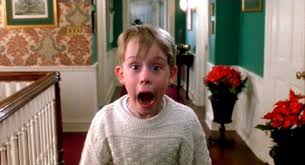


Home Alone (Columbus, 1990)

“This is my house, I have to defend it,” intones Master Culkin. Vigilantism, self-sufficiency and family values, Hughes-style. Given its message, is it any wonder that Home Alone wowed children pretty much the world over? A kid may miss his family eventually, this movie says. But in the meantime he’s entirely capable of surviving perfectly well without them.


Paradise (Donoghue, 1991)

Encompassing grief, friendship, empowerment and resolve, Donoghue’s movie - about the summer spent by a sadsack city boy (Elijah Wood) with his mother’s friends in the country – looks at its adult and child protagonists with equal affection and tenderness, slowly revealing the connections between their emotional experience of the world.


The Long Day Closes (Davies, 1992)

“Mam, can I go to the pictures?” Movie love. The rituals of home, church and school. A first scary stirring of homosexual desire. Davies makes the intimate experience of his 1950s Liverpool childhood something universal, far-reaching, embracing and profound here. If there’s just one sequence to demonstrate the rapturous, melancholic uniqueness of The Long Day Closes it’s this one.


Beasts of the Southern Wild (Zeitlin, 2011)

 A child’s eye view of the bayou, this could be a Maurice Sendak book brought to the screen by Terrence Malick. And in Quvenzhane Wallis’s enterprising Hushpuppy, Zeitlin creates one of the most memorable heroines of the recent American screen. I find the shot of the kids returning to the Bathtub following their dreamy night on the boat to be overwhelmingly powerful.


The Sixth Sense (Shyamalan, 1999)

Forget the ghosts, forget the twist. What makes The Sixth Sense such an enduring, deeply affecting childhood portrait, for me, is that it's about a kid coming to terms with an ability that it takes him the whole movie to recognise as a gift rather than a curse.


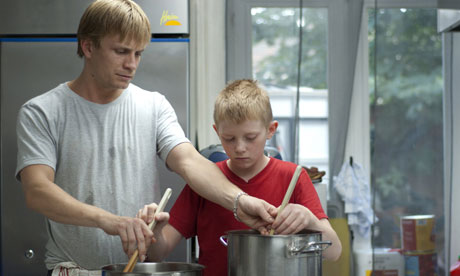
The Kid With A Bike (Dardennes, 2011)

With characteristic Dardennes doggedness, Cyril (Thomas Doret) sets about seeking out his errant father. The renunciation of the pursuit is the point of the story. And the humanity of the movie is cemented by its heart-wrenching final shot.


And...


Michael (Schleinzer, 2011)

An icily enigmatic coda to the (mostly) affirmative films listed above is provided by Marcus Schleinzer’s deeply subversive drama, which presents a middle-class office worker holding a young boy captive in his basement. And shows this predicament to have more in common with a traditional parent/child dynamic than we might care to admit.

Monday, 18 June 2012

Film Flashback: 20 Years of Paradise (Donoghue, 1991)


I can hardly believe that it’s twenty years ago this month since I first saw Mary Agnes Donoghue’s Paradise in the cinema. Alongside Home Alone (1990) – my first big film obsession – Paradise was the movie that I returned to most frequently throughout the 1990s. And while other, somewhat similar films that captivated me at the time (such as Howard Zieff’s My Girl [1991]; oh, the exquisite trauma of Master Culkin’s death-by-bees!) have pretty much fallen by the wayside now, Paradise is a film that I continue to hold in high esteem and to experience with enormous gratitude, affection and pleasure. An adaptation of Jean-Loup Hubert’s Le Grand Chemin (1988) – and one that gives the lie to the received wisdom about the “inevitable” inferiority of Hollywood remakes of French films – Paradise concerns the summer spent by a shy city boy, Willard (Elijah Wood, in pre-Hobbit days, and giving a wonderfully soulful, understated performance), in the rural Michigan home of his mother’s friends Lily and Ben Reed (Melanie Griffith and Don Johnson), a couple numbed by and still grieving the death of their young son in an accident several years previously. Throughout the summer, Willard’s presence acts as a catalyst for the almost-estranged couple’s gradual reconciliation, while his friendship with the Reed’s neighbour Billie Pike (Thora Birch) gives him the courage to face his own fears and problems with greater fortitude.


What I responded to so intensely in Paradise as a 12-year-old is difficult to recall precisely. But I do remember experiencing an immediate sense of identification with the movie’s characters, who seemed entirely authentic to me, and whose concerns and dilemmas echoed my own in ways that have become increasingly clear to me as time has gone on. The key to the film is, I think, precisely the sense of intimacy it creates: Donoghue keeps the characters close to us, so that their shifts in perception, the gradual connections they forge often in spite of themselves, really resonate. 

Paradise renders these small moments of connection with magical tenderness, but without an excess of sentimentality. The potential mawkishness of the material is sidestepped, throughout, with consummate delicacy and discretion, and with humour too (much of it courtesy of Sheila McCarthy’s turn as Billie’s husband-hunting waitress mother). There’s a gentle, easeful flow, and a lovely sense of structure, to the movie, but it has loss right there at its centre and a scene of confrontation between Ben and Lily (beautifully played by Johnson and Griffith, who draw effectively on their off-screen history together) that’s shocking in its intensity. (This is also the last film in which you get to see the pre-surgery Griffith looking like herself on screen and what a lovely, unique presence she is here.) I see Paradise now as a transitional film, in the sense that it bridged the gap between kids’ movies and adult cinema for me; indeed, the gaps and parallels in adults’ and children’s emotional experience of the world is one of the film’s major concerns. Given her exquisite work here, it’s a real shame that Donoghue never got the chance to direct another movie. Still, at least there’s always the opportunity – one I intend to take up quite soon, in fact – to return to Paradise.

Saturday, 7 May 2011

A Life in Movies Blogathon


Andy at Fandango Groovers has invited bloggers to participate in the "A Life In Movies" blogathon: a list of favourite films from the year we were born up to 2010, one title for each year. Nearly as hard as the Cinematic Alphabet meme but just as much fun. And compiling this list has reminded me of  several films I'd like to revisit very soon.


1980 - The Shining (dir. Stanley Kubrick)

It might not have pleased the novel’s author very much, but Stanley Kubrick’s film, departing fairly radically from its source at times, still remains perhaps the most striking and memorable of all Stephen King adaptations.


1981 - Atlantic City (dir. Louis Malle)

Louis Malle and John Guare’s fairly unclassifiable collaboration mixes elements of crime drama, comedy, love story and fairy-tale to create one of the most distinctive  American movies of the period. Great work from Burt Lancaster and Susan Sarandon.


1982 - Shoot the Moon (dir. Alan Parker)

We talk about break-up albums, but not break-up movies so much. Sharply-observed, funny, raw and disturbing, with memorable performances from Albert Finney and Diane Keaton as the couple falling apart, Shoot the Moon is one of the best.


1983 - Zelig (dir. Woody Allen)

Allen’s brilliant mockumentary charts the history of an “everyman” chameleon whose neurotic insecurity prompts him to take on the ideas, opinions and even physical appearance of whichever group of people he happens to be associating with. Hilarious and insightful, and, like all of Allen’s best films, both deep and feather-light.


1984 - Gremlins (dir. Joe Dante)

An early disappointment for me was not being allowed to go to see the 15-certificate Gremlins at the cinema. Seen on many occasions since; loved every time. “And that’s how I found out there wasn’t a Santa Claus…”


1985 - A Private Function (dir. Malcolm Mowbray)

“Like Volpone set in a cabbage patch” (Pauline Kael). Maggie Smith states: “I’m not having people think we put just rubbish in the bin.”


1986 - Little Shop of Horrors (dir. Frank Oz)

Honestly, no musical makes me happier than Little Shop of Horrors. Magic moment: the Steve Martin/Bill Murray encounter.


1987 - The Princess Bride (dir. Rob Reiner)

"My name is Inigo Montoya .. &etc."


1988 - Distant Voices, Still Lives (dir. Terence Davies)

Or The Naked Gun. Or Women on the Verge ...


1989 - Miss Firecracker (dir. Thomas Schlamme)

Does anyone else like this?


1990 - Home Alone (dir. Chris Columbus)

Vigilantism and family values, Hughes-style. Movie obsession commences right here.


1991 - Paradise (dir. Mary Agnes Donoghue)

Thoughts on Paradise here.


1992 - Strictly Ballroom (dir. Baz Luhrmann)

“Lee-sen to the ree-them!” One of my happiest cinema-going memories.


1993 - Philadelphia (dir. Jonathan Demme)

There are so many great sequences here, from that wonderful opening montage scored to Springsteen to the close-up of Hanks alone on the street,  and the opera scene, of course. But for me the key moment in Philadelphia comes in the exchange between Denzel Washington’s lawyer Miller and Charles Napier’s Judge midway through the movie. “In this courtroom, justice is blind to matters of race, creed, colour, religion and sexual orientation.” “With all due respect, Your Honour, we don’t live in this courtroom, though, do we?”


1994 - Forrest Gump (dir. Robert Zemeckis)

The early 90s = The Hanks Years.


 1995 - To Die For (dir. Gus Van Sant)

Van Sant's satire skewers its moment, and holds up very well.


1996 - The Portrait of a Lady (dir. Jane Campion)

Nicole, mark II. For me, the best Henry James adaptation there has been, or is ever likely to be.


1997 - The Sweet Hereafter (dir. Atom Egoyan)

A movie that retains its enigmatic quality no matter how many times it's seen; Egoyan’s masterful adaptation of Russell Banks’s novel.


1998 - Buffalo 66 (dir. Vincent Gallo)

Gallo's stylish, one-of-a-kind indie romance.


1999 - American Beauty (dir. Sam Mendes)

Or Magnolia. Or Topsy Turvy. Or Limbo. Or The Sixth Sense. Damn good year.


2000 - Under the Sand (dir. François Ozon)

A classic of first-person cinema: Ozon’s chilly, anti-closure masterpiece of mourning and melancholia.


2001 - The Deep End (dir. McGehee and Siegel)

McGehee and Siegel’s contemporary reworking of The Reckless Moment, with a tremendous performance from Tilda Swinton as the under-pressure matriarch.


2002 - Talk to Her (dir. Pedro Almodóvar)

Silent cinema. Telling stories. Dance and desire. Almodóvar's most moving, soulful film.


2003 - Lost In Translation (dir. Sofia Coppola)

Our Brief Encounter. Wonderful atmosphere. Humour and melancholy, alienantion and connection, resignation and hope.


2004 - The Village (dir. M. Night Shyamalan)

I wouldn't try to defend Shyamalan's last couple of films, which have seemed miscalculated in the extreme, but I've always been taken with The Village, for me one of the strangest, most beautiful and most underrated American films of the decade.


2005 - Hidden (dir. Michael Haneke)

Does anyone put our contemporary panics and paranoias on screen more memorably than Mr. Haneke?


2006 - Dans Paris (dir. Christophe Honoré)

Watching  Dans Paris, I discovered that I much preferred New Wave homage to the “real” thing.


2007 - Les Chansons d'amour (dir. Christophe Honoré)

Dans Paris's musical sister.


2008 - 35 Shots of Rum (dir. Claire Denis)

On the Nightshift.


2009 - RAGE (dir. Sally Potter)

Potter’s multi-vocal meditation on the fashion industry, corporatism, celeb culture, and much more besides. Also the only film so far in which you get to see Judi Dench light a joint. Reviewed here.


2010 - Le Refuge (dir. François Ozon)

Thoughts on Le Refuge here.