Monday, 8 July 2013

Theatre Review: Unrivalled Landscape (Orange Tree)


“If it is a choice between Richmond and death, I chose death,” sulked Nicole Kidman’s Virginia Woolf (c/o David Hare) in one of The Hours’s worst camp moments. Titled in reference to the Walter Scott quotation that deemed Richmond “an unrivalled landscape” and drawn from material produced by the theatre’s Writers Group, the six short plays that constitute this year’s Orange Tree Directors Showcase seek to construct a more complex portrait of the leafy Greater London ‘burb (hometown to yours truly) than Hare and co provided. Just as Jimmy Grimes’s And Then The Snow Came explored the plight of Richmond’s homeless in the 2011 Directors Showcase, OT writers have again been encouraged to take the theatre’s hometown itself as Muse, creating work that unfolds in Richmond and its environs, with the development of the pieces overseen by this year’s pair of resident trainee directors, Alexander Lass and Nadia Papachronopoulou.

It’s an interesting premise, to be sure, but one that doesn’t consistently pay the dividends it could. The bar having been set high by last year’s wonderfully confounding Showcase (which progressed, brilliantly, from a quaint Edwardian proto-Home Alone escapade to a fierce take on Amiri Baraka’s Dutchman via a spot of disturbing Haneke-esque home invasion) Unrivalled Landscape ends up feeling more uneven by comparison, despite the intimately collaborative nature of its genesis. Still, the evening offers some striking moments and strong performances, and rewards the patient viewer with a radiant finale.

While the pieces are tonally and formally diverse (encompassing the comic and the melancholy, monologues and duologues, the naturalistic and the surreal) Lass, Papachronopoulou and the writers have striven to make them interconnected affairs; the dramas are based around the trajectories of five individuals, characters who might be mere bit-players in one play and then become protagonists in the next. The evening opens by sounding its most eerily enigmatic note in Laura Muth’s intriguing but too-brief “Killing Time”, which finds a suicidal man, Andy (John Bowler), conversing with a “tourist” (Sarah Malin) during a night-time deer cull in “the purgatory of Richmond Park.” It’s an apt curtain-raiser for a sequence of plays that mostly focus upon characters who feel hunted or haunted to some degree.

However, the connections between the pieces seem less intricately worked out that they might have been, with a couple of characters feeling crowbarred into their scenarios, and, more disappointingly, the significance of the Richmond locales isn’t always maximised. Andy’s story, for example, is later elaborated in Ernest Hall’s “Goodbye From Me” a monologue-as-meltdown that finds the character delivering a torturously inept stand-up comedy routine the day before his prison release, resulting in a confession of tragedy that’s supplemented by a ghostly apparition. But where “Killing Time” is too brief, “Goodbye From Me” (which doesn’t even take place in Richmond in any case) feels over-lengthy and despite a thoroughly committed performance from Bowler is neither funny nor touching enough to sustain itself or the portrait of the crying-on-the-outside comedian that it presents.


Archie Maddocks’s more accomplished “Kizzy and the Prince” builds on the promise of the playwright’s excellent riots-inspired Mottled Lines with a piece that presents a Kew Gardens-set encounter between a spiky Trinadadian security guard, Kizzy (Nicola Alexis), and – yup – a Bahraini prince, Faris (Ash Hunter). If the scenario sounds more than a mite contrived, Maddocks’s punchy, poetic writing transcends it, as do Alexis and Hunter’s fine performances which spark Papachronopoulou’s carefully modulated production. It’s a pity, therefore, that Kizzy and Faris’s narrative is picked up less compellingly in Benedict Fogarty’s “Ties” – which focuses on a hospital row between the pair that boasts over-explicit dialogue (“My family is part of a tyrannous regime!” announces Faris) and one of the stage’s least convincing pregnant bellies, as it demonstrates the myriad complications involved in hooking up with a Prince.

The central thematic of “ties” – to one’s past, to other human beings, to previous identities – receives a more vibrant spin in Will Gore’s “Portman Avenue” which takes its inspiration from an extraordinary real event: the fall of an African stowaway from an aeroplane flying over East Sheen. Said incident is here witnessed by Kizzy who, being courted at this stage by Faris, receives a visit from a pissed-off reporter, Kate (Malin), who’s keen to quiz her on what she’s seen. The most ambitiously structured of the pieces in its (often effective) recourse to overlapping scenes, Gore’s play ultimately struggles to bring all the characters together convincingly, but it has great touches and boasts an absolutely terrific turn from Alexis, here trading the swaggering confidence of her first appearance for fear and vulnerability as Kizzy’s painful memories resurface.

Last up is Caitlin Shannon’s super “The Getaway” which brings the evening full circle by transforming the “purgatory” of Richmond Park into a Paradise of sorts. The jewel of the evening, Shannon’s play is simply lovely: a warm, funny, fluid piece that charts the interaction of Kate with Gary (Kieron Jecchinis), the ex-cop Park warden who’s supervising her volunteering work. Oscillating between bolshiness and tenderness, the pair – he a Western-movie enthusiast and stickler for Park rules given to California dreaming, she a divorcee seeking solace in Nature and scornful of Hollywood myths – finally share a moment of drunken connection under the stars, an encounter that incidentally features the best bit of stage iPhone abuse since Anna Calder Marshall memorably boiled a mobile in Salt, Root and Roe.

“The Getaway” can’t bring the disparate, sometimes straggly strands of the other plays together. But this text, deeply concerned with redemption, redeems the evening, offering its most insightful discourse on identity and the possibility of change. Indeed, Shannon’s play, wittily scored and beautifully performed by Malin and Jecchinis, does what you hoped all these plays would do. It wrests something at once local and universal, profound and mundane, from its Richmond setting, leaving the viewer with a renewed sense of the potential for interest, beauty and connection in a town that - as is certainly the case for this writer - they may feel they know all too well.

Running until July 13.

Friday, 21 June 2013

Mixtape Movies Blogathon: Childhood Portraits


Following the A Life in Movies and Desert Island DVDs Blogathons, the inventive Andy at Fandango Groovers has come up with another idea. This time, the challenge is for bloggers to compile a list of five or six movies (plus one wildcard) that serve as a cinematic equivalent of a Mixtape by complementing each other or fitting together in some thematic way. Since a recent conversation revealed just how many of my childhood memories are actually cinema-going memories, and since I eagerly await the appearance of Mark Cousins’s latest doc A Story of Children and Film (which sounds like a Mixtape Movie itself, if ever there was one), I’ve picked childhood as the theme for my selections. Kids coming to terms with absence, with their own gifts and abilities, and confronting beasts and burglars are the heroes and heroines of the films  below. 


Home Alone (Columbus, 1990)

“This is my house, I have to defend it,” intones Master Culkin. Vigilantism, self-sufficiency and family values, Hughes-style. Given its message, is it any wonder that Home Alone wowed children pretty much the world over? A kid may miss his family eventually, this movie says. But in the meantime he’s entirely capable of surviving perfectly well without them.


Paradise (Donoghue, 1991)

Encompassing grief, friendship, empowerment and resolve, Donoghue’s movie - about the summer spent by a sadsack city boy (Elijah Wood) with his mother’s friends in the country – looks at its adult and child protagonists with equal affection and tenderness, slowly revealing the connections between their emotional experience of the world.


The Long Day Closes (Davies, 1992)

“Mam, can I go to the pictures?” Movie love. The rituals of home, church and school. A first scary stirring of homosexual desire. Davies makes the intimate experience of his 1950s Liverpool childhood something universal, far-reaching, embracing and profound here. If there’s just one sequence to demonstrate the rapturous, melancholic uniqueness of The Long Day Closes it’s this one.


Beasts of the Southern Wild (Zeitlin, 2011)

 A child’s eye view of the bayou, this could be a Maurice Sendak book brought to the screen by Terrence Malick. And in Quvenzhane Wallis’s enterprising Hushpuppy, Zeitlin creates one of the most memorable heroines of the recent American screen. I find the shot of the kids returning to the Bathtub following their dreamy night on the boat to be overwhelmingly powerful.


The Sixth Sense (Shyamalan, 1999)

Forget the ghosts, forget the twist. What makes The Sixth Sense such an enduring, deeply affecting childhood portrait, for me, is that it's about a kid coming to terms with an ability that it takes him the whole movie to recognise as a gift rather than a curse.


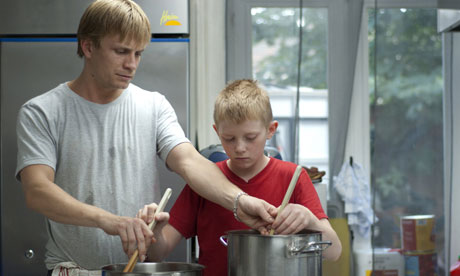
The Kid With A Bike (Dardennes, 2011)

With characteristic Dardennes doggedness, Cyril (Thomas Doret) sets about seeking out his errant father. The renunciation of the pursuit is the point of the story. And the humanity of the movie is cemented by its heart-wrenching final shot.


And...


Michael (Schleinzer, 2011)

An icily enigmatic coda to the (mostly) affirmative films listed above is provided by Marcus Schleinzer’s deeply subversive drama, which presents a middle-class office worker holding a young boy captive in his basement. And shows this predicament to have more in common with a traditional parent/child dynamic than we might care to admit.

Sunday, 9 June 2013

Theatre Review: Sweet Bird of Youth (Old Vic)


Groggily rousing herself from her hotel bed sheets, Kim Cattrall requests her spectacles - the better to inspect the bare-chested boy-toy she’s hooked up with. “I don’t mind waking up in an intimate situation with someone, but I like to see who it’s with,” Cattrall coos. Her verdict on said stud? “Well, I may have done better but God knows I’ve done worse.”

Nope, this isn’t, as you might imagine, a deleted scene from some Sex and the City episode, but rather the opening Act of Tennessee Williams’s Sweet Bird of Youth, in which Cattrall is starring at the Old Vic. It’s to Cattrall’s credit that the spirit of SATC's iconic Samantha Jones doesn’t hover too closely over her characterisation of Alexandra del Lago (aka the Princess Kosmonopolis), a sexually voracious faded movie star whose desperate flight from a disastrous screen comeback has led her into the arms of one Chance Wayne, a would-be actor still grasping for his big break. But it’s not to the production’s credit that it ends up making something quite cumbersome and clunky out of Williams’s play.

The tale of Chance’s return to his Gulf Coast hometown where he hopes – in a decidedly harebrained scheme - to use his acquaintance with the Princess to finally kick-start his career and reconcile with his teenage lover in the process, Sweet Bird of Youth is far from Williams’s most perfectly constructed work. But still it has interest and appeal. There’s a definite charge to the Princess and Chance’s interaction (they’re both using each other flagrantly but can’t help swerving into tenderness at times), as well as bite and poignancy in the exploration of what “the enemy - Time” does to human aspiration, plus a fascinatingly grisly, animalistic undertow to the piece. In a choice bit of symmetrical plotting, our hero’s girl, Heavenly, has undergone a hysterectomy after being infected with syphilis by him, and Chance now faces castration by Heavenly’s odious politician father Boss Finley and his goons should he attempt to contact her again.

But rather than embracing the kinky, heightened elements that Williams has provided, Marianne Elliott’s po-faced production treats the material with unseemly seriousness and reverence, often draining the humour and quirky lyricism from the piece. What needs to be bright, vivid, bold and arresting is here mostly gloom and pathos. Dan Jones supplies grimly portentous music, Bruno Poet’s lighting is glum, and Rae Smith’s design – while enabling efficient quick scene changes – makes the hotel set look ludicrously palatial. These opening scenes, which should be funny and sexy as the Princess and Chance negotiate the terms of their relationship, seem interminable and turgid; the production achieves the not inconsiderable feat of making Williams look like a boring writer.

Trying for the occasional melodramatic flourish, Elliott adds shadowy figures and hokey lightning flashes to the proceedings, but her heart doesn’t seem to be in it and there’s very little camp fun to be had. Nor is the evening very intense. For all its cuts (no hysterectomy, no castration, no evils-of-miscegenation chatter), Richard Brooks’s 1961 film version offered a much more compelling rendering of the play than this one ends up being. Elliott and dramaturg James Graham have made their own trims and tweaks to the text - including (very oddly) the omission of Chance’s final monologue. But with a running time of three hours, the production still feels torpid, and it seems highly likely that further cuts will be made, especially to the first half.

Cattrall (her natural sexiness somewhat hampered by an unbecoming wig) and Seth Numrich (making his London stage debut as Chance) are still clearly in the process of feeling their way into their roles during this preview period; both actors have strong, compelling moments, but sparks don’t yet fly between them. The production’s energy level does thankfully pick up, though - especially when dynamic Owen Roe starts snarling and sleazing away as Boss Finley. His scene with Heavenly (the striking, touching Louise Dylan) and Aunt Nonnie (spot-on Brid Brennan) is the only time when the play’s mixture of humour and menace really steams through. Still, a production of Sweet Bird of Youth in which these supporting characters, rather than Chance and the Princess, emerge as the most engaging figures, can’t feel anything but underpowered. Or rather: neutered.

Booking until 31 August.


Friday, 7 June 2013

Theatre Review: The Amen Corner (National Theatre, Olivier)


James Baldwin’s plays are so seldom seen on UK stages that the National Theatre’s decision to revive The Amen Corner is already a cause for celebration in itself. The even better news is that Rufus Norris’s take on the play proves spot-on in all departments: a lively, loving staging that’s funny, sad, soulful and tuneful by turns. All that being said, you wouldn’t call The Amen Corner Baldwin’s finest work: it’s sentimental, sometimes hackneyed in its plotting, and horribly patriarchal in its perspective. But Norris’s beautifully acted production sweeps along with such unabashed panache that you might not realise your objections to what the play’s saying until after the evening is through.

The action unfolds in two locations: the Harlem apartment occupied by Margaret Alexander (Marianne Jean-Baptiste), her son David (Eric Kofi Abrefa) and her sister Odessa (Sharon D. Clarke) and the humble corner church above it that serves as Margaret’s ministry. Margaret is a pastor given to fiery sermons and hardline pronouncements, a single mother who was abandoned by her hard-drinking jazz musician spouse, Luke. Or at least that’s the way Margaret tells it. For the surprise reappearance of the now ailing Luke (Lucian Msamati) results in a slightly different version of the couple’s past coming to light, one that spurs the already-conflicted David – who’s inherited his father’s musical gifts and resents his mother’s attempts to push him into the Church - into further rebellion and finds the congregation soon plotting a coup to get Margaret ousted.

Baldwin, whose stepfather was an authoritarian lay preacher and who himself served briefly as a child evangelist before renouncing the Church, has called Harlem a “southern community displaced in the streets of New York,” and that’s exactly what The Amen Corner presents: it’s a play with the savour of a particular time and place. That sense of community life - a society steeped in religious rhetoric yet with its own tensions, jealousies and power-plays, plus Big City temptations within reach - is expertly rendered in Norris’s production which is especially good at conveying the shift from respect to resentment in the congregation’s attitude towards Margaret and the glee with which they discover that this proud, pious woman who’s set herself above them is in fact “no better than the rest of us.”

Also striking is the insightful way in which the production shows music to be central to the community’s interaction, both inside and outside the church. Overseen by The Reverend Bazil Meade and MD Tim Sutton and dynamically delivered by the cast (with the London Community Gospel Choir – no less - on hand to help out) the selected hymns and spirituals range from the exhilaratingly rowdy to the achingly tender, and Norris makes them, by turns, centrepiece and accompaniment to the action in a way that feels totally natural. First impressions of Ian MacNeill’s cumbersome-looking, slightly murky split-level set - which, in typical MacNeill fashion, sits the interior of the church atop the family’s dwelling so that both are visible throughout - aren’t favourable. But gradually the design comes into its own, enabling the production to shift elegantly between domestic and public space and show the overlapping, counterpointing concerns of each. It’s apt – if a bit obvious - that when Luke slinks back into Margeret's life it’s with a cheeky ditty that puts a blasphemous spin on the hymn that the assembled company are reverently intoning in the kitchen.

What’s problematic about Baldwin’s conception of the piece is the way in which he places a complex, dynamic female character at the centre of the play – and then reveals her to be wrong about pretty much everything. The Amen Corner is dominated by vivid, well-drawn women characters, in fact, and yet it’s Luke’s perspective that ends up being endorsed, Baldwin loading the dice too heavily in his favour. However you slice it, the play is finally about Margaret getting a lesson in humility and coming around to her ex’s point-of-view. Luke can be a handful, we’re given to understand, and his hard-living  ways have taken their toll, but still he represents Truth, Life and Pleasure – all the things that Margaret, in fleeing into the Church, has cut herself of from. Renounce Christianity he might have done, but Baldwin is a highly moralistic writer and underpinning the cosy message that he presents us with here - that to “love the Lord is to love all His children … and never count the cost!” - is a less palatable one. It goes something along the lines of: “Girls, stand by your man.”

Notwithstanding, Baldwin’s language has suppleness and pungency line by line, and the actors’ pleasure in delivering the dialogue is palpable. Across the board, the ensemble excels. Marianne Jean-Baptiste, whom we might have thought lost to the US (Without A Trace, indeed), makes a simply sensational return to the London stage as Margaret, communicating every shade of pride and self-righteousness, of resentment, regret and sympathy, that the character goes through. Her opening sermon is a startler but the performance only deepens from there. Jean-Baptiste is an actress who, even on a stage as massive as the Olivier, makes you feel like you’re watching her thinking in close-up and her performance here is beyond praise: deep and rich and true. As the errant hubby, Lucian Msamati is stuck with some of Baldwin’s worst stuff: he has to be irreverent and a font of wisdom, be proved right in his assertion of his wife’s enduring devotion (ick) and keep collapsing on cue. But Msamati is such a charismatic presence that he gives the role a semblance of believability. Sharon D Clarke makes Odessa an epitome of wry, forthright good sense, while the awesome Cecilia Noble (making a welcome return to the NT after a long hiatus) does a delicious, aspirating turn as Sister Moore – a hilariously smarmy hypocrite with her eye on Margaret’s job. And while Eric Kofi Abrefa’s trajectory as David is perfectly predictable, the actor delivers his final monologue with so much heartfelt emotion that it becomes the production’s most moving moment.

Ultimately, then, there’s a generosity of spirit to Norris’s production that helps to overcome the more rigged and problematic elements of the drama, resulting in a rich, vibrant take on the play, one that has "NT summer crowd-pleaser" stamped all over it. Praise be.

Booking until 14 August.

Saturday, 1 June 2013

Wednesday, 29 May 2013

Dispatches & Polaroids 1998-2013: From the Choirgirl Hotel 15 Years On


from the choirgirl hotel, by Tori Amos


Sorrow goes to raves

“There are moments of sadness … on this record,” Tori Amos told John Everson in an interview about from the choirgirl hotel, which was released fifteen years ago this month. “But I really realized that Sorrow goes to raves every Friday night. She looks at life differently because she understands tears. But that doesn’t mean that she doesn’t have a dirty little laugh. She has all that. But she just sees life from a different angle.”


El hotel de las chicas del coro

I first heard from the choirgirl hotel in public: on headphones in Richmond’s Our Price record store. (Remember Our Price? Aw. Well, these days Richmond has no record store at all.) Why I didn’t just dash to the counter to buy the album rather than listening to it in the shop is a bit of a mystery to me. Was there a chance that I didn’t think I’d purchase it? A more likely reason is that I didn’t want to have to wait to get the album home to hear it. Anyhow, that’s the way I first encountered all these songs. It was May 1998, and I’d been listening to Amos’s music for just a few months then, having discovered Little Earthquakes in January of that year, then progressed - how orderly I was at the time! - to Under the Pink and Boys for Pele. I was 18-years-old, studying for A Levels (Eng Lit, Film, Spanish), and feeling overwhelmed by the impact that these songs were having, amazed by the space they’d taken up in my life. I was a fairly unmoody kind of teenager, not especially rebellious – or, at least, not on the surface. Still, Tori’s songs – with their complexity, their quirks, their humour, their eruptions into anger – stirred something deep. It was a busy, focused, quite intense time. The first relationship that really meant something to me was still ongoing, but there were warning signs already that something was up. I don’t think I knew what the Internet was; I certainly hadn’t ever been “on” it. But that period seems so full of exciting discoveries as I look back now: reading and writing about A Streetcar Named Desire and Hamlet; seeing Godard and Cassavetes movies for the first time; translating articles and reviews from El Pais. Tori’s songs were one of those discoveries, of course. They twine around that time, more than its soundtrack, but a space that really opened up the world for me, giving so much inspiration and strength, challenging me to move forward with more courage and honesty, changing forever the part that music would play in my life.
     In my 1998 diary I find that I wrote, of choirgirl: “It’s not Little Earthquakes. But it’s fascinating.”


 The piano gets laid

In the overview that I wrote on Tori's work a couple of years ago, I listed choirgirl as one of Tori's "Essential" albums: a record that even those who aren't  dedicated Toriphiles should own. The placement stands, not only because of the jaw-dropping quality of choirgirl's songs, but also because the album  feels very much like a transitional work for Amos, a significant turning point. It’s the first record that she made at Martian, her home studio in Cornwall, for one, as well as the first with drummer Matt Chamberlain on board, a collaboration that’s nourished both her live and recorded music ever since. At the time, of course, it was regarded as quite a bold and potentially polarising departure from her early style, with her keyboards no longer the main focus but rather featured as one part of an ensemble. From the vantage-point of fifteen years, though, I’d say that choirgirl looks less like a radical departure and more like a natural progression for Tori, one that emerges organically from her singular history - piano prodigy, rock chick, singer-songwriter poet - as much as from her desire to experiment. In her book Women and Popular Music, Sheila Whitely notes that Amos’s “thoughtful approach to composition is matched by her ability to draw on a diversity of styles which develop the feel and direction of the lyrics … More importantly there is a sense of musical growth, where she actively stretches her sound by incorporating a broader approach to instrumentation.” That’s what’s going on on from the choigirl hotel. Amos had got loud at times on her earlier albums, of course, but recording live with a full band for the first time, she sounds fired up, energised, challenged, inspired to reach out for new territory, to use rhythm in a different way, to explore in new genres, be it rock, jazz, techno or dance. In inimitable Tori-terms: “The piano was excited. She didn’t have to masturbate for the first time in a long time.”


Movements. Moods.

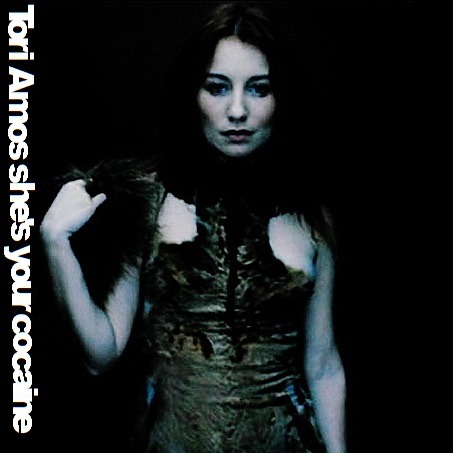
Fury and delicacy. Anguish and calm. Confrontation and repose. Playfulness and intensity. Withering put-downs and the tenderest of declarations. The sacred and profane. The cosmic and the interior. The oblique and the direct. Yeah, choirgirl has “all that.” I’ve said before that what’s always captivated me most about Tori’s music is its contradictory qualities, the way it encompasses all aspects of human personality, the speed with which it moves through diverse moods. Amos can do this without any assistance from other musicians, of course; in fact, many would argue that it’s solo that she’s at her very best. But it seems to me that choirgirl’s “broader approach to instrumentation” – the bolder, louder sound that it sustains - enables Tori to shift through emotional registers with particular exhilaration and exultation. Based around the premise that the songs this time were “independent” – "girls who hang out together," singing-group members occupying the same "hotel" - choirgirl is a staggeringly diverse album stylistically. Yet it’s remarkably cohesive too: a Gesamtkunstwerk (atchoo) in which all the elements – vocals, lyrics, music, art-work – feel integrated and aligned. A major part of Amos’s genius as an artist, in my opinion, is the attention she gives to the arc of an album. choirgirl isn’t my favourite of her records structurally (that would be one of the longer works Boys for Pele, Scarlet’s Walk, American Doll Posse, Night of Hunters, or maybe even Strange Little Girls). But still I love its shape, its flow, the way in which the songs bump up against each other. The orgasmic clamour of “Raspberry Swirl” giving way to the pristine piano and sweeping strings of “Jackie’s Strength.” The soothing, jazzy groove of “Liquid Diamonds” arriving to pick up the pieces after “iieee”’s wail of despair. The cock-rock crunch of “She’s Your Cocaine” segueing into the swooning croon of “Northern Lad” segueing into the squelchy synthesizer turbulence of “Hotel.” These transitions tell. They present human experience in its infinite variety. They show us that we have stronger sides that can help more vulnerable sides out. More than that, they make us question what strength is, what vulnerability is. (Sorrow goes to raves, after all.) In interviews at the time Tori talked about "allowing herself to be taken over by the characters" in these tracks and said that she would "change clothes to be able to sing the songs on this album." American Doll Posse, clearly, is a twinkle in from the choirgirl hotel’s eye.


The Map

Get high on Lowe Road. Find yourself in Mr. Grumpy's maze. Win big at the Nautical Nuns Casino. Climb the Wannabe Rockies and jump off "Oh Jeez" Tower. Make a purchase at the Cocaine Lip Gloss sale stand. Take a slow saunter through Beene’s Field and a brisk walk down Toodles Pass. Stand by the Standing Stone. Lose something yourself at the ‘Has anyone seen anything that belongs to Marcel’ Brothel. Wander around endlessly shoeless with the Ballerinas.
     See, this is the kind of stuff a digital download won’t give you.


Dispatches and Polaroids

choirgirl boasts a subtitle - “Dispatches and Polaroids 1963 – 1998” - the significant dates indicating that the album is "reportage," presenting "snapshots" of Amos's life up to this point. As the media at the time didn’t fail to point out, two personal experiences inform the record: Tori's marriage and miscarriage, the latter event dubbed “Tori’s Latest Trauma” by some typically sensitive sections of the music press. Yet the suggestion that choirgirl should be read as a raw slice of autobiography seems exceedingly misleading now.  Of Sylvia Plath’s poetry Judith Kroll, in Chapters in a Mythology, notes: “personal experience provides the starting-point. But only after it has been worked over and metamorphosed into myth does the material become poetically acceptable.” That’s how Tori’s operated too, increasingly. One of the things I love about her songwriting is its flexibility of perspective, its ability to place the listener inside and outside of an experience, to shift from direct address to interior monologue. Commenting more recently about “Spark,” for example, she described the track not in relation to her miscarriage but rather as being about “finding those wires that you have to connect in yourself so you can face things in your life.” It’s an interpretation that allows the song to resonate far beyond the specific experience that inspired it. Matt Mazur, in a terrific PopMatters piece, credits Tori with creating “a language all her own, a musical language, a vocal language, and a written mythology deep and nuanced and brimming with feeling.” Right on.


Moments

The vicious grungy guitar that ushers in the second verse of “iieee”. The marimba bridge break in “Cruel.” The "I'm still alive" refrain in "Hotel" and the fairground-melody coda that follows it. The buzzy chattering in “Raspberry Swirl.” Tori’s exalted “Hey!” as the band crash in around her piano attack on “Black-Dove (January).”  The way she intones “Surrender – then start you engines” at the beginning of “Liquid Diamonds.” The spoken command at the end of “She’s Your Cocaine.” The verse-to-chorus transitions in “Spark.” On some records, though, every moment's a favourite moment, really. choirgirl is one such record for me.


Subversions (A Lip Gloss Boost)   

Though less obviously "political" than Strange Little Girls or Scarlet's Walk, say, choirgirl remains a  deeply subversive  album especially – no surprises here - in relation to gender. Ever alert to the culture’s questionable depictions of women, Tori wastes no time in settling some scores, offering a gleeful Sapphic retort to Prodigy’s “Smack My Bitch Up” with “Raspberry Swirl” (and switching the oral sex metaphor of “Professional Widow” from fellatio to cunnilingus in the process), and telling the guy in “She’s Your Cocaine” to “bring your sister if you can’t handle it.” The most provocative moment is “Playboy Mommy,” though, and its good-time-gal’s not-quite-apology to the daughter she’s neglected and who’s ended up dead. The mix of pride, remorse, self-justification,  and – yes – love in the narrator’s address rewrites a whole heap of prejudices about neglectful mothers, leading to a redemptive yet wrenching climax that blindsides the listener. It's a rather more straightfoward narrative than is usual in Tori's song-writing where you seldom get  the story A-to-Z. Generally, in ToriLand, you contribute to the song's making, filling in the gaps with your own ideas and images, your own experience.


Spirits

David Bowie. Carole King. Beethoven. Led Zeppelin. Carly Simon. Elton John. The Stooges. Neil Young. Nina Simone. Prodigy. Portishead. Debussy. The Doors. Janis Joplin. Rickie Lee Jones. A title that nods to Grateful Dead. You wouldn’t mistake from the choirgirl hotel for an album by anyone other than Amos. Yet these are some of the artists whose spirits I hear on this record, passing through.


Reviews

I have a couple of favourite reviews of from the choirgirl hotel. The first is Glenn McDonald’s great piece – one of many that Glenn wrote for his wonderful column The War Against Silence – which you can savour here. Glenn can get over-effusive at times, and be stubbornly dismissive at others, but, still, he's the finest writer on music that I know. The other review I cherish is James Hunter’s in Rolling Stone. It’s not an exceedingly lengthy piece, but in it Hunter seems to me to encapsulate certain key aspects of Tori’s work with particular insight and elegance. I love the way he describes her as “the girl whose background in European piano literature encouraged her to hear the unforgiving structures of the Baroque era, the vast spiritual and melodic vistas of the Romantic period and the knotty imperatives of twentieth century experimentalism as one ongoing compositional story - not a bad basis, thank you, for art rock with guts.” I love his classification of “Jackie’s Strength” as “a perfect memory of pop energy past.” I love his summary of the component parts of “iieee”: “suspended piano landscapes, straightforward rock 4/4 beats, gnarled industrial wastelands and a symphonic soundtrack from a film that has opened only in Amos’s head.” I love his summation of the record: “What the album is so unfailingly good at … is capturing the exact geography of one woman’s imagination.” And, mostly, I love his description of Amos’s singing: “like the coloratura president of Robert Plant’s fanclub.”


Words and sounds

Few singers phrase more meaningfully than Amos, in my book, but her vocals on from the choirgirl hotel do seem to reach an apex of sumptuous expressiveness. The brittle, metallic enunciation on “Cruel,” the scatting and soaring on “Liquid Diamonds,” the sneers and shrieks in “She’s Your Cocaine,” the percussive gasps in “Raspberry Swirl,” the sultry sadness of “Northern Lad,” the odd curveballs thrown on “Pandora’s Aquarium,” the Southern twists throughout. It’s some of the sexiest, most sensual singing she’s done, but sexiness inflected, variously, with wit, with anger, with jubilance, with desolation. “Her singing style becomes an interpreter of sorts,” writes Matt Mazur. “Her vocal interpretation of [the] lyrics, the way she endows each syllable with palpable emotion, is precisely what makes her a master storyteller. Simply put, how the words are delivered has become one of the most important aspects of Tori’s music.”

He's absolutely right, but choirgirl’s lyrics also read beautifully. You could teach a course on Amos and assonance. “A Bouvier till her wedding day/Shots rang out the police came/Mama laid me on the front lawn/And prayed for Jackie’s strength...My bridesmaid’s getting laid/I pray for Jackie’s strength.”


“Jackie’s Strength”

All of Amos’s albums are about empowering the listener. Informed by loss it might be, but choirgirl is an affirmative record, passionate for experience, for understanding, for the life-force itself. It’s real subject, I'd say,  is the bewilderment, the guilt and the joy of survival - survival after a devastating experience, survival after loss. It's a theme that's scattered all over the album but, for me, it reaches its most complex expression on “Jackie’s Strength.” This song has fierce competition but I think it's the finest, deepest ballad that Tori’s written, in its seamless interweaving of autobiography and US history, the iconic and the intimate. If Boys for Pele had found Tori running to a dazzling array of prophets, demons and icons of history and popular culture (everyone from Lucifer, Moses and Mohammad to Anne Boylen, Angie Dickinson, Big Bird and Mr. Sulu) in an effort to make sense of her experiences here she focuses her attention on one historical figure: Jackie Kennedy. Opening on the day of the JFK assassination, sketching a vivid portrait of a 60s/70s suburban childhood ("Stickers licked on lunchboxes, worshipping David Cassidy"), and ending with Tori's narrator getting suggestively "lost" on her wedding day, the song coheres into an affirmation of the strength required to survive a variety of experiences, from adolesence to marriage to the aftermath of assassination.  But even as the song celebrates Jackie as an icon of endurance in adversity, it scrupulously avoids nostalgia or sentimentality (the reference to those “lie[s] … in Camelot”), while the sheer irreverence of some of the lyrics ensure that the listener finds themselves laughing aloud as often as wiping tears. That’s the thing: for all the pain in which it deals choirgirl exhibits, in spades, the most overlooked quality of Tori’s music: a great big sense of humour. I still crack up every time at the “my bridesmaid’s getting laid” line and at Tori’s cutting observation that “you’re only popular with anorexia.” Sometimes the album’s humour skirts obscenity. It's very druggy, too, throughout. Pot, Ecstasy, Cocaine, "coming down." I think it’s fair to speculate that Amos was continuing to experiment with substances other than her new keyboards while she composed this record.


Supplements

While I’ve a fondness for Cindy Palmano’s small-scale productions for the Little Earthquakes singles, choirgirl boasts Tori’s best, most cinematic set of videos, with “Spark’s” pursuit through the woods the finest of the bunch. The album’s singles also feature an outstanding set of B-Sides that include some of Tori's strongest compositions. "Purple People (Christmas in Space)" - possibly my all-time favourite Tori B-Side - is a gorgeously elegant, late-night barroom croon on which brushed drums, wheezy keyboards and wintery piano accompany prime Amosian musings on identity, envy, self-worth and self-sabotage. “Bachelorette” (and who didn’t expect a Bjork cover when they saw this one listed?) is its own bewildering, beguiling, lurching thing, its woozy stop-start rhythm, clattering percussion and scatty, mumbled vocal, adding up  to an indelible portrait of a marvellously self-sufficient heroine. Then there's the celestial "Cooling" and the spiritual-from space, "Beulah Land." I can’t envisage any of those tracks on the album exactly (and "Beulah Land," for one, seems more Pele-approriate)  but they’re all a part of its wider story. Let's picture these songs in the Hotel’s annexe. Self-catering.


Coda (Checking in)


I wish from the choirgirl hotel had been a more influential album than it has been - in the sense that it would be great to see more mainstream artists today doing work at this level, and making music that’s so deep and complex on the one hand yet so open, so accessible and so emotional on the other. Here’s the good news, though: Tori’s still out there doing it. Always prolific and protean she’s moved in many, many directions since from the choirgirl hotel: subverting iconic men’s songs, making the best album about America that anyone’s ever likely to make, performing – thrillingly - in character, undertaking a superb classical collaboration, and touring, touring, touring. (The closest she’s come to choirgirl, stylistically, is 2009’s Abnormally Attracted to Sin, but that record was too diffuse, and had too much mediocre material, to have a comparable impact.) Next up, it's to the National Theatre for the long-awaited The Light Princess, a show destined, so sneaky advance word has it, to be "brilliant - and nuts." Meantime, though, the choirgirl hotel is still open to all-comers. Tori hasn’t lost contact with these tracks (witness the bitchin' reinvention of “Cruel” on the Night of Hunters tour), and neither should we. The songs on this album haven’t aged, in fact; they’re still leaping off the speakers, fresh, seductive, a bit dangerous, still concealing their mysteries and disclosing them. Which is why, fifteen years after that diary entry, I’m still fascinated by from the choirgirl hotel. And why I'll likely find myself putting the record on again today. Turning it up. And checking in.


Film Review: Blood (Murphy, 2012)

London : Blood © Paul Bettany


Nick Murphy's woeful Blood is getting a UK cinema release. You can read my review of it at last year's London Film Festival here.