Thursday, 12 September 2019

Theatre Review: For Services Rendered (Jermyn Street Theatre)


(Photo: Robert Workman)


A tea service set out on the table of a garden terrace decked with climbing roses... With a fine set by Louie Whitemore, Tom Littler's production of W. Somerset Maugham's For Services Rendered exudes Autumnal Englishness even before a word is spoken. When Diane Fletcher, elegantly grey-haired and clearly carrying an emotional burden or two, enters the scene and takes a seat, the picture is complete.

As in many Maugham plays, though, biting insights and tough ideas belie the cozy, decorous surface of the drama. Written in 1932, when Maugham was at the peak of his power and popularity as a writer, For Services Rendered follows such works as The Breadwinner (which firmly defended a parent's right to leave their family) and The Sacred Flame (which endorsed euthanasia - a theme that returns here) by offering a perspective on WWI that makes clear the damage that continued to be done to former soldiers (and their loved ones) after their return home.

Maugham accomplishes this through a situation that owes a self-conscious debt to Chekhov. Three sisters, Eva, Lois and Ethel, and a brother, Sydney, are the children of Leonard and Charlotte Ardsley. Sydney has returned from the war blind and cynical, and Ewa, who lost her fiance in the conflict, has - increasingly begrudgingly - become his carer. Ethel is unhappily married to a tenant-farmer and the younger Lois has attracted the attention of a an older, married family friend.

Littler's production plays up the Chekhovian echoes, creating a buzz of overlapping funny/sad activity that gives the play's portrait of generational divides and the wider societal damage wrought by war believable human contours. The characters are drawn with Maugham's customary intelligence, and, if this production isn't ideally cast across the board, several of the actors come through with memorable performances.

(Photo: Robert Workman) 

Sally Cheng, Rachel Pickup, Leah Whitaker and Richard Keightley compel as the contrasting siblings and Jotham Annan underplays effectively as a cash-strapped naval hero struggling to make it as a businessman. Fresh from the success of the Orange Tree's Rattigan revival While the Sun Shines, Michael Lumsden brings ardency and pathos to undercut the absurdity of a character who is not adverse to offering a girl money to elope with him, while Viss Elliott Safavi moves beyond comic caricature to convey the desperation of a wife who realises she's about to be ditched.

And the velvet-voiced Fletcher is exceptional as the matriarch, bringing a lifetime of technique to create a performance of great naturalness, one that's restrained and economical but full of feeling. The astute Charlotte, whose reaction to a terminal diagnosis is not the expected one, suggests a relative of the equally surprising Mrs. Tabret in The Sacred Flame: an older female character whose conventional demeanour masks unorthodox views. The same goes for the play itself. Littler's production occasionally looks a bit cluttered on the small Jermyn Street stage, but it succeeds in capturing both the sensitivity and sharp subversiveness that defines Maugham's writing at its best.

For Services Rendered runs at the Jermyn Street Theatre until 5 October.


Wednesday, 4 September 2019

Interpersonal Situations: on Retroperspektywy Theatre Festival, Łódź, 2019


The ill-informed might scoff at the notion, but Łódź's boast of hosting "more festivals than Rio" often feels entirely accurate. No sooner has one arts event finished in the so-called "Manchester of Poland" - Transatlantyk's film, food and music extravaganza in July, say - than another one is starting up. Occurring just prior to the Four Cultures event, last week saw the latest edition of the experimental international theatre festival Retroperspektywy. This festival brings together CHOREA Theatre, a company based at the city's Art_Inkubator venue, with a range of practitioners and companies from across the world for eight days of shows. 

Presenting work from Greece, Ukraine, Sweden, Russia and the US as well as Poland this year, the programme - and indeed the whole atmosphere of the festival - is inclusive. Plays, dance performances, concerts, kids shows, and Q&As make full use of the flexible spaces of Art_Inkubator - and also spill out a little into the city beyond. In addition, the festival had further occasion to mark this as a special year - the celebration of CHOREA's 15th birthday. 

ja, bóg  (Photo: Rami Shaya)


As diverse as the programme is, most of the shows presented, bear, to some extent, the influence of Jerzy Grotowski's Poor Theatre, mobilising what the director/theorist called "the principle of reduction, to find the essence of theatre: actors and audience, fundamentally an interpersonal situation". That influence was emphasised not only in the form but also in the subject matter of the opening show "ja bóg", an investigation into the metaphysical questions underpinning Grotowski's texts, created by and starring CHOREA director Tomasz Rodowicz and Joanna Chimelecka.

After the Birds (Po Ptakach) (Photo: Rami Shaya)

I wasn't able to attend the opening performances, which sadly meant missing the acclaimed likes of Tragedia Jana  (John's Tragedy) and Akty (Acts). The first show I did see proved a vibrant and compelling introduction to the festival, though. After the Birds (Po Ptakach) is a collaboration between CHOREA and the Welsh dance company Earthfall, which was first presented in 2005, and retains the same company of perfomers today. Following Grotowski's tendency to base work on classical narratives - the better to tap into mythic resonances and evoke a collective, internal response in viewers - the show, co-directed by Rodowicz, Jessica Cohen and Jim Ennis, takes off from The Birds, using Aristophanes's comedy as the inspiration for a distinctive piece of physical theatre that dynamically combines the ancient and the contemporary.  

Opening in playful, clowning mode - three men and a ladder greet the audience and soon have us participating in a Mexican wave - the show ultimately runs the emotional and stylistic gamut. The performers flock together, form duos, or break apart via choreography that is breathtaking in its range and expressiveness. Live music and folk song, as well as bespoke compositions by Maciej Rychły - including a deeply moving growled Tom Waits-esque number - add to the intensity of the event. The show inspired a rapturous standing ovation, indicating that this is a piece that audiences would like to see return very soon. 

Othello/ Ukraine / Facebook (Photo: Rami Shaya)

Shifts between the absurdist and the serious also characterised Othello / Ukraine / Facebook, a piece for seven actors from Kyiv Academic Theatre "Golden Gate" directed by Stas Żyrkov, which uses elements of Shakespeare's text and the context of the current "fake news" climate to investigate Ukraine's present, past and possible future. The show is physical - with the cast variously donning fat suits or stripped to their pants - but also verbose, and, presented without English subtitles (something that the festival might consider adding in future years), some contextual elements inevitably remained obscure.

Other moments communicated powerfully, though, not least a homoerotic interlude in which shouted slurs give way to embraces, and a haunting sequence about the Holodomor - the famine that Stalin inflicted on Ukraine in the early 1930s which is the subject of Agnieszka Holland's fine new film Gareth Jones. The show renders as expressionist nightmare what Holland's film presents in an observant, straightforward, classical-filmmaking style. The absence of any female presence feels like a lack,  but Othello / Ukraine / Facebook remains a powerful and subversive piece at its best. 


(The End, The Beginning - SOMA)
(Photo: Tomek Ogrodowczyk)
Male and female energies combined to exciting effect in Koniec, początek - SOMA (The End, the Beginning - SOMA) which introduces its five brilliant performers moving insect-like in separate relays across the floor, before Marta Bury's choreography brings them together explosively for a series of by turns playful and dramatic encounters. Video projections and the dynamism of bodies in motion also distinguished the outdoor performance of Właśnie tu. Właśnie teraz (Right Here. Right Now), created by CHOREA and Laboratorium Kreatywnego Działania. Presented in the social space between the buildings of the former factory, this piece addressed young people's hopes, struggles and dreams through movement and words, also inviting audience members to take to the mic. 

Pygmalion (Photo: Tomek Ogrodowczyk)

Meanwhile, Wojtek Ziemilski's Pygmalion soon subverted any notion that the performance would have anything to do with a certain George Bernard Shaw text. Instead, the piece found the personable Rozalia Mierzicka genially asking for the assistance of a volunteer from the audience to join her - in order, as it turned out, to help her move and manipulate a large piece of cardboard around the stage. Said cardboard is gradually revealed to be a container into which performer and volunteer disappear, moving it from the inside.

Stated themes of socialisation, education and training - of performer or child - gradually emerge and the show retains interest as a kind of minimalist spectacle, especially when its cardboard "creature" is making its way across the space, suggestive at times of fortress and tank, prison or playpen. 


Miasto (Photo: Rami Shaya)

With exciting, challenging concerts by the Kukła Żywa Collective and Magos Makriyannis ("Pythagoras Meets Euclid") closing the event, another surprise highlight of the last day of performances was the morning show Miasto (The City), a delightful piece devised and developed by CHOREA's kids theatre group. The show presents a day in the life of the city, taking us through various spaces - park, airport, museum, cinema - which are all creatively embodied by the young performers. As the group take their seats at the movies (hand-drawn posters for Frozen 2 and Moana to the fore!), the film they watch turns out - wonderfully - to be a document of the research that inspired the show itself.

The scene served as a synecdoche of sorts for the festival as a whole, uniting not only actors and audience but also the theatre with the world outside which it draws on, evokes and transforms. In our divisive, harshly judgemental times, and with Brexit looming, the vibrant "interpersonal situations" experienced at Retroperspektywy offered a timely reminder of the power of performance to unite and connect us across borders of language, culture and nation. 


Retroperspektywy Festival 2019 ran at Art_Inkubator between 23 August - 1 September. 


Related reading:

Reviews of Polish theatre:

The Nether (Jaracz Theatre), 
Fever (Pomysłowe Mebelki z Gąbki), 
Angels in America, 
Slippery Words (Teatr Studyjny)
      

Tuesday, 13 August 2019

Film Review: Nic Nie Ginie (Nothing is Lost) (dir. Kalina Alabrudzińska, 2019)


It's only 5 years since Łódź Film School inaugurated the "Diploma Film," a final project for the year's contingent of graduating students. But in that short time the initiative has firmly established itself as an important and anticipated tradition for the School.

Last year, with Monument, Jagoda Szelc produced the best of the Diploma films yet: a hypnotic and unsettling mood piece that finally revealed its hand as a shrewd meta-reflection on the experience of studying at the school itself. The confidence of Szelc's vision was stunning and was probably made possible by the fact that she had already completed and released a first feature, the distinctive Tower. A Bright Day (2017). 

An assistant director on Tower was Kalina Alabrudzińska, who now steps into the director's chair herself with this year's Diploma film Nothing is Lost (Nic Nie Ginie). A much more accessible offering than Monument, Alabrudzińska's film, which she describes as "a sad comedy," doesn't attempt to replicate its predecessor's oddity or intensity, instead treating serious subject matter in a much lighter way. Screened at Koszalin's 38th Youth & Film festival, where it won the prize for Best Directing, the result is an attractive ensemble drama that will likely have far wider general audience appeal than Monument's trippier vision.


That said, Nothing is Lost actually starts out as "meta" as Monument ended up - with a cheeky reflection on "group therapy" scenes in cinema. Such a session is getting underway as the film commences, and finds the characters wondering: "Are we gonna sit in a circle like this? There are scenes like that in movies. Usually the most boring scenes..." This self-reflexive opening establishes the humourous tone of the film, which never becomes a mere mope-fest. Doubtless mindful to incorporate as many of the graduating actors as possible, Alabrudzińska uses the context of the therapy meetings to bring together a group of diverse characters - and then to branch out into snapshots of their lives and relationships outside the sessions.

As  the "lost" or searching protagonists start to open up and "find" something in the therapy, the set-up sometimes gives off Breakfast Club vibes. But, working from her own script, Alabrudzińska prevents the film from degenerating into a series of predictable emotional showdowns. Bonding scenes and so-called "breakthrough moments" tend to be underplayed, and not everything resolves in the way you anticipate (or at all). 

As such, the film avoids obviousness, allowing its characters to retain a bit of mystery. The storytelling is helped by the contribution of cinematographer Nils Croné, who gives the images a clear, warm, burnished look that's very inviting, and by the crisp editing of Piasek & Wójcik (following their work on Ewa Podgorska's brilliant Diagnosis), which moves us fluidly between the therapy sessions and the characters' individual lives.


Still, while the technical side is more than proficient, Nothing is Lost's main asset is its performers, and those who've been lucky enough to see these actors' often amazing stage work over the past year (in new extravaganzas like Fever, devised pieces such as Slippery Words, or contemporary classics like Angels in America) will be particularly delighted to find them taking to the camera with equal assurance.

Alabrudzińska's writing allows the actors to develop characters who are relatable but who go beyond conventional "types." Michał Surosz is lovely as a guy so dedicated to saving a particular endangered species of turtle that all his other relationships are neglected. Wiktoria Filus charms as a single mum trying out Tinder, and Jan Hrynkiewicz delivers delectably mean put-downs with aplomb as the group's most caustic participant. Zuzanna Puławska is funny and touching as a mother-dominated people-pleaser, and charismatic Piotr Pacek shines as an actor with interpersonal issues - so much so that he feels rejected by nature itself. (The film makes nature a motif, in fact: plants, trees and the aforementioned turtles all feature in the protogonists' attempts to connect.)


And in case it seems that the focus is entirely on personal concerns, Nothing is Lost doesn't shy away from the wider context of darker elements of contemporary Polish political reality, either. The most ambitious sequence here is a night-time nationalist gathering attended by Hrynkiewicz's character and featuring Elżbieta Zajko as a firebrand delivering hate speech, with Kamil Rodek and Mateusz Grodecki on hand as colleagues, the latter playing guitar and singing that "The day of mighty Poland is coming."


Some of the smaller roles need further development; one senses a few of the actors' eagerness to go further into the characters than their fleeting appearances allow. But Robert Ratuszny and Faustyna Kazimierska - memorably opening a beer bottle with her teeth! - maximise their brief screen time, while, in one of the best sequences, Karol Franek Nowiński flashes his great grin - surely one of the best smiles the Polish screen has seen - as a pharmacist who pleases Pacek's character by revealing himself to be a fan - before their exchange is given a great comic twist. And Ksenia Tchórzko gets a lovely appearance as a dog-sitting neighbour, when the film belatedly digresses to focus on the therapist, Remek (excellent Dobromir Dymecki), himself.

Such moments cut to the heart of the concern with human interaction which is the main preoccupation of Nothing is Lost. In the introduction to Powidoki / Afterimages, a poetic book of visual essays about Łódź Film School, (di)rector Mariusz Grzegorzek describes the School as "a special place" where "there flows a source of energy that connects people." In its wise and wry portrait of the challenges and possibilities of making contact, Alabrudzińska's likeable film taps into that source.


Nic Nie Ginie / Nothing is Lost  will screen in the Panorama section of the Polish Film Festival in Gdynia (16 - 21 September). 


NIC NIE GINIE /////// teaser ////// scenariusz i reżyseria Kalina Alabrudzińska from LODZ FILM SCHOOL on Vimeo.

Friday, 9 August 2019

Theatre Review: Directors' Festival 2019 (Orange Tree)

The Mikvah Project (Photo: Robert Day)


This is the third year that the Orange Tree has run its Directors' Festival, which presents the work of graduates from St. Mary's University's MA Theatre Directing course over a week of performances. As Paul Miller has previously noted, "director training is part of the OT's DNA," and the initiative has its roots in the long-running Directors' Showcase seasons of Sam Walters' tenure, when the theatre's trainees staged such seldom-seen plays as Caryl Churchill's The After-Dinner Joke and Amiri Baraka's Dutchman, which featured future Hamlet Paapa Essiedu in a galvanising turn. 

This year, the four plays presented are, once again, all contemporary works, ones that, via a series of excellent designs by the enterprising team of Cory Shipp, Chris McDonnell (lighting) and Lex Kosanke (sound), transport the audience from the Portuguese capital to the mindscapes of a love-seeking man and woman, from mountain tops to a Mikvah bath. 

The latter is the location for Josh Azouz's The Mikvah Project, which, with a surprising amount of humour, unfolds a love story between two very different Jewish men who meet every Friday to take part in the religious ritual of water submersion. Avi is a married thirtysomething trying for a child with his wife, while Eitan is an Arsenal-loving 17-year-old. As the men talk and bond, mutual attraction surfaces, which Eitan is keen to act on. 

As a portrait of gay desire struggling with culture, The Mikvah Project suggests a Jewish Brokeback Mountain or, more aptly, a companion to the excellent 2009 Israeli film Eyes Wide Open. Shipp's set opens a pool in the OT floor which the actors slip into and out of. At such moments, Georgia Green's audience-inclusive production creates a palpable erotic tension, while also indulging some broad comedy, especially in a manic and very funny Alicante-set interlude. Grace notes are found in the well-judged performances, with Dylan Mason capturing Eitan's ardency and Robert Neumark Jones touchingly conveying Avi's conflicts. 

Eight Gigabytes of Hardcore Pornography (Photo: Robert Day) 

A more caustic take on modern relationships is offered in Declan Greene's Eight Gigabytes of Hardcore Pornography, which presents a hook-up between a nurse and an IT worker - each with their own problems. (He's a miserably married porn addict, and she a debt-ridden shopaholic.) It's more "meet desperate" than "meet cute," and the fantastic opening scene captures the relentlessness and absurdity of needy online interactions with wince-inducing perceptiveness. 

The bluntness of the title carries over into much of the dialogue, which Cate Hamer and Matthew Douglas deliver with aplomb, getting a great rhythm going. Nothing revelatory is said about the way in which technology feeds on and frustrates the human need for intimacy. But, with crackling bursts of static and illumination, Gianluca Lello's sharp and intelligent production makes wonderfully dynamic a play which, like The Mikvah Project, tends to (over-)rely on to-audience narration rather than the creation of dramatic scenes. 

Pilgrims (Photo: Robert Day)

The other two plays in the festival are engaging three-handers. Elinor Cook's Pilgrims offers a feminist take on (male) wanderlust and folk song, with Nicholas Armfield and Luke MacGregor as two dedicated climbers and Adeyinka Akinrinade as the PhD student who, in conventional parlance, "comes between them." Armfield and MacGregor convey an affectionate, but also tense and competitive, bond and Akinrinade moves compellingly from sparkiness to disappointment as the girl who gives up her own dream for theirs. 

Mythological and archetypal resonances are incorporated with a slightly heavy hand, but Ellie Goodall's production is fluid and sensitive, negotiating temporal and location shifts with elegant economy (plus some lovely a capella folk singing by the cast), and giving the production a mystical undertone. Signposted from the outset, the outcome seems predictable, but the play twists in an unexpected direction in the subversive and exceptionally well-played final scene. 

Sadness and Joy in the Life of Giraffes (Photo: Robert Day)  

The most obviously dazzling and surprising of the four productions is Wiebke Green's take on Tiago Rodrigues' Sadness and Joy in the Life of Giraffes. The premise of this play - the imaginative odyssey of a 9-year-old across Lisbon, accompanied by her teddy bear (named Judy Garland) - sounds like the height of preciousness. But, belying its overt playful qualities, Rodrigues' writing (presented here in a fine poetic/profane translation by Mark O'Thomas) turns out to have plenty of bite, and succeeds in confounding the viewer at every turn. "Judy Garland" (a hilarious, bear-suited Nathan Welsh), for one, has suicidal tendencies, a Ted-ish vocabulary and attitude to spare, while the play itself has decidedly complex things to say about loss and the relationship of language to experience. 

Green keeps the proceedings fleet, funny and physical throughout, with the great Gyuri Sarossy multi-tasking superbly as "The Man Who Is My Father" and all the other blokes encountered on the journey. (Including Chekhov!) But ultimately the evening belongs to Eve Ponsonby who gives a sublime and exhilarating performance as the smarty pants, dictionary-devouring heroine who has more to learn about life and language than she realises. A brilliant and barmy trip, Green's hugely enjoyable production makes the viewer wish for more Portuguese plays - and certainly more plays by Rodrigues - on the UK stage. 

The Directors' Festival runs until 11 August. Further information and booking details here. 


Thursday, 1 August 2019

Shooting the Moon: on the 9th Transatlantyk Festival, Łódź, 12-19 July 2019


Ja Teraz Kłamię 

"I wish you all a strange trip," said director Paweł Borowski as he introduced his new film Ja Teraz Kłamię (I'm Lying Now) to a packed house at the 9th Transatlantyk Festival, Łódź. "Strange trips" were not in short supply at this year's edition of Jan A. P. Kaczmarek's "glocal" 7 day film and music event, which, following last year's independence-themed programme, this time took as its topic "The Moon Landing and Other Interrupted Dreams" - as a way of celebrating not only the 50th anniversary of the Apollo 11 mission but also the transportive, dream-inspiring potential of the cinematic and musical arts.


Ja Teraz Kłamię

Borowski's wish was realised: Ja Teraz Kłamię, the director's first feature since his acclaimed debut Zero ten years ago, is a dazzlingly designed Rubik's cube of a movie that, in its idiosyncratic way and with a Rashomon-esque narrative structure, addresses our "post-truth" culture via the interwoven experiences of three protagonists who participate in a "reality" TV show. A pleasingly convoluted plot (which only conks out a bit at the very end) and some breathtaking visuals - don't be surprised to hear yourself exclaim "Wow!" on several occasions - are complemented by the efforts of a fabulous (and fabulously costumed) cast, with talented young Łódź theatre heroine Paulina Walendziak more than holding her own against such luminaries as an intense Maja Ostaszewska and the otherworldly Agata Buzek, garbed in black as the show's enigmatic host. A unique offering in contemporary Polish cinema, Borowski's film seems destined for major cult status.

Arturo Ripstein 

Elsewhere, the Festival's wide-ranging programme encompassed philosophical debates and such unique events as the Instant Composition Contest and the always-popular Cinema in Bed screenings, in which great recent films including Tully, Fugue, Happy as Lazzaro, The Heiresses and Summer 1993 - a highlight of Transatlantyk 2017 - were presented. The Culinary Cinema section found four new foodie documentaries and Stanley Tucci and Campbell Scott's evergreen Big Night (1996) inspiring delicious dinners and stimulating conversations at EC1, where Jull Dziamski, the artist responsible for this year's Festival poster, also exhibited a selection of his exciting work.

A rare retrospective of the films of Aleksei German was greatly appreciated, and, as usual, attendees also had the opportunity to engage with filmmakers in person thanks to post-screening Q&As and the series of special Master classes, which this year featured Mexican maestro Arturo Ripstein (recipient of this year's FIPRESCI Platinum Award 94), Wojciech Marczewski (whose Star on the Łódź Walk of Fame was unveiled during the Festival), and Martha Coolidge, whose new film I'll Find You received its Polish premiere at the Opening Gala. A soapy, well-meaning and determinedly old-fashioned WWII love story that's somewhat reminiscent of Amma Asante's recent Where Hands Touch (2018), I'll Find You was few people's idea of a galvanising festival opener but justified its inclusion due to its Łódź setting and Kaczmarek's status as the film's composer.


Synonyms

The New Cinema section, however, offered more innovative visions. The exciting new Israeli cinema was well represented by Nadav Lapid's Golden Bear-awarded Synonyms, a ludic, cerebral and sharp-edged investigation into issues of nationhood, language and identity that features charismatic Tom Mercier (variously naked or sporting a highly covetable mustard-coloured coat) as Yoav, a twentysomething who, having completed his military service, rejects his homeland for France but finds assimilation into the City of Light a more problematic prospect than might be imagined. 

God of the Piano

Meanwhile, the influence of Lapid's wonderful The Kindergarten Teacher (2014) could be felt in Itay Tal's confident debut film God of the Piano, a brisk but haunting drama that grips like a thriller as it focuses on a complicated heroine (great Naama Preis) striving to make her son a piano prodigy. Lean and stylish, God of the Piano is notable for its intelligent perspective on the place of talent in family dynamics, and, following the success of Sara Colangelo's superb US take on The Kindergarten Teacher (2018), it wouldn't be much of a stretch to imagine an American remake of Tal's film in the future, too.

Several other memorable dramas also placed complex female protagonists at their centre. Teona Strugar Mitevska's God Exists, Her Name is Petrunya focuses on the patriarchal ruckus that results when the title character (Zorica Nusheva) intrudes on male territory by being the one to pull a cross out of a river during a religious ceremony in a Macedonian village. Marie Kreutzer's The Ground Beneath My Feet plays out as a sincere, emotionally insightful counter to Maren Ade's ghastly Toni Erdmann (2016) as it critiques corporate culture through a focus on an ambitious business consultant (Valerie Pachner) grappling with her carefully compartmentalised professional and personal commitments.

Nina Wu

Premiered in Cannes' Un Certain Regard section, Midi Z's #MeToo-influenced Nina Wu oscillates compellingly between social realism and hallucinatory Lynchian weirdness in its exploration of the exploitation of an actress (the director's usual collaborator Wu Ke-xi) in the Taiwanese film industry. As in The Ground Beneath my Feet the (lesbian) sexuality of the protagonist is presented with refreshing matter-of-factness - though a lurid, overly explicit final flashback sequence unfortunately leaves the film itself open to the charge of exploitation. 

Sybil

Fresh from Cannes' Main Competition, Justine Triet's campier, all-over-the-shop Sybil features the elegant Virginie Efira as the title character, a psychiatrist cannibalising the life of a patient (Adele Exarchopoulos, perpetually tear-stained) for a novel. With Erdmann's Sandra Hüller rehashing her frazzled schtick as an under-pressure filmmaker and Niels Schneider steamily reuniting with Efira after last year's An Impossible Love, the film takes off in all manner of directions and never quite comes together, but offers a memorably off-kilter ride, held together by Efira's game, quicksilver turn. With female protagonists and performances such as these standing out throughout the festival, it was also notable that the audience-voted Distribution Award went to a female-directed film for the third year in a row: this time, the winner was Nora Fingscheidt's System Crasher, a distinctively kinetic take on the in-care experiences of a "problem" child.

Piercing

American cinema didn't have anything of substance to offer, though Nicolas Pesce's Piercing, screened in Cinema by Night, which features the appealing duo of Christopher Abbott and Mia Wasikowska in a highly stylised torture porn power game curio adapted from Ryū Murukami's  novel, is the quintessence of a guilty pleasure. International filmmakers, in contrast, were to be found grappling with intersections of personal and political histories in interesting ways. Flavia Castro's Unremember tracks a family's return from exile in France to their homeland of Brazil where teenager Joana (Jeanne Boudier), initially resistant to the move, finds herself drawn into new pleasures and memories of the past, the latter related to the fate of her father. Castro's film isn't particularly satisfying dramatically but its brooding, moody texture keeps the viewer close to the emotional experience of its young heroine.
Angelo


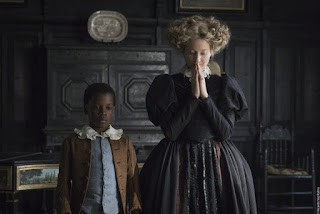
A belated (and cheekily titled) follow-up to his immaculately chilling debut Michael (2011) Markus Schleinzer's Angelo follows an African slave boy's progress through the 18th century Austrian court where he starts out as the favourite of a countess (Alba Rohrwacher) and ends up...well, that would be telling. With unstressed anachronistic touches piercing the period ambience, and the director's super-subtlety subverting some traditional tropes, the opening scenes promise much but the film falters due to an unsatisfying, decades-leaping structure and its frustrating failure to make its protagonist more than a cipher.

I Was Here

A welcome contrast to the celeb-struck tendencies of Asif Kapadia - whose shallow "trilogy" of Senna (2010), Amy (2015) and Diego Maradona (2019), as "tabloid" as the culture they ostensibly critique, screened as part of a retrospective - two fantastic new documentaries focusing on "ordinary" people were revelations for the festival audience. In I Was Here, directors Nathalie Biancheri and Ola Jankowska interview a range of people from around the UK about their lives, posing the question of why they would make a compelling documentary subject.

The question leads to some fascinating accounts of illness, creativity, work, and adoption. An elderly woman sings, dances and does the splits - and then shares a perceptive account of her previous life as a carer. A confident, beefy guy weeps as he recalls his separation from his sister as a child. Brief moments of re-enactment - from sleeping positions to a doctor's examination - make mimed daily activities  a strange ballet, but what captivates here are not the meta aspects so much as the articulated memories hopes, dreams, fears and fantasies of the protagonists, their faces lovingly attended to in Biancheri's and Jankowska's unflinching but tender frame.

Diagnosis poster

A unique city symphony, both intimate and monumental, in which the metropolis and human psyche become indivisible, Ewa Podgórska's Diagnosis takes a more overtly stylised approach to the documentary form, with a haunting sound design, slow zooms and some stunning overhead shots creating a hypnotic, multifaceted portrait of Łódź that might be described as an investigation into the city's subconscious. As the title indicates, Diagnosis combines elements of psychoanalysis with urban studies, as questions such as "If the city had parents, what would they be like?" and "If the city was a colour what would it be?" yield answers at once poetic and direct from the interviewees, generating insights that create a deeper, more impressionistic vision of the city than that made possible by a focus on demonstrable facts. 

Like I Was Here, Diagnosis unfolds stories of caring and compromise, loss, disappointment and resilience, and it was especially powerful to screen the film in the city that is its subject, with some of the protagonists present for Q&A discussions. By turns moving, funny and surprising, both of these empathetic documentaries deserve to be widely seen. Affirming a common humanity, they also prompt a subversive reassessment of what constitutes "ordinary" experience. In a year in which the festival celebrated the special achievement of the moon-landing, it was essential to have these films to remind us, so insightfully and intensely, of the pains, joys and complexities of our earthbound lives.


A full list of festival winners is available here.


Tuesday, 18 June 2019

"It's been the adventure of my life": Łódź Film School Actor Interviews (vi): Mateusz Grodecki

Mateusz Grodecki (Photo: Aleksandra Pawłowska)

Mateusz Grodecki plays multiple roles in the Diploma show Fever (Pomysłowe Mebelki z Gąbki), directed by Mariusz Grzegorzek, and the character of Louis Ironson in Angels in America, directed by Małgorzata Bogajewska. He also features in the Diploma film Nic Nie Ginie (Nothing is Lost), directed by Kalina Alabrudzińska.

Alex Ramon: Tell me a bit about your background.

Mateusz Grodecki:  Music came first for me. I was born in Przemyśl, a town close to the Ukranian border, and my favourite hobby, one of the things I loved most, was playing the guitar. I was in two bands playing rock and metal music. So my biggest dream when I was growing up was playing guitar on a huge stage to a big crowd. When I graduated high school I felt like the band was over, but I wanted to continue performing. I had performed in local theatre, and I found I was drawn to acting more and more. I didn't have professional lessons; I prepared alone, working with different texts. I auditioned for the Film School here in Łódź and got in.

AR: What are your feelings about the training, which I understand concentrates more on theatre than screen acting?

MG: Personally, I'm very happy with the training here. Theatre for me is the magical place where actors feel most at home and where the greatest actors are found. It's because of the connection with the audience and the fact that it's happening in the present moment. Film is great too, but in the end it's more the director's medium. Whereas in theatre the actor has more control over their performance and the telling of the story from beginning to end. At least, that's how I see it.

AR: So how was working on the two Diploma theatre shows you perform in, Fever and Angels in America?

MG: It was tiring and demanding, but great. Fever was the first of the Diploma shows and we were all very excited about it. Mariusz Grzegorzek, our director, is the wizard of theatre: a good man, and so creative. He encouraged our collaboration in the show, inviting us to bring in things we were interested in. For example, Ksenia [Tchórzko], Franek [Nowiński] and I created the tap dancing scene together.

Filip Warot, Karol Nowiński and Mateusz Grodecki in Fever
(Photo: Filip Szkopiński)

AR: It's such a lovely moment. Which other scenes do you most enjoy performing in the show?

MG: One of my favourites is when we all perform the Czesław Niemen song "Pieśń wojów" ("Warrior Song"). I hadn't heard the piece before and when Mariusz played it, I thought: "Oh my God!" It's a primal, Viking, warrior song. When I sing it with all my friends on the stage, I feel the emotions very, very strongly. I think about Poland - about the history of the country and what's happening now.

AR: How is it to perform the end sequence, "Four Miles From Warsaw", which is so daring in its staging?

MG: It's scary, to be honest! But exciting too. The text is an old ballad but it feels timeless. I see it as a warning from history.

Mateusz Grodecki and Piotr Pacek in Fever
  
(Photo: Filip Szkopiński)

AR: Piotr Pacek also mentioned the quiet scene that you play together as father and son.

MG: Oh yes, it's very special. We play it naturalistically. I try to focus on the real feelings of the character. When I'm waiting before we start the scene I take a big breath and cut out everything else for this moment. I feel very responsible for showing to the audience the feelings of this boy.

AR: How did working on Angels in America with Małgorzata Bogajewska compare?

MG: It's hard to compare because the experiences were so different. They both challenged and excited me, and made me use and develop totally different skills. I feel very happy because I'm a young actor and I already got the chance to play with different methods. That's what's exciting about this job.

In Fever, for example, the close contact with the audience is very important. We talk to them directly in some moments, acknowledging their presence. In Angels we're playing to each other. And playing one character, you have to create a whole history for them, and really get inside them. We had classes with Małgorzata  Bogajewska from our second year in School, and she decided to do the Diploma show with us, and chose the Tony Kushner text. I'd heard about it because of the series with Al Pacino and Meryl Streep, and the famous Warlikowski production. Of course our production has some very challenging scenes, like the sexual encounter in the park, and the wrestling scene where Kamil [Rodek] and I are naked.

Sebastian Śmigielski and Mateusz Grodecki
 in Angels in America (Photo:
 Filip Szkopiński)
AR: Did you do a lot of research into the period?

MG: Yes, we studied a lot about America in the 1980s, about Reagan, about AIDS. I enjoy this kind of research very much.

AR: Louis is a character who people often criticise, for his idealistic chatter and his abandoning of Prior. How do you feel about him?

MG: The fact is that in reality people don't always do the perfect thing. Louis loves Prior but he's a young man who can't deal with the situation and isn't prepared to sacrifice himself. With my performance, I try to encourage the audience to understand his conflicts and his desires, and maybe not to judge him so harshly.

AR: How was making the Diploma film, Nic Nie Ginie?

MG: I liked it a lot. I have one scene, playing the guitar in the forest, and singing a song created for the film. It's not a lot of screen time, but it's an important scene, quite controversial.

AR: Do you like Łódź as a city?

MG: Many people say it's horrible but I always reply that you need to live here for a few years to really discover it. It's a mysterious city with many surprises. And thinking about the film history is very important too.

Mateusz Grodecki (Photo: Aleksandra Pawłowska)


AR:  What are your future plans? Who are some directors you'd like to work with?

MG: I feel like I'm a free man! There are a few theatres I would really like to work in - here, in Warsaw, in Gdańsk  and Krakow. As for international directors - well, Quentino Tarantino! Of course we all feel quite encouraged that Rafał Zawierucha is playing Polański  in Once Upon a Time in Hollywood! In terms of Polish filmmakers, I admire Smarzowski for making intelligent films that address problems in society. And I would love to work with Jagoda Szelc who I think will have a great career. With Tower. A Bright Day and Monument it feels like she really started something new in Polish cinema.

AR: Are you interested in Shakespeare? You'd make a great Hamlet.

MG: Wow, thank you! Yes, I love Shakespeare: he's a God! He writes about human nature in all its aspects and with the most amazing language.

AR: It seems like you're very positive about your time here and what the future holds.

MG: Yes, like I said, coming here to Łódź was great for me. It's been the adventure of my life. I met some very good people: some of my professors taught me... not only acting skills -  but they opened my mind up to so many new things. I'm very grateful to the School for that.

Angels in America is performed for a final time at Teatr Studyjny tonight, 18 June. 

Other interviewees: 

Piotr Pacek
Anna Paliga
Paweł Głowaty
Ksenia Tchórzko
Karol Franek Nowiński

"The school helps you to open your mind": Łódź Film School Actor Interviews (v): Karol Franek Nowiński


Karol Franek Nowiński (Photo: Aleksandra Pawłowska)
Karol Franek Nowiński plays multiple roles in Fever (Pomysłowe Mebelki z Gąbki) and the character of Leo in Śliskie słowa (Slippery Words). He also features in the Diploma Film Nic Nie Ginie (Nothing is Lost), directed by Kalina Alabrudzińska.


Alex Ramon: Was it always your ambition to be an actor?

Karol Franek Nowiński: It's funny you should ask that because just the other day my parents sent me a message. They were clearing up my room and had found some old notebooks from when I was 11 or 12. In one of them I'd written down my dreams for the future. The first one was "To be an actor on the stage." This was followed by "Become a lawyer" - a classy alternative! - and "Become a chef."

I'm from Warsaw. We have some fringe stages there, and when I was 16 I auditioned for a part in Grease and got the job. I'd been in some drama groups before that, and played some roles, but this was my first professional job. Later, at school, we did a version of Miss Saigon. I enjoy musicals very much; and when I've visited London I've always made sure to see some West End shows. More recently, with my colleagues here, we put together a show based around songs by Agnieszka Osiecka. I'd originally thought of going to Gdańsk where they have a good school for musical acting. But my friend told me about Warsaw and Łódź so I auditioned. I got in here, and forgot about my original plan!

AR: How has your time at the School been and what are some of the most important things you've learnt over the four years?

KFN: It's a huge question. I could write a book about it! But overall I feel positive about the four years: what I got from my professors, my friends, the guys from other departments. One problem, and its not unique to Łódź, is that the school is "closed" in the sense that you can't go to auditions while studying. I didn't have such problems but some of my friends had to make hard decisions about whether to stay at the school or not if a job opportunity of some kind came up.

I guess that "Trust yourself" is one of the big lessons I take away from the training here. It's easy to say it, but it took me four years to really develop that belief. Before school, I thought I was stronger and more confident than I actually was. So it was a good, hard lesson. The school helps you to open your mind, to look deeply inside - not in the sense that you're "raping" yourself - but in a careful and supported way.

Filip Warot, Karol Nowiński and Mateusz Grodecki in Fever
(Photo: Filip Szkopiński)

AR: How was the experience of making the Diploma shows, Fever and Slippery Words (Śliskie słowa)?
KFN: Very interesting because I'm in two shows which are not typical dramas made from an existing text. With Fever, Mariusz Grzegorzek didn't know exactly what the end result would be but he came with texts and ideas, also wanting our input. He has an amazing brain and knows so many things - from classics to the very latest music.

At our first meeting for Śliskie słowa, Artur Urbański  said to us all: "We don't know each other. Tell me a story." He was observing us, seeing our energy. I'm very grateful to Artur and the atmosphere he created, which gave us a chance to experiment and try things. I love writing as well, and it was great that we could create our own scenes and characters through improvisation. We were inspired a lot by material we found on YouTube, and by the writing of Dorota Masłowska, which fed into Ola Skraba's character, Ala, in particular.

AR: How did your character, the chef Leo, evolve?

KFN: Originally I was thinking to create a character based around Mikey Walsh's memoir Gypsy Boy  but it happened that I made dinner for everyone and Artur was rather inspired by this! I like cooking, and, as I told you, being a chef was one of my ambitions, but I wasn't sure I wanted to play one. However, I trusted Artur, and I'm happy with the direction we went in. Again, trust is so important in this job - trusting yourself and your colleagues. I also watched Marco Ferreri's La Grand Bouffe, which proved to be a big inspiration for me.

(Photo: Aleksandra Pawłowska)

AR: How was making the Diploma film, Nic Nie Ginie?

KFN: I don't have a huge part but I really enjoyed the experience. Kalina [Alabrudzińska] is a good person and the energy on the set was great. We didn't have a lot of time, but she created space, things never felt rushed. Our cinematographer, Nils Croné, was excellent and so was the whole crew. I had a great time.

AR: What are your future plans?

KFN: I'm going back to Warsaw and thinking about auditioning for the music Academy there. I feel like musicals are getting stronger and stronger in Poland, and it's exciting to be part of that. As for dream roles... well, anything from Cabaret! I saw the production at Teatr Dramatyczny five times. I like American drama and I'd love to perform in Tennessee Williams plays, in Edward Albee's Who's Afraid of Virginia Woolf...

AR: Is it a good moment for Polish culture, in your opinion?

KFN: Well, the political situation isn't good, and we're all ashamed about that. But there are some positive things, too, with the first Polish Netflix series and some interesting directors coming through with different visions and ideas. So it's getting better, but with small steps, and the government doesn't help. What I like about Fever is that it reminds us of the richness of Polish culture, and that there are many things to be interested in and inspired by in our cultural history.

AR: Will you miss Łódź?

KFN: Yes, I really like it here. The city centre has a great vibe, with many good venues, clubs, and restaurants with vegetarian and vegan food. It's very cool. It's slower paced than Warsaw, but there's a lot happening, too.