Thursday, 21 October 2021
Sight & Sound, November 2021 issue
Thursday, 30 September 2021
Powrót do Gdyni: on the 46th Polish Film Festival (20-25 September 2021)
![]() |
| Jacek Bromski and Agnieszka Holland (Photo: PAP Adam Warzawa) |
![]() |
| Tomasz Kolankiewicz (Photo: Materialy Prasowe) |
Gay Times and Country Life
A highlight of New Horizons, where it premiered last month, Piotr Domalewski's Netflix-produced Hyacinth (which won Marcin Ciastoń this year's best screenplay prize) exemplifies the kind of "untold story" to which Matuszyński referred in its focus on the targeted campaign against homosexuals in mid-80s Poland known as "Akcja Hiacynt". Also concerned with police brutality, and boasting another fine performance from Tomasz Ziętek, this time on the other side of the law (for a while, at least), the film stood up extremely well to a second viewing, revealing beneath its police procedural trappings a love story between two protagonists who are each concealing the whole truth from the other.
| Wszystkie nasze strachy |
As a film about Polish LGBTQ+ experience Hyacinth was joined in the FPFF Main Competition by Wszystkie nasze strachy (Fears) directed by Łukasz Ronduda and Łukasz Gutt, which was the eventual winner of the top Golden Lions prize for Best Film. The film is inspired by the life of Daniel Rycharski, the gay Catholic artist from the village of Kurówka. It makes the suicide of an (underwritten) lesbian friend the catalyst for the decision of Rycharski (played by Dawid Ogrodnik with the artist's signature bleached blonde hair and rainbow-striped tracksuit) to suggest a Way of the Cross for his friend as a redemptive action undertaken by the whole community whom he sees as implicated in her death.
| Daniel Rycharski & Dawid Ogrodnik. (Fot. Jarosław Sosiński) |
Compromised by several aspects including the miscasting of Ogrodnik, a generally uncritical acceptance of Rycharski's own self-image, and an overreliance on choral vocalising to whip up an emotional response, Wszystkie nasze strachy's scooping of the main prize surely represented a politically-motivated gesture of LGBTQ+ solidarity on the jury's part. Lacking an objective stance on its hero, the film still scores in some of its intimate scenes (the protagonist's interactions with his supportive babcia are a crowd-pleasing highlight), its beautiful cinematography (by Gutt), and the subtler moments in which the screenplay by Ronduda, Katarzyna Sarnowska and Michał Oleszczyk attends a bit to the contradictions inherent in Rycharski's position as a figure self-consciously bridging contemporary Poland's polarisation.
Here and Now, Black and White
A less high-profile but intriguing exploration of the Polish province, religion and desire came courtesy of Po miłość / Pour l'amour, which screened in the Microbudget Competition. Andrzej Mańkowski's decidedly odd drama puts Jowita Budnik (who also makes the most of a small role as the grieving mother in Wszystkie nasze strachy) through the physical and emotional mill. Here Budnik plays a school cleaner, Marlena, who finds herself caught between an abominable husband with a drinking problem and a smooth-talking Senegalese scammer (Mamadou Ba) who contacts her via a social media app.
Much concerned with the escapist and exploitative potential of Internet interaction - which it also explores via a not-too-subtly-developed subplot involving Budnik's young colleague (Patrycja Ziniewicz) who ends up slut-shamed by the rural community - the film begins promisingly. But its attempt to blend social realism with fantasy in sequences in which Marlena visualises her online beau as present with her (accompanied by jaunty "African" music, natch) proves ill-advised.
Budnik's powerful performance holds the film together, though the shrill climax, which literalises the heroine's position as a trapped woman, is painfully over-extended. Undoubtedly feminist, the film is a bit more problematic when it comes to race issues. The topic of African online scammers is one that Western liberal filmmakers, obsessively dedicated to portraits of Black heroism or victimhood at the moment, would be sure to shy away from, and Ba (an actor known for his work with Warsaw's Teatr Powszechny) manages to bring some subtler shadings to the role later on. But the fact that the only non-white character to feature in the some 17 films I saw at this year's festival is, at base, a negative stereotype indicates (like the brief moment of racist caricaturing that cropped up in Smarzowski's Kler three years ago) that Polish cinema has a long way to go when it comes to effectively broadening its scope of ethnic representation.
As Po miłość and Wszystkie nasze strachy show, the films at FPFF 2021 didn't ignore the contemporary world. Several more took on social topics, such as Michał Otłowski's Lokatorka (The Tenant. You Can't Burn Us All), a blunt critique of "wild privatisation" that uncovers a web of corruption beneath the recent removals of social housing tenants from buildings reclaimed by their owners. The film's highlighting of the disparagement of such tenants as worthless wastrels within capitalist society is certainly well-intentioned (one envisages Ken Loach nodding approval) but the style and execution are basic, to say the least.
At the other end of the scale of creativity was Filip Jan Rymsza's Mosquito State, an ambitious blend of bio/body horror and corporate black comedy in which the consequences of a mosquito bite become less a threat than a liberation for the socially awkward Wall Street hero (Beau Knapp). Its title evoking both a personal condition and a parasitic social system, the film offers an idiosyncratic origin story for the 2007-2008 financial crisis while also keeping us immersed in its protagonist's freaky headspace. From its leisurely, artfully-designed title sequence onwards, the movie is a trip, and was a deserved winner of the "Visions Apart" and Best Sound prizes.
| Inni Ludzie |
Also offering a wild ride of a different kind was Aleksandra Terpińska's Inni Ludzie (Other People), adapted from Dorota Masłowska's 2018 text. The film brings together Poland's haves and have-nots via the relationship between an aspiring rapper (Jacek Beler, a surprise winner of the Best Actor prize) and his wealthy older lover (Sonia Bohosiewicz), translating Masłowska's language to the screen in the form of an attention-grabbing hip hop musical, complete with narrating Jesus (Sebastian Fabijański).
Frenetic to a fault, Inni Ludzie won many admirers. But some deft touches notwithstanding (those who loved the brief bout of musical muff-diving in Leos Carax's Annette will thrill to several sung-through sex sequences here), I found the film increasingly repellent: obvious in its social points, tonally one-note, and so smugly scuzzy in content that you might feel like a bath afterwards. (The rhymes yield some unintentional comedy, too, at least in their translated form. Sample: "He badly wanted a Lego Space Rover/Would've had a hard-on - if he'd been older.")
Those seeking a more modest take on the musical could find it in the Microbudget Competition, where Tomasz Habowski's Piosenki o miłości (Songs About Love) (the eventual winner of said competition), served up a pleasing confection about a drifting rich boy (Tomasz Włosok) with musical ambitions and the underconfident waitress (Justyna Święs, of The Dumplings) with whom he collaborates after overhearing her sing. Black-and-white for the most part but turning to colour for its social media inserts, the film has plenty of charm, some insight and bite, a nice dash of Nouvelle Vague spirit (as indicated by that Honoré-alluding title), and a brilliant performance from Andrzej Grabowski as the hero's self-regarding actor Dad.
Performance was indeed a pleasure of many of the films at this year's festival, from the great Agata Buzek bringing her vaguely extraterrestrial quality to the part of Jo, an English teacher undergoing entwined personal and professional tensions in Łukasz Grzegorzek's delicious Moje wspaniałe życie (My Wonderful Life) to Maria Dębska's radiant star turn in Bo we mnie jest seks (Autumn Girl), Katarzyna Klimkiewicz's stylised, intermittently enjoyable retro musical about Kalina Jędrusik. Props, too, to the brilliant DP Weronika Bilska, whose cinematography on Everyone Has a Summer I already admired, for her superb work on both of these films and her loving lighting of their heroines. (The in-demand Bilska shot Piosenki o miłości, too!)
One takeaway from this year's festival was that Polish films currently tend to be reliant upon a journalistic approach, mostly dramatising historical/contemporary events or figures and using the "Based on true events" tag as a stamp of authenticity. (In this context, the cheeky slogan that precedes Bo we mnie jest seks - "The events presented in this film may or may not have happened" - seems quite subversive.)
This is not an exclusively Polish issue (rather, it may be linked to a wider distrust of "fiction" in our over-mediated age), and it's not necessarily a problem when it yields films of the quality of Leave No Traces. Still, one would hope to see directors letting loose with their imaginations more (in the vein of Mosquito State) and further embracing the expressive potential of the medium. Nonetheless, FPFF 2021's uniting of new and established talents (with a significant number of young or debuting directors in the Main and Microbudget Competitions) and its open attitude were bracing, and bode well for the future of the festival based, in Kolankiewicz's phrase, "on dialogue not division."
The 46th Polish Film Festival took place in Gdynia between 20-25 September 2021.
Sunday, 26 September 2021
Review of Uprising in Sight and Sound
My review of Steve McQueen and James Rogan's three-part BBC documentary series about the New Cross Fire, Uprising, is in the October issue of Sight and Sound and on the magazine's website. You can read it here.
Monday, 30 August 2021
Meeting / Community / Celebration - A Report on Retroperspektywy Festival 2021, Łódź
Now in its 10th edition, the international theatre festival Retroperspektywy, hosted and programmed by Teatr CHOREA at their HQ of Art_Inkubator, remains a vibrant highlight of summertime in Łódź. The festival features all kinds of performances, workshops, talks, discussions and presentations across its ten August days, and the title of this year's just-concluded edition - Spotkanie / Wspólnota / Święto (Meeting / Community / Celebration) - felt particularly significant.
Not only are those concepts central to the Festival's ethos (and to that of CHOREA as a company more broadly), they also seem freshly potent following the previous, pandemic-stricken 18 months. (Against all odds, the festival was able to take place, between Polish lockdowns, last summer. I wrote about it here.) As Artistic Director Tomasz Rodowicz notes of this year's edition: "We invited creators who, through their artistry, refer to the oldest function of performative arts - celebration - in the meaning of something extraordinary and pleasing... It is a celebration bringing new reality to viewers - happiness and hope rather than chaos and destruction."
That's not to say that this year's festival was all about fun. On the contrary, the rich range of work on display encompassed a variety of emotional registers. Wojciech Faruga's JA JESTEM PAMIĘCIĄ (I AM MEMORY), for instance, offered a moving evocation of the culture and history of the Lemkos: the Carpathian highlanders who lived in the Beskid Niski mountain area for four centuries, until a 1947 decree was issued to resettle them - along with Hutsuls and other ethnic groups.
| JA JESTEM PAMIĘCIĄ (I AM MEMORY) |
Reminiscent of the sections dealing with Hutsul traditions that formed a thread throughout Mariusz Grzegorzek's great 2018/2019 Łódź Film School Diploma Show Pomysłowe Mebelki z Gąbki (Fever), I AM MEMORY evokes the culture and history of the Lemkos in a way that is both expressionistic and attuned to lived, daily detail. At once sensitive and bold, the production invokes Lemkos legends such as that of the "sleeping army" through sometimes startling theatrical language. Faruga and Wojciech Nowak's extraordinary lighting captures the cast (comprised of theatre professionals and local community members) in a range of attitudes and positions, and at times gives the piece the haunting quality of a requiem.
| Ghost Dance |
| Śmierć na gruszy (Death on a Pear Tree) |
Adapted in the most radical fashion by CHOREA and director Łukasz Kos from Witold Wandurski's 1925 satire on militarism and capitalism, the result is a gleefully excessive extravaganza from its exhilarating opening relay onwards. Elina Toneva's scythe-toting Death (at one point seen roaming Piotrkowska Street via video footage) and Rodowicz's chain-smoking Jesus are among the production's most indelible creations. But all of the cast members - Joanna Chmielecka, Joanna Filarska, Paweł Głowaty, Julia Jakubowska, Michał Jóźwik, Sara Kozłowska, Małgorzata Lipczyńska, Anna Maszewska, Wiktor Moraczewski, and Ewa Otomańska - manage to make their mark in this delirious collective endeavour, while the contributions of the on-stage musicians Grzegorz Fajngold (synthesizers), Piotr Gwadera (drums, percussion), and Piotr Andrzejewski (guitar, bass, moog) add to the punkish energy of the piece.
| Śmierć na gruszy (Death on a Pear Tree) |
Kos's production renders even the interval a riot, with the audience invited on stage for drinks and nibbles in celebration of Death's defeat. The second half gets even wilder, with severed limbs and buckets of blood creating a full-on phantasmogoria replete with allusions to 20th century conflicts. By far the funniest show I've seen CHOREA perform, and among their most risk-taking, this wild cackle in the face of death is an unforgettable spectacle that's as horrifying as it is hilarious.
| Śmierć na gruszy (Death on a Pear Tree) |
The Festival also gave another opportunity to experience a couple of previously-premiered CHOREA ventures, including the bold dance duet Powinniśmy być…Impresja na kilka czasowników (We Should Be...Impression on a Few Verbs) which I reviewed at its opening in May. Schulz: Pętla, (Schulz: The Loop), meanwhile, was derived from the company's Schulz: Skrawki (Schulz: Scraps), which opened last year's festival.
| Schulz: Pętla |
![]() |
| Schulz: Pętla |
The six-strong main cast - Janusz Adam Biedrzycki, Joanna Chmielecka, Michał Jóźwik, Majka Justyna, Małgorzata Lipczyńska, and Tomasz Rodowicz, accompanied by director Konrad Dworakowski and musicians Paweł Odorowicz and Zofia Łęczycka - work together wonderfully well, with one sequence proving that all you need is Lipczyńska, Jóźwik, a book, and Joanna Jaworska-Maciaszek's choreography to create the quintessence of stage sexuality.
|
| Księżniczki (Princesses) |
Uniting The Little Mermaid, Cinderella and Snow White, Jakubowska's show deconstructs female archetypes in a way that's provocative, loving and witty: one sequence, with Maszewska "performing" masculinity to the full-on competitive reactions of her two fellow cast members, made me weep with laughter. Offering a fresh take on contemporary feminist revisionings of fairy-tale tropes, this beautiful show deserves to be widely seen.
| Księżniczki (Princesses) |
![]() |
| Dzień Dobry Pinky Mouse! |
Thursday, 26 August 2021
Everything Went Fine?: Some Remarks on New Horizons Film Festival 2021
"Films that stretch your mind and heart ...that make you think and feel in a way that you haven't before." Such was Maggie Gyllenhaal's definition of what she, as a Cannes Main Competition juror, was looking to see at the Festival this year, as the event returned to its first post-pandemic (sic) edition.
Many of the films featured at this year's Cannes turned up in the diverse, expansive programme of Wrocław's New Horizons, along with some choice selections from Berlin, Sundance, and elsewhere. These films were presented alongside New Horizons' own world premieres, exhibitions, and carefully curated retrospectives, which this year were dedicated to, among others, Chantal Akerman, Apichatpong Weerasethakul, and Gaspar Noé, the latter of whom was present - to considerable fanboy fervour - at the festival.
| Gaspar Noé with another star: Sebastian Smoliński |
I haven't attended New Horizons since 2016, the year in which Wrocław was joint European Capital of Culture, and it was heartening to find the event retaining its distinctive identity and vibe as it reaches its 21st edition. However, despite the promise of the programme, and the collective joy of returning to the big screen (which felt freshly encompassing, expressive and overwhelming after so many months away from it), many of the new films I saw turned out to be draining disappointments.
The first let-down came with the first film I caught: Xavier Beauvois's Albatros (Drift Away). Beauvois's drama starts wonderfully, sketching out the domestic and professional life of a small town gendarmerie commander (the great Jeremie Renier) in an intelligent, quietly absorbing series of scenes that inspired me to scrawl "I LOVE THE FRENCH!! " across my notepad.
But just as the scenes seem to be building towards a portrait that's at once collective and deeply personal, the fallout from a shooting incident sends the plot on a downward spiral from which it never recovers. The kind of narrative shift that John Sayles pulled off so powerfully and meaningfully in Limbo (1999) is botched by Beauvois, as the film turns into a painfully limp man-in-peril-on-the-sea quest. By the time Albatros reaches its predictable and sentimental conclusion the only surprise offered is that a film that started out so smart could end up so dumb.
For me, Albatros set an unfortunate precedent for many of the films at this year's festival, in which a promising premise or first half often gave way to a compromised or lacklustre development. This was true of such shakily-executed meta-exercises as Mia Hansen-Løve's Bergman Island and Nadav Lapid's Ahed's Knee, the latter's hectoring tone and stylistic inconsistencies constituting a particular disappointment after Lapid's sensational Synonyms two years ago.
Established auteurs often seemed to be treading water, or skirting dangerously close to self-parody in their approach to familiar themes. Apichatpong Weerasethakul's latest, Memoria, held together for at least some of its running time by Tilda Swinton's presence in the lead, was a case in point, sinking into numbing, half-baked abstractions in its final stages. Asghar Farhadi's A Hero, while substantially superior to The Salesman and Everybody Knows, found the writer-director offering yet another highly-strung social melodrama based around an increasingly unlikely pile-up of deceptions.
Gaspar Noé's Vortex seemed to offer something quite different to his past provocations, but this split screen portrait of illness and decline featuring Françoise Lebrun and (yup) Dario Argento as a married couple becomes grindingly monotonous, entirely lacking the kind of feeling and insight that made a similar work like Tom Browne's Radiator resonate. Another film on the topic of mortality, François Ozon's Everything Went Fine, based on his frequent collaborator, the late Emmanuelle Bernheim's, autobiographical book, was far more palatable, and boasts fine performances from Sophie Marceau and Andre Dussollier. But, as indicated by the blithe title, this measured, sane look at dealing with a loved one's desire to die has turned out a shade too measured and sane to generate much interest or emotional impact.
I also failed to share the love for Radu Jude's Bad Luck Banging or Loony Porn in which po mo formalist playfulness and habitual snark are mobilised for a take on a contemporary moral panic about a sex video gone viral. As one of the first films to directly address Covid reality, Bad Luck Banging initially has a fresh, uncanny quality as it tracks its masked heroine (Katia Pascariu) through the Bucharest streets in the opening sections, the camera gleefully capturing foul-mouthed confrontations or else getting distracted by kitschy billboards. But, following an intermittently hilarious A to Z mid-section, the tedious third act reveals its hand too openly. Pitting its sane, intellectual heroine against a bunch of conveniently moronic, self-righteous and hypocritical accusers, Jude's film merely panders to liberal groupthink and ends up insufferably smug.
At the opposite end of the scale in terms of humane vision, and with its own understated corona coda, was Ryusuke Hamaguchi's Drive My Car. Adapted from a Murakami short story, the film focuses on a cuckolded, widowed actor gradually making contact with the world again as he undertakes the direction of a production of Uncle Vanya. Mostly absorbing - especially for those of us compelled by rehearsal processes and actors' interactions, which the film renders perceptively - the film loses a lot of goodwill in its third hour, resorting to spelling out in confessional monologues the emotions that have been delicately suggested before, and also succumbing to a flagrant plot contrivance in order to bring about its hero's return to the boards.
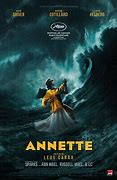
The only auteur to truly be firing on all creative cylinders was Leos Carax whose divisive Sparks-scored musical extravaganza Annette, with its daring transitions, formal finesse, intelligent merging of theatrical and cinematic techniques, and piercingly moving climax, is one of the few films featured at the festival that I would want to watch again.
The work of new directors also yielded mixed results. Despite striking moments (and strong performances from Charlie Shotwell and Jennifer Ehle), Pascual Sisto's debut feature John and the Hole, described as Home Alone meets Haneke, emerged as studiedly affectless, while Déa Kulumbegashvili's passive aggressive, bizarrely overpraised Beginning ultimately played out as little more than a Slow Cinema pastiche.
The Cannes Palme winner (and NH opening night film) Titane was another film that failed to make good on an explosive opening. Highly derivative of Claire Denis and David Cronenberg, Julia Ducournau's genderqueer fantasia, about a serial killing dancer passing herself off as the lost son of a lonely fireman (Vincent Lindon) after impregnation by automobile, ticks off modish themes with the calculation of a dilligent MA student writing a thesis proposal on transhumanism. I found the film abrasive to begin with and surprisingly sentimental to end, and full of plot holes big enough to drive a tanker through. But there's no denying the power of Agathe Rousselle's protean presence in the lead, or the film's status as a tailor-made cult item.
Among a small selection of Polish productions that I saw (more of those in a couple of weeks in Gdynia...), Grzegorz Zariczny's Simple Things and Piotr Stasik's The Moths were notable for mobilising the idea of therapy workshops in very different contexts. The notion seems little more than a garnish in Simple Things: the primary focus of this modest, engaging docu-fiction is the everyday experiences of a couple, Błażej Kitowski and Magdalena Sztorc, moving from Warsaw to renovate a country house, with some unexpected, but emotionally challenging, assistance from Błażej's uncle (Tomasz Schimscheiner). Lovingly photographed by the talented Weronika Bilska (DoP of the wonderful Everyone Has a Summer) the film unfolds in a natural, unforced way that proves beguiling.
The Moths, on the other hand, is hyper from the get-go. Stasik's film is a highly stylised riff on Lord of the Flies in which a group of gamers turn feral in the woods before returning to enact their various traumas via performance workshops. Occasionally frustrating and heavy-handed in its symbolism, the film is nonetheless consistently arresting: a challenging sensory experience that builds to a delicate, cathartic coda.
The Polish premiere destined to make the biggest splash, however, was Piotr Domalewski's Hyacinth, a Netflix-produced thriller featuring Domalewski regular Tomasz Ziętek as a detective investigating the killings of several gay men in 1980s Warsaw (a period and location expertly evoked via Jagna Janicka's fine production design and Ola Staszko's costumes).
Marcin Ciastoń's smart script (which includes one Poland-baiting epigram that drew a hearty round of audience applause) fully embraces its murky cop procedural genre mode. But the film gains extra bite from its context, highlighting the persecution of homosexuals in the Poland of this period in a way that complements Tomasz Jędrowski's recently-published novel Swimming in the Dark, and suggests an overdue popular focus on the history of Polish LGBT experience.
Following so many under-written, plot-lite endurance tests at the festival Hyacinth's narrative drive and engaging characters were certainly appreciated. Overall I saw little to really "stretch the mind and heart" at this particular edition of New Horizons, but Domalewski's film is certainly one to discuss in more detail when it hits Netflix in the Autumn.
Wednesday, 25 August 2021
Earl Cameron Season at BFI: 10 Essential Performances
My piece on 10 Essential Earl Cameron Performances for the Cameron season at BFI Southbank is up. You can read it here.
Friday, 9 July 2021
Theatre Review: Last Easter (Orange Tree)