
The April issue of Sight and Sound is out now. I was pleased to write on one of my Top 10 choices, Basil Dearden's The Halfway House, for the "101 Hidden Gems" feature.
All the individual voter Top 10 poll ballots are now up here on the website.
The April issue of Sight and Sound is out now. I was pleased to write on one of my Top 10 choices, Basil Dearden's The Halfway House, for the "101 Hidden Gems" feature.
All the individual voter Top 10 poll ballots are now up here on the website.
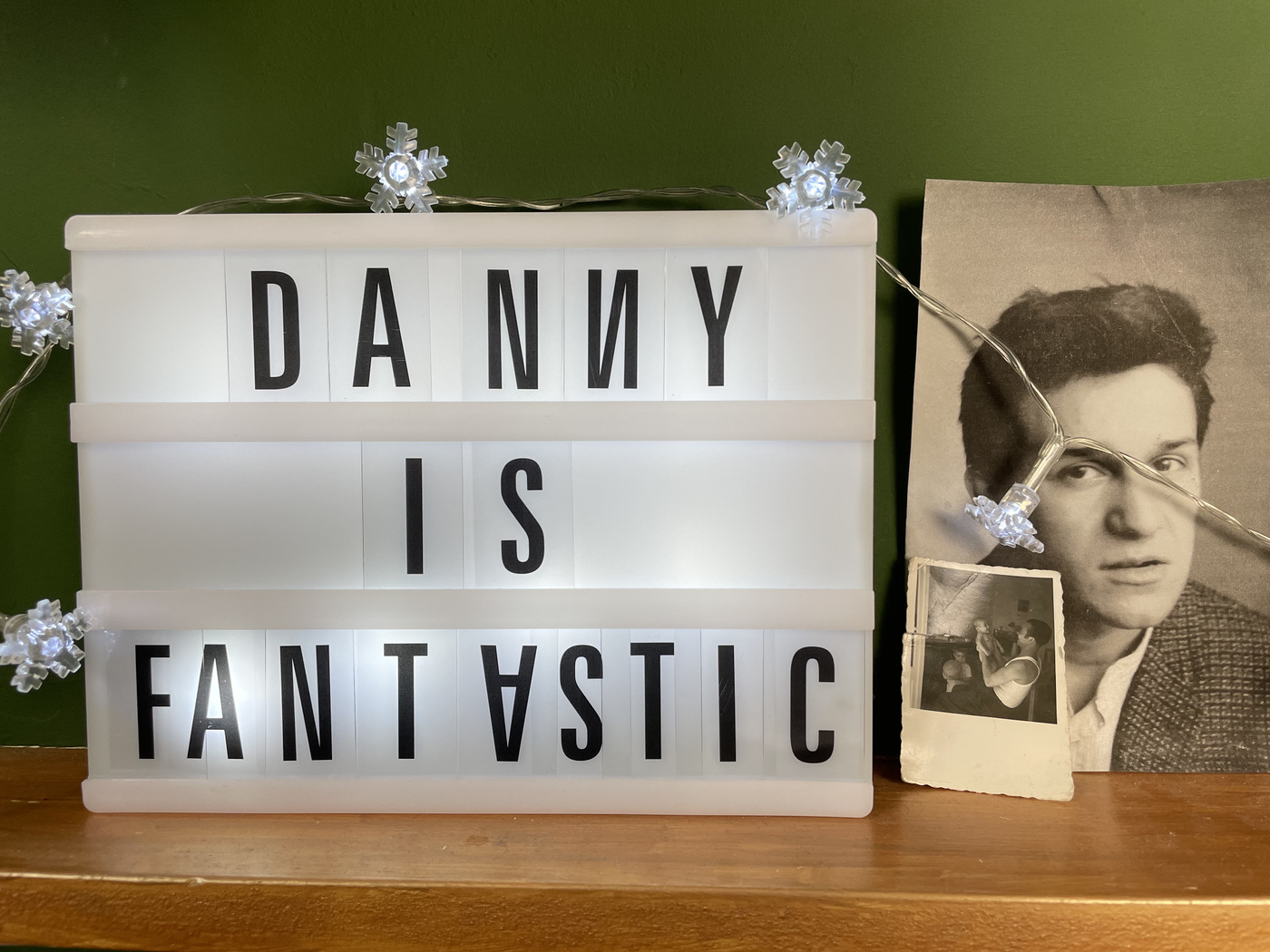
In the tucked-away artist's space of Arch 21, Valentia Place, in Brixton, lit by "pretty fairy lights," some special theatrical magic is happening. Daniel Cerqueira has been performing his show Danny is Fantastic on and off since last year, usually in three show bouts. With Cerqueira operating as a one-man band (director, producer, prop guy, pianist and performer, among other roles), the evening is a truly intimate one that's for audiences of up to 30 people - and that intimacy is essential to its impact.
Different every night, with Cerqueira wryly describing the show as "so live," Danny is Fantastic feels very much like a shared secret journey that both connects the audience to each other and brings each one of us back to ourselves. The 90 minute show zips by - inclusive but not intrusive (there's no forced audience participation but you might get a song sung to you, and you're invited to leave a "remnant" of yourself behind at the end), deeply personal but always reaching out.
There are songs beautifully sung in Portuguese, French and English, special serenades, surreal silliness (What is behind the green door...?), skits, readings (Claude McKay and GBS on the night we attended), poems (including "Poems on One Knee"), reminding us again and again how much is out there to engage with, be inspired by. In sharing personal stories of his grandmother's life or a neighbour's encouragement in the arts, Cerqueira stirs the audience's memories, too - especially in a deeply moving and cathartic "Memento Mori" moment. Oh, Danny Boy...it's a gorgeous, restorative evening.
For information about future shows see the website here.


.jpg)


In late 2002, I remember attending a "farewell" talk at the Donmar Warehouse by Sam Mendes, as he prepared to leave the theatre he'd successfully put on the map as artistic director over the previous 10 years. At the Q&A, a young audience member raised a question about what she termed Mendes's "defection to America", following his Oscar-winning triumph with American Beauty (1999) and the then-imminent release of his second film, the father/son gangster drama Road to Perdition (2002). Mendes was visibly annoyed at the remark, emphasising that he had no intention of turning his back on the UK.
In fact, though, Mendes's career, particularly in film, has tilted substantially toward the US in the subsequent two decades, and those of us who were huge fans of his earlier work have often felt that his choice of projects - diverse as it may have been - was consistently failing to play to his considerable strengths as a director. 2019's 1917 suggested something of a creative rebirth, though, and raised expectations for his latest film.
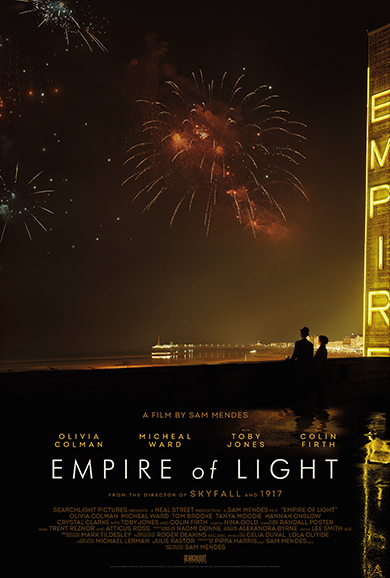
For its first 30 minutes or so, Mendes's new venture, Empire of Light, looks like just the kind of film some of us had been hoping he'd make for many years: an intimately-scaled drama of relationships in an English context. Set in 1980-1981, the film (which Mendes wrote himself and which he's emphasised the "personal" nature of in numerous interviews) follows Hilary Small (Olivia Colman, yet again) the middle-aged duty manager of a fading south coast cinema, who forms a bond and then a romance with a new young employee, Stephen (Micheal Ward).

Mendes pitches the opening scenes confidently, presenting Hilary's work routines, interaction with colleagues and coercive relationship with her boss (Colin Firth) who requests sexual favours in his office. In its careful and nuanced presentation of Hilary's brisk professional competence and personal loneliness, the film has something of the intimacy and frankness that Mendes brought to the best parts of American Beauty, and the initial scenes between Hilary and Stephen (effectively underplayed by Ward, who was Franklyn in Steve McQueen's Lovers Rock [2020]), also mostly hit the right notes. (Though Stephen demonstrating his loveability by tending to a heavily symbolic broken-winged bird is a little much.)
Collaborating again with Roger Deakins, Mendes also succeeds in making the film visually distinctive: the cinema, with its art deco foyer and seductive but slightly seedy ambience and the sea visible through its glass doors is both grand and faded, and feels just right as Hilary's domain.
It's a shame, then, that Empire of Light's scenario gradually turns out to be an excuse for a clunkingly heavy-handed glance at two of the culture's current favourite topics: mental health and racism. Ducking out of really exploring or developing the relationships it's established, the film defaults to shriller dramatic territory in scenes depicting Hilary's breakdown and Stephen's abuse at the hands of loitering National Front bovver boys. Neither aspect is deftly handled: affecting in quieter moments, Colman over-pitches Hilary's off-medication diatribes, and a sequence of an NF attack on the cinema is badly staged. The early 80s context ultimately feels sketched in, too, with Stephen schooling Hilary in the realities of racism via a quick mention of the New Cross Fire.
Nor, even more oddly, does the film's attempt to celebrate "the magic of the movies" come across as deeply felt. Toby Jones's proud projectionist is alotted a would-be rhapsodic monologue on light that may have you wistfully thinking back to his role in Peter Strickland's tougher-minded Berberian Sound Studio (2012), while a screening of Being There (1979) converts Hilary from cinema agnostic to wide-eyed acolyte with record speed. The opening scenes promise much, but, pandering to the modish topics of the moment in a way that gradually reduces its characters to representative figures rather than individuals, the shallow Empire of Light sadly ends up failing as both relationship drama and cinema tribute, feeling both calculated and counterfeit.
Empire of Light is released in UK cinemas today.
 |
Trzy ćwierci do śmierci (Three Quarters to Death) |
 |
| Romans (Love Affair) (Fabryka Sztuki) |
 |
| Ragnorok (Fabryka Sztuki) |
 |
 |
| Arms and the Man (Orange Tree) |
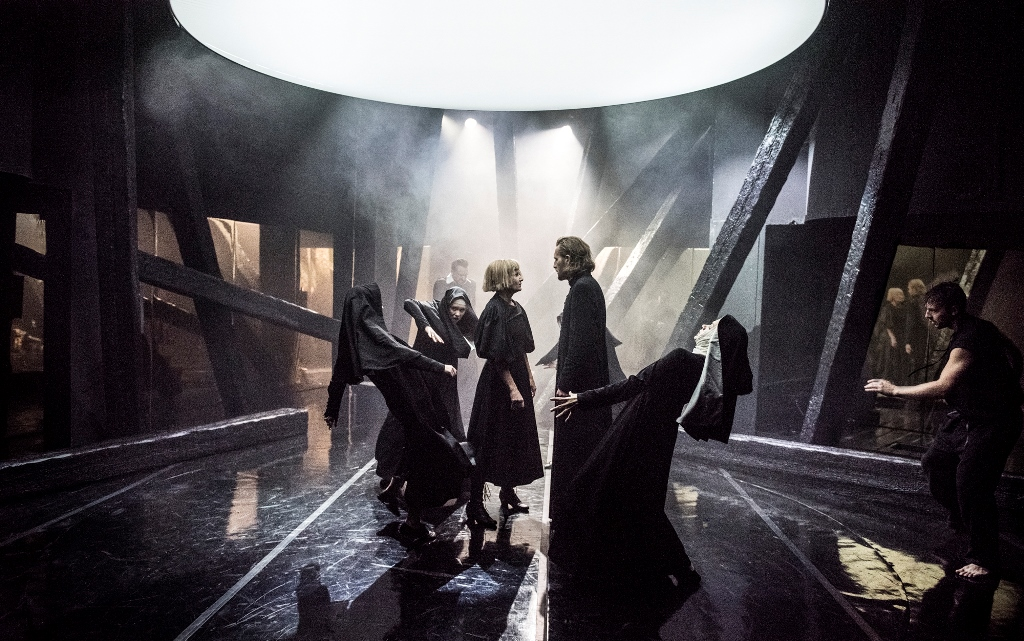 |
| Matka Joanna od Aniołów (Teatr Narodowy) |
 |
| Hex (NT) |


