Showing posts with label Review. Show all posts

Monday, 3 August 2026

Theatre Review: The Smile of Her (Marylebone Theatre)


Reviewing her Oscar-nominated supporting performance in Jonathan Demme's Swing Shift back in 1984, Pauline Kael described Christine Lahti as "one of the towering Venuses who are changing our image of women. Like Sigourney Weaver, Joanna Cassidy, Kathleen Turner and, of course, Vanessa Redgrave," Kael continued,
"[Lahti] is heroically feminine. She's also a rip-snorting comedienne, and she gives [Swing Shift] whatever spark and intensity it has."

‎Over 40 years on, Kael's great descriptions hold true for Lahti on stage, where she continues to "change our image of women," this time with a deeply personal work

(Photo: Mark Senior)

This summer the actress/writer/director is making her quite unexpected but very welcome London theatre debut in The Smile of Her, which premiered three years ago at the Berkshire Theatre Group's Unicorn Theatre in Massachusetts, in a production by Robert Egan.  

Unlike Susan Sarandon's very low-key first foray onto the UK boards last year as one of the five incarnations of Mary Page Marlowe, Lahti's stage debut here could hardly be bolder or more self-revealing. Not only is The Smile of Her self-penned, it's also intensely confessional; the play takes off from Lahti's book of autobiographical essays True Stories from an Unreliable Eyewitness (2018), which in turn originated from her performance of some of those pieces as monologues in small NYC venues. 

(Photo: Mark Senior)

The Smile of Her comes to London in a fresh, tweaked new production by Mêlisa Annis at the Marylebone Theatre. Girl-group pop warmly welcomes the audience into the show before Lahti, casually resplendent in red, takes to Sarah Beaton's spare, sofa-dominated set to begin her story.   

The female-fronted creative team seems appropriate for a play that feels very much of the #MeToo moment in its focus on Lahti's feminist awakenings. These are explored as they occurred on the home front - in memories of her middle-class Michigan childhood, her siblings, her authoritarian father and compliant mother (to whom the title refers). And also in the professional arena as she recalls her first forays into acting - inspired when she saw a production of Long Day's Journey Into Night and headed to New York, "where all bad bitches go to make their dreams come true."

Across 90 compelling, cathartic, frequently funny and sometimes gut-wrenching minutes, Lahti reveals her growing awareness of the power dynamics in her family and the wider inequalities they point to, and recalls some disturbing encounters with industry men. (Though celebrated by Kael, Lahti's height definitely wasn't considered an asset by some of those in power in her chosen profession.)

(Photo: Mark Senior)

The Smile of Her isn't quite a monologue. As well as serving as audience-addressing narrator, and  playing her family members in quick, revealing sketches, Lahti also interacts with her childhood self (well played by Isabella Ford). With notable wit, fierceness and generosity of spirit, Lahti moves fluidly between roles, moods and perspectives, keeping the proceedings pacey but also nuanced and thoughtful (she also dealt elegantly with a tech hitch on the night I saw the show). 

The language is sometimes crude, sometimes lyrical; pitched somewhere between Fleabag and The Year of Magical Thinking, the show emerges as something distinctive: part memoir, part drama, part social history, part therapy. 

Looking back, Lahti's film choices often displayed a feminist bent - the aforementioned Swing Shift, plus Housekeeping (1987) and Leaving Normal (1992), for instance. While it's fun to see some footage of her hilarious 1998 Golden Globes win, I'd have loved to hear more about her particular experiences on those films instead. 

But maybe Lahti prefers to be quite vague about aspects of her career in order to avoid solipsism and to give more space to the audience. For, ultimately, it's the family dynamics that cast the longest shadows here, as Lahti movingly honours the traumas experienced by two of her sisters and details a reconciliation with the mother who her college consciousness-raising had distanced her from. 

As a work of contemporary feminism, The Smile of Her is intergenerational but not "intersectional"; it might be viewed as an example of what's these days sometimes fashionably disparaged as "white feminism." Perhaps such labelling, with its reversed hierarchies of value, only serves to create more division, though.  Part of what the play conveys so powerfully is the Second Wave tenet that our most intimate, affective experiences often shape our political consciousness - and how our perceptions can shift over time. 

Lahti tells us at one point that she was drawn to acting for its ability to explore all of life's "messy, ugly and beautiful" aspects. Drawing on painful personal experience to deliver one of the year's essential stage performances, she ensures that The Smile of Her conveys all of that in spades. The show comes warmly recommended. And here's to Lahti's return to London after this run ... Long Day's Journey Into Night, anyone?

The Smile of Her is at Marylebone Theatre until 29 August. Further information here


Tuesday, 3 March 2026

Concert Review: Bartees Strange (St. Pancras Old Church, 25/02/2026)


The only London show for a while by Bartees Strange prompted my first visit over to St. Pancras Old Church last week. What a nice venue it is: full of spirits, one of the oldest Christian worship sites in England (possibly) provides an atmospheric setting for intimate gigs. 

That's exactly what Strange delivered. Strong opening support came from another singer-songwriter/guitarist mariedominique whose supple, soulful set included the beautiful original compositions "Fire and Ice" and a haunting cover of Moses Sumney's "Doomed" - and whose 29th birthday it was, resulting in an impromptu serenade from the crowd ("I didn't know I needed that!").

‎Strange himself had just finished a European tour supporting Biffy Clyro; he seemed at the kind of total ease and command that come with months of solo performance in front of diverse audiences. "I like playing with a band, but I kind of remembered lately that playing by myself is really what I do," he told us. "It feels like we could be doing a Q&A in here."

‎Ipswich-born and mostly Oklahoma-raised, place is important in many of Strange's songs. He's an artist of many parts, his music combining folk and funk, country, blues and indie rock into a totally distinctive, seductive blend. Distilled to acoustic guitar and voice, the songs all felt full, Strange roving around the tunes with wonderful spontaneity and with a delivery that veered from gentle croon to full-throated rasp. 

‎The set ranged over tracks from Strange's  albums and EPs, up to last year's brilliant double of Horror (2025) and Shy Bairns Get Nowt (2025). Standout songs like "Sober," "17," "Lie 95," "Baltimore," "Ain't Nobody Making Me High" and "Doomsday Buttercup" ("This is straight-up about having sex") gained in grit and grace. Strange also felt comfortable enough to debut two still-in-development pieces, "Gillette Blade 7" and "Running Back," the latter particularly beautiful.

‎"Heavy Heart," written after the deaths of his grandparents, was a poignant and healing closer. "What's a cure for heartbreak?" asked a voice from the pews. Strange paused for a moment before answering: "Making something new."


Tuesday, 11 November 2025

Review of Park Avenue (Sight and Sound, December 2025)


My review of Gaby Dellal's new film Park Avenue is in the latest issue of Sight and Sound. More details about the issue here


Tuesday, 7 October 2025

Theatre Review: Mary Page Marlowe (Old Vic)


Scenes from an "ordinary" American woman's life are the thread of Tracy Letts' 2016 play Mary Page Marlowe. The novelty - or gimmick - of the piece is that snapshots of the protagonist's experiences are presented in a fragmented, non-chronological form and that the role of Mary is divided between five (in some productions six) actresses playing the character from ages 12 to 69. (A doll's good enough for a babyhood scene.)

The piece-it-together structure throws out and withholds narrative tidbits - a crime, affairs, alcohol dependency, an absent child - but overall the structure seems more interesting than what's done with it; don't expect the radical transitions of a Palindromes (2004) or an I'm Not There (2007). As a writer, Letts doesn't have the insight or the delicacy to pull off a play like this: he's more at home with bigger gestures and protagonists' spitting vitriol.  There are many plays that have made the details of daily life into something compelling, even monumental, but that's not achieved here, between thinly imagined supporting characters and dialogue that veers between inconsequentiality, belated, heavy-handed symbolism, and spelling out the themes. 

Despite putting the Old Vic stalls in the round again, Matthew Warchus, directing in his usual brisk, slick, proficient style, doesn't bring out much that's distinctive in the material. (Robert Howell's set and costume designs are just functional.) 

Even so, the cast come through to create vivid moments. Letts limits most of the supporting characters to one scene; for actors of the calibre of Hugh Quarshie (playing Mary's third and most satisfactory spouse) and Melanie La Barrie (as a sympathetic nurse), this production must be quite a nice rest. 

But the Marys maximise their opportunities. The sharing out of the role means that there are few chances for grandstanding, but Andrea Riseborough has the toughest emotional moments to play and she's compelling throughout, whether twitchily laying out a separation to Mary's children in the opening scene or sinking under the wreck Mary makes of her life at one stage. 

A minor Matilda: The Musical movie reunion is accomplished with the appearance of Riseborough's co-star from Warchus's film, Alisha Weir, as 12-year-old Mary; the scene is one of the play's weakest ones - it essentially only serves to indict Mary's unsupportive mother for the protagonist's later-life problems - but Weir is perfectly charming in her performance of  "Tammy."

Rosy McEwen also hits the right notes as the adulterous younger Mary, delicately trying to extricate herself from Ronan Raftery's persistent lover (also her boss). And playing Mary across three later-years scenes, it's wonderful - and a bit unexpected - to see Susan Sarandon on the British stage. In many ways, the role doesn't play to Sarandon's greatest strengths: one of the best actors at expressing blazing anger on screen has an essentially quiet, reflective role here. But Sarandon brings a beautiful, unstressed radiance to it; she seems totally at ease, connecting with the other actors in ways that fill out some of the writing's sketchiness. 

Mary Page Marlowe doesn't achieve the depths Letts seems to strive for. In the end, it's a modest work: a woman's life story as a shuffled, tentative impression. It isn't a play to go to with big expectations, but the accomplished cast  - plus a perfect song choice to bookend the evening - still send you out of Warchus's production feeling good. 


Mary Page Marlowe is booking at the Old Vic until 1 November. Further information here

Monday, 10 March 2025

Sight and Sound (March 2025): Bushman Review


For the March 2025 issue of Sight and Sound I reviewed the new Blu-ray release of Bushman by David Schickele. 


Friday, 31 January 2025

Film Review: Flight Risk (dir. Gibson, 2025)


"I'm gonna land this plane!!!" As in Guy Ritchie's The Gentlemen (2019), Michelle Dockery does all kinds of things that Downton's Lady Mary never got to do in the new Mel Gibson-directed Flight Risk. The mere sight of Gibson's name on the film seems to have been enough to send the majority of critics off the deep end, with the unreliable Mark Kermode deeming it "one of the worst films I've ever seen" (a bit much for the man who gave Mamma Mia: Here We Go Again [2018] 5 stars). 

Viewed without such prejudice, though, Flight Risk emerges as a knowingly hokey and perfectly enjoyable comedy-thriller that feels a lot like a 1980s/90s throwback. It's an unabashed airborne popcorn movie that lands somewhere between Airport 1975Narrow Margin (1990) and Passenger 57 (1992). 

Dockery plays a US Marshal tasked with transporting a witness (Topher Grace) to trial and finding out that the pilot (Mark Wahlberg) taking the pair over the Alaskan wilderness is not all he seems to be. The film is basically a three-hander set on the tiny plane, and Gibson keeps the fun and tension quotients high as the trio play cat-and-mouse in the space.

Jared Rosenberg's quip-strewn script is only serviceable but the film is pleasingly distilled, and gains a lot from its slightly berserk casting choices. Topher Grace starts out doing comedy schtick as the chatty prisoner/witness but notably deepens the character later on. Gum-chewing and scenery-chewing, Wahlberg snarls and gurns with aplomb, but though his face is on the poster it's Dockery who's the star here and she's wonderfully committed, bringing surprising variety to the role whether kicking ass, responding to flirtatious overtures, or revealing what's actually at stake for the character in this scenario. What happened to the Gibson who had the sensitivity to make The Man Without a Face back in 1993 is quite another story, but Flight Risk remains a smashingly silly and fun ride.

Flight Risk in in cinemas now. 

Film Review: The Girl With the Needle (Pigen med nålen) (dir. Von Horn, 2024)


Despite retaining some of the same creative team, the three films made so far by Magnus von Horn have been strikingly different from each other. The director's Sweden-set debut fiction feature, The Hereafter, which I saw at Gydnia 10 years ago, about a teenager's return to his hometown following incarceration for a crime, was deliberately low-key, its measured mood disrupted by jarring violence; it was accomplished and slightly studied, with Dardennes and Haneke touches. Von Horn followed it up with Sweat (2020), a portrait of a social media influencer, which was brisk and colourful, and aggressively contemporary. 

Von Horn clearly adapts himself to his subjects, and his latest film, co-written with Line Langebek Knudsen, is something different yet again: a black-and-white maternal melodrama that plays out with the horrifying dream logic of a dark fairy-tale for adults. Set in between-the-wars Copenhagen, The Girl With the Needle  (Pigen med nålen) is based on a real-life case. The social period details feel right - the factory work, the shops, the dingy dwellings - but, from the opening montage of contorted, superimposed faces, von Horn goes for something more primal and ambient, and sustains a mood of quiet, creeping dread. The result is a compelling piece of work, and his best film to date.

As the working-class mother who gives up her baby, and as the woman who arranges for its care, Vic Carmen Sonne and Trine Dyrholm give richly detailed performances; playing the latter's daughter, young Avo Knox Martin is a remarkable find. Coming off of EO (2022) and A Real Pain (2024), the amazing DP Michał Dymek returns to black-and-white for the first time since My Friend the Polish Girl (2018), and gives the images a hallucinatory depth and clarity. Frederikke Hoffmeier's score is mostly an asset too, though some twitchy electronics feel misjudged. The sound of crying babies is perhaps the most eloquent noise here; it permeates the film, and, like many of the images, returns to haunt the viewer long after the screening. 

The Girl With the Needle is in cinemas now. 

Saturday, 25 January 2025

Film Review: Babygirl (dir. Reijn, 2024)


Apart from Jude Law making his daring escape from the law by hopping on a treadmill, my main memory of Ivo van Hove's staging of Obsession (2017) is that of Halina Reijn, as Giovanna, scattering rubbish all over the set. Now, working as a writer-director, Reijn scatters rubbish over global cinema culture and benefits from the A24 hype machine in doing so. Babygirl isn't quite as awful as Reijn's previous film, the exploitative Gen-Z-meets-Agatha-Christie Bodies Bodies Bodies (2022), but it's nearly as juvenile and just about as smug. 

Focusing on the affair between the CEO of an NYC robotics firm (Nicole Kidman) and the intern (Harris Dickinson) who instantly diagnoses the well-heeled boss's unfulfilled desire to be dominated, Babygirl evidently considers itself a brave, transgressive entertainment, and some of Reijn's statements about it have been wonderfully pompous: "Babygirl was an opportunity to bring my Dutch, more liberated ideas about sexuality to the US... I thought of Americana as a metaphor for the danger of suppression that still exists within me." 

These are big claims, since the end result is weirdly tame in its imagery and mightily confused in its sexual politics, ticking off contemporary platitudes about modish topics - consent, the orgasm gap - with all the depth of the average Cosmo article. What the modern woman really, really wants, Babygirl ultimately suggests, is to have Antonio Banderas and Harris Dickinson fighting over her. Well... aim high, I guess. 

It's billed as an erotic thriller, and Reijn has confessed to a fondness for the likes of Basic Instinct (1992), while indicating that her take is far more progressive: "We are in conversation with [film] history...but we're going to to do it in a different way." In part she succeeds, since Babygirl has precious little of the drive or dramatic impetus of a thriller; all of its tension and interest are in the (fairly promising) early scenes. On the plus side, Reijn and her collaborators have clearly thought the film out in visual terms - right down to the pink cellphone case brandished by Kidman's Romy - and the opening sequences craftily juxtapose corporate sterility and churning horniness thanks to Matthew Hannam's brisk editing. 


Though some moments (the first motel room tryst and a witless illicit-encounters montage) just make you feel embarassed for her, Kidman, looking fetching in Kurt and Bart's power-dress designs, is an asset in the role, too. Compensating for the script's deficiencies, she uses the close-ups to convey Romy's conflicted, unsettled feelings, and gives the in-control CEO a disarming wobbly walk that also suggests her vulnerabilities. A strainingly meta 'Botox moment' is a little much, but Kidman finds ways to bring some tenderness to Romy's struggle to integrate her competing selves, and to the relationship dynamic, notably in a quiet post-coital scene. 

As Samuel, Dickinson has his moments - especially, his laugh after he instructs Romy to "Get on your knees!", not entirely convinced by the part he's allocated himself in this relation. But his sexual savant role is so thinly conceived that we never get a read on the character's motivations. It's not the actor's fault that his sex appeal here has also been crazily overhyped (not only by 'the Internet' but by professional critics), including a sub-Claire Denis shirtless sway to George Michael's "Father Figure": an on-the-nose song choice, if ever there was one. 


Babygirl falls apart as its underwritten character's start confronting each other, and Samuel's abrupt banishment from the film just feels like a plot convenience. As the cuckolded theatre director husband, who's never once sexually satisfied his wife in 20 years of marriage, poor Antonio Banderas fares far worse, especially in a late confession scene that finds him mewling "What the fuck, Romy...?" in a tone that made me weep with laughter. 

The only sequence I'd save from the second half is a vibrant wordless one: Romy tracking Samuel down in a club. But indulging a campy pop aesthetic is clearly only part of the film's intention; on the contrary, given some painfully heavy-handed references, I think it's actually aiming for Ibsenesque intensity. Unfortunately, while we might buy Banderas's Jacob directing Hedda Gabler, we definitely don't swallow such touches as the couple's younger daughter being called Nora and having a fondness for dancing - you guessed - the Tarantella. 

Babygirl's thinness is especially evident in this last section, including a hasty reconciliation scene and the sudden wheeling on of a subsidiary male character for Romy to give a sound scolding to for the sake of a very cheap feminist huzzah. And maybe Reijn needs to watch Basic Instinct again, and more closely. Not only is Verhoeven's film more fun and more accomplished in its storytelling than Babygirl, it's finally more subversive, too. Suggesting that Sharon Stone's Catherine Tramell was "punished" for "dark desires" is not being "in conversation with film history": it's conveniently rewriting it. 


 Babygirl is in cinemas now.

Wednesday, 9 October 2024

Theatre Review: Look Back in Anger (Almeida)


"Hope deferred makes the heart sick, and many hearts are sick at what they see in England now." (John Osborne, 1959)


Given its (perhaps overinflated) reputation as the play that single-handedly blew the doors of off fusty ol' 50s British theatre and put working-class grievances centre stage, Look Back in Anger is revived with surprising infrequency in the UK. 

Times change, tastes change, and what once looked radical, now - in form at least -  may look tame, since Osborne's play is in essence a static Three Act relationship drama which, apart from the often stinging language delivered by its iconic protagonist, seems not very far removed from the middle-class domestic dramas that the playwright and others of his generation so aggressively critiqued. As Richard Eyre has put it: "However abrasive and excoriating, far from looking back in anger, the play looks back with a fierce, despairing nostalgia."

All of this makes Arti Banerjee’s revival at the Almeida quite welcome - even just as an opportunity to see how the play stands up from a contemporary vantage point. Staged alongside Arnold Wesker's Roots, with which its partially cross cast to form the rather cringingly named "Angry & Young" season (t-shirts available in the foyer!), there's much that doesn't quite work in Banerjee’s production: feeble Expressionist movement flourishes; an unhelpful red carpeted circular set by Naomi Dawson that's too obvious a representation of a domestic hell; and some miscasting. 


But damnit if the power of the play doesn't peek through in the end. That's mostly due to a great performance from Billy Howle (last seen on stage in a more revelatory revival, of Dodie Smith's Dear Octopus at the NT) who, without any sentimentalising, manages to humanise Jimmy in surprising, unexpected ways.

In Tony Richardson's film version of the play, the character's rants as delivered by Richard Burton were effective but felt over-rehearsed. Down to his restlessly twitching toes as Jimmy reads the paper in the opening scene, Howle makes the character's frustration more subtly palpable and demonstrates how it manifests in domestic tyranny. He doesn't stint on conveying Jimmy's cruelty - mostly directed at his wife Alison -  but also shows that to view the character as a "toxic masculinity" exemplar is simply a diminishment. Whether you like the content or not, Jimmy's outbursts against the post-war English scene are often bitingly acute and funny and have a theatrical charge: even if last Friday's audience seemed determined to register their disapproval of the character by responding only with the occasional tut. But Howle's triumph in the role is to reveal Jimmy as at once infantile and insightful, a rebel without a cause who's clearly in pain but also thinks he has a monopoly on it. 


Overall Banerjee's production gets better as it goes along, and some of the sketchier performances start clicking into place as well. As Alison's friend and (apparent) defender, Morfydd Clark lacks the sensual quality that Claire Bloom brought to the part on film but gradually manages to make sense of the character's tricky trajectory  - especially a moral awakening that's powerfully conveyed here.

Playing Alison, Ellora Torchia hits odd notes in most of the earlier scenes. But from the character's touching encounter with her Empire-and-Establishment-representing father (a well-judged Deka Walmsley) onwards the performance begins to find its shape and I wasn't prepared for the depth  of emotion she reaches in the final scene. As a combined portrait of the pain of marriage and the state of a nation, Look Back in Anger reveals itself as a flawed work, but while Banerjee's revival isn't ideal I came away moved in the end. 

Look Back in Anger is at the Almeida until 23 November. Further details here

Photos: Marc Brenner

Tuesday, 21 May 2024

Concert Review: Barb Jungr - Singing into My Seventies (Crazy Coqs, May 2024)


Barb Jungr
(Photo by Steve Ullathorne)

It's not everyone who'd necessarily opt to celebrate their 70th birthday by performing a trio of shows - each one made up of completely different, challenging musical material drawing on a repertoire of about 40 years.

But if there's one thing we know about Barb Jungr by now it's that she doesn't take expected routes. So that's exactly how Jungr spent her 70th - with a three night residency at one of her favourite venues, Soho's Crazy Coqs, accompanied at each show by a different long-time collaborator on piano.  

The first show on 9th May (Jungr's birthday night itself) found Jenny Carr joining to perform a set titled Dark Love: Elvis, Chanson & More. The 10th May show presented Jungr alongside Simon Wallace with a Dylan-centred programme, while the final night saw John McDaniel re-teaming with Jungr on a set revisiting their beautiful collections of work by The Beatles and Sting.

I was only able to make it to the 9th May performance, but have seen Jungr in concert many times since 2015 and it's always a unique, profound and exhilarating experience. She is, without a doubt, one of the greatest of contemporary singers: her supple voice, always exceptionally expressive but undiminished and deepened with the years, is able to dig into a dazzling range of material to find new and surprising qualities. And she's no slouch as a songwriter herself, either. 

But live she's even more than that: a great mover (in the sense of giving a vivid physical life to each song), and a spontaneous, hilarious and often subversive story-teller. At a Jungr show, you never quite know where the between-song chat will go: "I was obsessed with the Gothic nature of swamps," was one of the gems she shared this time around. But what might initially seem to be a non-sequitur always ends up adding to the texture of the song she's about to perform. Movement, gestures, delivery, chat - for Jungr, it's always about serving the story of the song in the most expressive way. 


Barb Jungr
(Photo by Steve Ullathorne)

With only one Jacques Brel piece, "The Tender Hearts," featured, the 9th May show didn't exactly adhere to its title - a case of 'its my birthday and I'll shake up the set-list if I want to', perhaps. But it was a rich and glorious evening nonetheless. Jungr opened with a punchy "Last Train to Clarksville," placing the song in a Vietnam context that I for one had never been aware of. As the evening progressed, connections between the  songs emerged, whether by theme - loss and separation were big - or by specific imagery: trains pulling out of stations, walking, rain. "It does get cheerful in a bit," she deadpanned at one point. 

With Carr's brilliant piano-playing as a by turns delicate and dramatic accompaniment, highlights included a pair of Elvis songs, drawn from Jungr's often wonderfully weird and spooky 2005 Love Me Tender album, a deeply moving "In the Ghetto" and "Kentucky Rain." With Jungr's delivery morphing from gossipy confidence to a preacher's declamation, the rendition of  Dylan's "The Man in the Long Black Coat" was staggering. And so, in an entirely different way, was "Au Depart," an extraordinary piece of writing by Robb Johnson that conjures a world of history, absence, loss, leave-taking and starting over through its economical images. With Johnson himself in the audience, Jungr performed the song with a captivating stillness that made each word pierce the listener. 

Jungr placed "Au Depart" in the context of the post-war refugee experience of her Czech father. This was one example of the resonant way she wove personal stories through some of the songs, from teenage Stockport memories to a traumatic visit to the eye hospital with her beloved mother (who sadly passed away just before Christmas last year) to her joy at getting a dog (Bambi, from Hungary). The latter relationship was celebrated via a rendition of Cat Stevens' "I Love My Dog," a warm performance of the song and a wry deconstruction of it at the same time. 

Indeed, when the evening did "get cheerful" it was with that infectious, soul-enhancing energy that's one of Jungr's essential qualities as an artist. She expresses a sheer joy in communicating with an audience that's often sadly absent from performers half her age.  A glorious take on Jeff Barry's "Walking in the Sun" and a singalong "Forever Young" were irresistible.  Carr led the crowd in a chorus of "Happy Birthday" before Jungr's rollicking version of "Walking in Memphis" sent us out of the club on an exultant high. 

From Ella to Emmylou, June Tabor to Joan Baez, Jungr joins the many female artists who've continued to perform dynamically in their later years, blowing apart pervasive ageist and sexist assumptions in the process. "I couldn't think of anything I'd rather be doing than singing tonight," Jungr said. A more vibrant and vital artist than ever - listen to last year's blistering My Marquee album for recorded proof - may she continue to do so for many more years to come. 


Thursday, 16 May 2024

Sight and Sound (June 2024 issue)


The June issue of Sight and Sound is out now. I reviewed Ellen E. Jones's new book Screen Deep for this issue. 


Thursday, 18 April 2024

Theatre Review: The Ballad of Hattie and James (Kiln Theatre)


A decades-spanning play about loss and forgiveness, talent and time, music and memory, centred around a thorny, complicated male/female friendship, Samuel Adamson's The Ballad of Hattie and James tells the story of the title protagonists - piano prodigies who meet as teens in the mid-1970s to collaborate on a college production of Benjamin Britten's  Noyes' Fludde

Inevitably, perhaps, they're a contrasting pair: James a stuttery, pretentious boy who flaunts his high cultural ideals like a badge of honour, and she an unruly middle-class girl, open to contemporary music, who turns up at rehearsal with a bottle of booze in her bag. Adamson's writing - rude, allusive, surprising and tender by turns - is attentive to the places where their experiences and temperaments connect and diverge - and how an early tragedy ends up shaping both their personal and professional lives in different ways.

Though not quite as ambitious as Adamson's last play Wife (2019), which traced and placed queer currents in and around productions of a A Doll's House over many years, The Ballad of Hattie and James shows a similar interest in time and its impact on creative artists. In Wife, a tambourine used in the Doll's House tarantella scene became a talisman passed down over decades. Here a similar function is served by a Bechstein piano owned by Hattie's family, coveted by James, and over which the two bond and bicker through the years.

Again, Adamson includes a futuristic flourish, but adopts a non-linear structure to tell this particular story - dropping in on Hattie and James at various points, moving backwards and forwards in time, as their dynamic shifts and changes. 

At first you might wish for a more straightforward telling. But the structure, elegantly managed in Richard Twyman's astute production, gives the piece a richness of texture  and pays off emotionally in the second half. Layering in references from Britten to Bush to Pulp's "Disco 2000", the play is much concerned with how music shapes identity - and vice versa - and how gender has impacted upon the career trajectories and expectations of musicians through history. 

A depiction of a friendship between a gay man and a gay woman is a rarity on stage or screen, and neither the writing nor the performances sentimentalise the protagonists, who are often prickly, selfish, or blinkered but retain our interest and affection, in all their recognisable flaws. 

With a Penguin book in his cardigan pocket and perfect pitch (but dodgy cords), Charles Edwards incarnates in James a certain species of gawky Englishman, smug and shy at once, dismissive in a kneejerk way of the female composers and writers who mean so much to Hattie. But Edwards also reveals the sense of sadness and loss underpinning James' attitudes. As often, Sophie Thompson seems on the cusp of doing too much, vocally and physically, yet keeps an emotional truth in her performance, including in her most florid moments to make Hattie a vital force even when at her lowest.  

With Suzette Llewellyn multi-roling to great effect, and a pianist on stage to tackle the musical interludes, Twyman's production remains intimate but conveys the vagaries of fate and time and creative expression, a brief ballet of past moments bringing the piece together in a beautiful way. 


The Ballad of Hattie and James is booking at the Kiln Theatre until 18 May. 

Saturday, 10 February 2024

Film Review: American Fiction (dir. Jefferson, 2023)


My review of Cord Jefferson's American Fiction is up at the Sight and Sound website. You can read it here

Wednesday, 31 January 2024

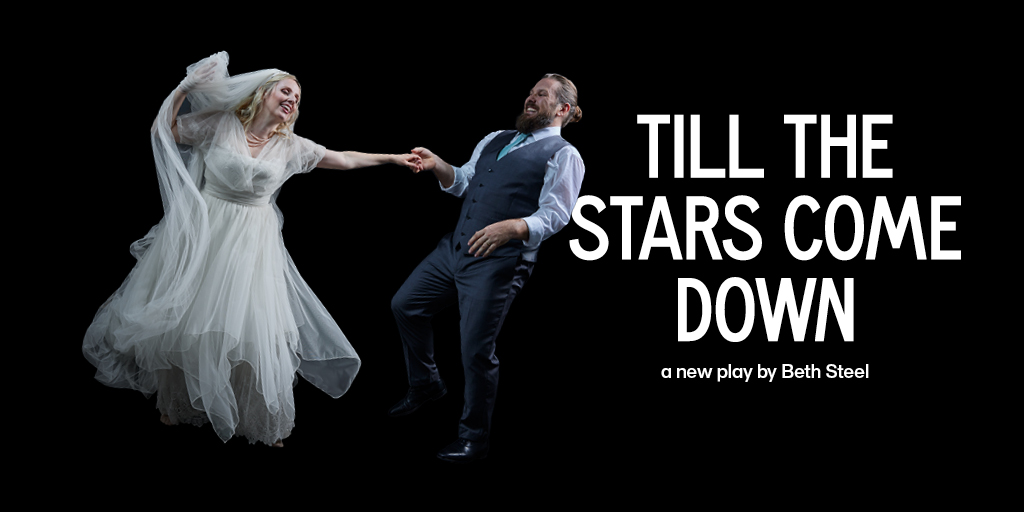
Theatre Review: Till the Stars Come Down (National Theatre, Dorfman)


An Anglo/Polish wedding taking place on a sweltering summer day last year is the focus of the new play by Beth Steel, which gets its world premiere in a vibrant, sometimes exhilarating production by Bijan Sheibani at the NT's Dorfman. Often described (in meant-to-be-praising yet slightly patronising-sounding terms) as a foremost contemporary dramatist of "working-class lives," Steel follows up The House of Shades with another intergenerational Nottinghamshire family drama, albeit one in which events are telescoped into a day rather than unfolding over decades.

Placing the audience on four sides of a set (by Samal Blak) that variously suggests pitch, sparring area and dance floor (and, as lit by the great Paule Constable, also gives off more cosmic vibes at times), the play's slightly Steel Magnolias-evoking opening scene plunges us without preamble into the dynamics of the family on the morning of the big day of Sylvia (Sinéad Matthews), as she, her two sisters, nieces, Dad, Aunt and assorted other relatives prepare for the ceremony.

The man Sylvia's marrying is Marek (Marc Wootton), a Polish immigrant who, having arrived in England on a Megabus with little money to his name, has since successfully set up his own business. Nonetheless, it's a union that certain family members - especially Sylvia's older sister Hazel (Lucy Black) - view with scepticism that's pretty close to outright hostility. And as the booze flows freely during the wedding reception, those xenophobic feelings are exposed, along with sundry other family rifts and secrets - including an illicit attraction that turns out to be a little case of history repeating.

At its big, messy heart, Till the Stars Come Down is yet another three sisters story. Sheibani's production works hard to get a Chekhovian flow of life and activity across, bringing characters of diverse ages into dialogue that's by turns wildly funny, perceptive and touching. (And there's surely a nod or two to the classic Polish wedding play, Wyspiański's 1901 Wesele, in there as well.Steel's play also has something of the rude English humour and cusp-of-caricature vim of April De Angelis' Kerry Jackson, staged by Indhu Rubasingham in the same auditorium last year - especially in the way it puts un-PC remarks seldom heard onstage (yet heard in Britain itself every day of the week) into the mouths of working-class characters who it refuses to demonise - even if the spectre of "punch up at a wedding" cliché hovers (and is finally fulfilled) at times. 

Overall, the writing here feels fuller, though, and ultimately more adept at interweaving personal and social concerns. Despite the large presence of Polish migrants in Britain since Poland entered the EU in 2004, dramatists have seemed reluctant to explore their experiences or the resulting tensions in UK communities. Sensitive to the context of a post-industrial community, Steel confronts both directly: while Marek expresses pride in the achievements of Poles who've moved to the area, Hazel resents the overburdened services that she blames for her mother's death, and feels threatened by a perceived shift in power. The play's inclusion of only one Polish character could be critiqued, but it works dramatically on several levels, as latent suspicion turns to scapegoating, and pits the family group against the outsider. 

As the bride caught in between, and gradually finding her voice in order to confront a family of more dominant personalities, Sinéad Matthews, always an asset to a production, captivates here. Among her many gifts, Matthews is great at conveying a character's contradictory, unspoken emotions: just watch the mix of embarrassment, pride, sadness and pleasure that crosses her face as Sylvia listens to her dad and then her new husband give their speeches. And there'll probably be few more joyous moments on a stage this year than the one in which Sylvia gleefully shakes off her anxieties to leap up on the table to dance.  

Lisa McGrillis and Lucy Black match Matthews brilliantly as the sisters, the former bringing some beautiful plaintive notes to her characterisation of a once-confident, now-cautious divorcee who's moved from the area for reasons that gradually become clear; the latter treading a difficult but believable line between sharp humour and bitterness as her fears about her own marriage come to the fore. (Black is especially devastating in a scene in which Hazel witheringly maps out her husband's likely future if he leaves her; this is Steel's writing at its best.)

As the rambunctious Aunty Carol, Lorraine Ashbourne relishes the lion's share of the quips, whether lamenting that she's being asked to leave before doing the Macarena, getting down to "Toxic," or revealing a few rather toxic views of her own as the night wears on. And Marc Wootton is perfect as the personable spouse - astute, hearty, curious, adorable when horny, but increasingly disinclined to put up with Hazel's passive aggression, and frustrated at his wife's reluctance to challenge it. 

The production gives the pleasure of a true ensemble, and the cast work together wonderfully well to convey a sense of complicated family life, with further texture provided by Ruby Stokes as Hazel's disillusioned teenage daughter and Alan Williams as the deadpan Dad at odds with his brother (Philip Whitchurch), feeling stuck since his wife's death, and giving a longer view of Polish presence in the town. 

Some elements, such as a "stopped time" conceit, are underdone, and the play's final tonal shift is extreme, with an ending that feels truncated. But Steel's refusal to shy away from big emotions or contrive cosy resolutions is admirable in itself. Essentially, Till the Stars Come Down is about a family reckoning in contrasting ways with change and transition. Expressing the theme, the staging cleverly keeps things in motion, adding a revolve to the central dinner scene, and getting the cast to physically "orbit" each other as Max Richter's recomposed Vivaldi plays. Steel has written an insightful, caustic but large-hearted play full of recognisable characters; both literally and figuratively, Sheibani's highly entertaining production ensures that we see them in the round.


Till the Stars Come Down is booking at the Dorfman until 16 March 2024. Further information here

Thursday, 28 September 2023

Theatre Review: Infamous (Jermyn Street Theatre)


Always among the most accessible and least pretentious of contemporary British playwrights, April De Angelis has also demonstrated a stealth subversiveness and wide range in her work. As Dominic Dromgoole writes in The Full Room: "Her imagination can encompass and reproduce worlds very distant from her own, and she has an ease with non-naturalistic dialogue that carries the audience with her... There is a central coarseness, a vitality, a rudeness that keeps it fresh and alive." 

De Angelis brings those qualities to her latest historical play, Infamous, which focuses on Emma Hamilton. The scandalous life story of "that Hamilton woman," wife of Sir William and lover of Lord Nelson, has, of course, often been dramatised - including in Susan Sontag's great The Volcano Lover (1992) which filtered the events mostly through Sir William's perspective. 


But where Sontag's novel constantly expanded outwards through rich allusions and digressions, De Angelis play is distilled, intimate and interior - particularly so in Michael Oakley's production on the tiny Jermyn Street stage. Pointedly, William and Nelson are nowhere to be seen here: the only male characters are an Italian servant and a French Mayor's son, both played with gusto by Riad Richie. 

Instead, De Angelis makes Infamous a mother/daughter story, and one that's much enhanced in Oakley's production by the casting of real-life mother and daughter Caroline and Rose Quentin. 

The play opens in 1798 in Naples, with Rose as the young Emma, married to William, the English Ambassador, but already plotting the seduction of Nelson fresh off the boat. She receives her mother, who's been visiting the daughter that Emma's abandoned in England, and who has a secret of her own to share.

In the second half, the scene shifts to Calais in 1815. Nelson is dead and the ageing, drink-dependant Emma (now played by Caroline) is living in decidedly straitened circumstances with Nelson's daughter Horatia, dwelling on memories of her illustrious past. 

As in her last play - last year's unfairly critically-mauled (but audience-pleasing) Kerry Jackson -  De Angelis deceptively packs quite a lot into a small, unassuming space in Infamous. Exceptionally clear, the historical context is lightly sketched but felt - weaving a sense of Emma's history into the sometimes sparky, sometimes painful exchanges between her and her mother, and then between her and Horatia. 

Oakley's no-frills production places the emphasis firmly on the dialogue and the actors, who capture all the contours of the characters' dynamics in both time periods. 

From Jumpy to the hilariously excruciating memorial service mashup in Kerry, De Angelis loves to integrate a moment of full-on female performance into her plays, and here Caroline Quentin gets to deliver Emma's "Attitudes", the set of historical and mythological poses she persists in viewing as an artistic triumph. 

Equally good in their other role, the Quentins give marvellously complementary performances as Emma, the pertness, casual cruelty and self-regard of Rose's turn in the first half given its distorted mirror image in Caroline's very physical portrayal of the character's decline in the second. Neither demonising nor romanticising its heroine, yet subtly casting her in a fresh light, De Angelis' funny, touching play finally places the emphasis on female fortitude. 


Infamous is at the Jermyn Street Theatre until 7 October. 


Production photos by Steve Gregson. 

Monday, 7 November 2022

Film Review: Roving Woman (dir. Michał Chmielewski, 2022)


I reviewed  Michał Chmielewski's new film Roving Woman for Film International. You can read the review here.  

Thursday, 6 October 2022

Film Review: Roald Dahl's Matilda The Musical (dir. Matthew Warchus, 2022)


One of the true great British musical successes of the past decade, Tim Minchin and Dennis Kelly's Roald Dahl adaptation Matilda The Musical reaches the screen with its main personnel - including the director of the original stage production, Matthew Warchus - intact, but its charm considerably diminished. 

In fact, keeping Warchus on board as director probably wasn't the best idea, after all: in many sequences, the film feels very much like a theatre director's basic idea of making a musical cinematic: all overly bright colour and manic quick cutting (editor Melanie Oliver does not distinguish herself here, and neither do the designers). The sequence for the opening number "Miracle" is particularly unpleasant: a garish kids and parents display that does more to repel the viewer than draw them in. 

This pushy, forced energy scuppers several anticipated moments, with even the show's best song, the brilliant self-reliance anthem "Naughty," marred by an overly-fussy visual treatment. When the film calms down and trusts the witty, warm songs a bit more, it's more successful: Miss Honey's "My House" (well delivered by Lashana Lynch) is particularly lovely here. 


Also on the plus side, some of the other performers come through: Alisha Weir acquits herself well in the title role, with the right mix of intelligence, sensitivity and mischief. Evidently seeking to avoid certain types of gender trouble in the reception, the film's Miss Trunchbull is played by Emma Thompson (the role has always been played on stage by a male actor, and Ralph Fiennes was originally tipped for it here). Thompson brings a level of Expressionist mania to her performance that makes her another of the film's assets, though a bizarre fantasy moment in the middle of "The Smell of Rebellion" is haunting for all the wrong reasons. On the other hand, the icky elements of class contempt in the portrayal of Matilda's parents feel particularly overt in Andrea Riseborough and Stephen Graham's braying interpretations, which need more witty touches (like the wonderfully casual little wave Riseborough's Mrs. Wormwood gives when bidding her daughter farewell forever). 

Unfortunately the film has little fludity, to the extent that one of the show's most famous songs, "When I Grow Up," feels completely crowbarred in here in a superfluous sequence. The feel-good climax, featuring what can only be described as the flagrant blowing of an Ofsted budget and scored to a not-very-distinguished new song whose sentiments somewhat violate those of "Naughty," is also wildly over-pitched and ends up more more laughable than joyous.  Lacking finesse, and only satisfying in scattered moments, on film Matilda The Musical ranks as a disappointment. 


Roald Dahl's Matilda The Musical is released in UK cinemas on 25 November and internationally on 9 December, before hitting Netflix. 


Tuesday, 24 May 2022

Film Review: Benediction (dir. Davies, 2021) (Sight and Sound)


My review of Terence Davies's new film Benediction is up at the Sight and Sound website. You can read it here

Wednesday, 2 March 2022

Film Review: The Lost Daughter (Cineaste)


I reviewed Maggie Gyllenhaal 's The Lost Daughter for the Spring issue of Cineaste. The review is available online here


Sunday, 20 February 2022

Theatre Review: Pretty Woman: The Musical (Teatr Muzyczny, Łódź)


With both Waitress and Once currently being presented at Warsaw's Teatr Muzyczny Roma, it's obvious that the appetite of Polish theatre audiences for West End or Broadway-originated musicals, especially those derived from films, remains strong. 

Having opened late last year after a long pandemic-necessitated delay, Łódź's latest addition to the list of imports is Pretty Woman, the musical version of Garry Marshall's seminal romantic comedy, with music and lyrics by Bryan Adams and Jim Vallance. The Łódź production is directed at Teatr Muzyczny by the theatre's artistic director, Jakub Szydłowski. And it's not the only take on the show in the country, either: for those wanting to play "compare and contrast," Krakow's Variété Theatre also has a production running concurrently.

When the musical premiered on Broadway in 2018 and then in London in 2019 (where it's currently at the Savoy Theatre) critics were quick to point out the "problematic" elements of the material's Cinderella-meets-Pygmalion set up, in which Hollywood hooker Vivian Ward finds love with the businessman Edward Lewis after he's paid for her services - as if people hadn't been making such critiques since the film's release in 1990. (Among actresses who turned down Julia Roberts's star-making role over concerns about the "tone" of the script and its "degrading view of women" were Michelle Pfieffer and Daryl Hannah.) 

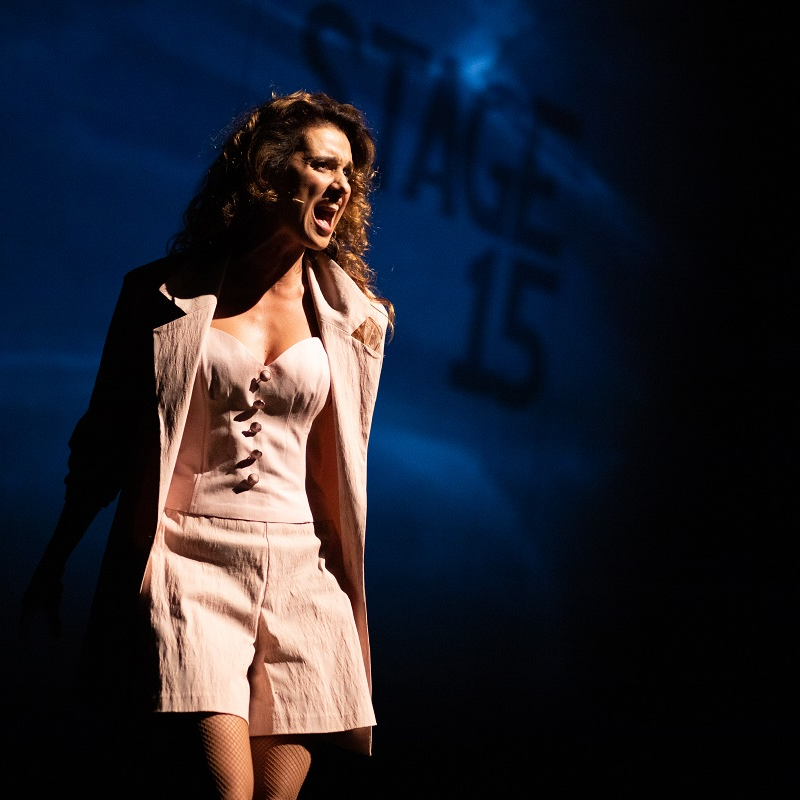
In most respects a facsimile of the film, with a book penned by Marshall and the film's screenwriter J.F. Lawton, Pretty Woman: The Musical certainly doesn't attempt a revisionist view of its source's sexual politics. What Szydłowski's production does do, though, is add a bit of a meta framework - mild but nonetheless welcome - which presents the production in the context of a sound stage film set, complete with crew, cameras,  clapperboards and the occasional "re-take" for a flubbed line. You'd hesitate to call it Brechtian, but, carried through to a witty curtain call, this self-conscious conceit puts a little bit of distance on the material, serving as a wry reminder of its origins. 


Pretty Woman: The Musical
© Teatr Muzyczny w Łodzi, Michał Matuszak

Otherwise the show offers a faithful, straight-down-the-line retread that delivers the expected mix of comedy, light social satire and romance. (Its machine-tooled slickness is the opposite of the last musical I saw, the National Theatre's wonky but characterful Hex.) Adams and Vallance's songs, with their upfront "80s pop/rock sensibilities, are generic and lyrically banal but serviceable and easy on the ear (well, except for the shrill "Rodeo Drive"): they sound good here in Polish translation by Daniel Wyszogrodzki, and are enhanced by fun, diverse choreography by Jarosław Staniek and Katarzyna Zielonka. 

Budgetary constraints are evident in elements of Grzegorz Policiński's  design - such as a meant-to-be-palatial Beverly Hills penthouse suite that looks more like the set of a 1970s sitcom. But there's an affectionate early '90s nostalgia to aspects like the displayed Cher, Thelma & Louise, and Terminator 2 posters. And the production reaches its romantic apex in a simply beautiful staging of the opera scene, with the La Traviata performance interwoven with the musical's centrepiece romantic ballad "You and I," that moves the couple from opera box to the stage and back to the apartment. It's the show's standout sequence in terms of fully integrating song, dance, design and lighting to develop character and move the narrative forward. 

Pretty Woman: The Musical
© Teatr Muzyczny w Łodzi, Justyna Tomczak

From costume choices to hairstyle to physique, Malwina Kusior as Vivian hews closely to Julia Roberts in the film. But Kusior succeeds in creating a strong audience rapport from the start, and from her impassioned delivery of Vivian's early "I want" song "Anywhere But Here" ("Jak najdalej stąd" - hej, Domalewski!), she makes all the musical moments count. As Edward, Marcin Jajkiewicz brings less to the party, but he does well by the soul-baring ballad "Wolność" which sounds much stronger and more meaningful here than in its blander English language incarnation, "Freedom".
 
A solid ensemble offers lively support, including Paweł Erdman as the hotel manager who schools Vivien in etiquette in an amusingly done number, and the ebullient Maciek Pawlak in two roles, including Erdman's bellboy sidekick. The biggest departure in terms of characterisation is Małgorzata Chrusciel's brassy, peroxided Kit, who's closer to a full-on John Waters heroine here than to Laura San Giacomo in the film. The definition of a fun, undemanding night out (though definitely over-extended at a whopping 3 hours), judging by the enthusiastic response of the packed audience it's easy to see Pretty Woman taking its place alongside Les MisMiss Saigon and Madagascar as a popular new addition to Teatr Muzyczny's repertoire. 


Pretty Woman: The Musical is booking at Teatr Muzyczny. Further information here