
I wrote this piece on Agnieszka Holland's work and reputation for Culture.pl. You can read it here.

Culminating in the sublime LIVET: Suite for the Earth concert, which brought together performers from Poland, Ukraine, Norway and Bulgaria, last year's Retroperspektywy proved an unforgettable edition of the international theatre festival, which is invariably a highlight of summertime in Łódź. And Retroperspektywy returned this year with a just-concluded edition marking a milestone: the 20th anniversary of its founder, Teatr CHOREA, whose activities encompass workshops with and training of diverse community groups, and, of course, the staging of its own inimitably creative concerts and shows.
 |
| Tomasz Rodowicz... and the CHOREA birthday cake |
 |
| Exhibition: Evocations - 20 Years of CHOREA |
Under the title "Przebudzenia" ("Awakenings"), this year's edition found CHOREA in a mood both reflective and celebratory. This was evident, for one, in the theme of the festival's accompanying exhibition, "Evocations: 20 Years of CHOREA," curated by Magda Milewski and Janusz Adam Biedrzycki, which presented a narrative of the group's activities accompanied by photos and a well-chosen physical "trace" of each live event through the display of a prop or costume. On Monday and Tuesday there was also the rare opportunity to watch filmed shows from the CHOREA archive.
 |
| Ola Shaya opening What's Demeter? |
What's more, the opening show of this year's edition, punningly titled What's Demeter?, offered an exhilarating rollercoaster ride through a diverse selection of songs and scenes from CHOREA's performance history - a bit like 2013's "50 Years on Stage" event by the British National Theatre, but much more excitingly done. With artistic supervision by CHOREA co-founder Tomasz Rodowicz and "interventions" by director Łukasz Kos adding a fresh eye, the evening was no mere cobbled together "Greatest Hits" package.
 |
| Elina Toneva and the company in What's Demeter? |
Instead, What's Demeter? worked as a profound, playful and cohesive experience in its own right, with a strong flow and meaningful transitions but also loose, improvisatory elements, as artists from the company's past and present took to the stage or joined in and sang from the audience.
 |
| Po Ptakach (After the Birds) in What's Demeter? |
Highlights were plentiful, from Ola Shaya opening the proceedings in cabaret style to quiz audience members on favourite productions and deliver a number from 2011's The Blue Parrot concert, to Sean Palmer unleashing his gorgeous gritty growl ("CHOREA in the house!") to score Rodowicz and Dorota Porowska's super-sensual pas de deux from 2005's After the Birds (Po Ptakach) - incidentally the first CHOREA performance I saw.
 |
| Ragnarok in What's Demeter? |
And even if you had seen some of the featured extracts before you would perforce experience them afresh here, since a major component of the event was the live filming of most of the performances by Kamil Wallace, with the images relayed on a large screen to achieve some startling juxtapositions.
Particularly overwhelming in this regard was the opening sequence of 2022's Ragnarok. This was already a uniquely haunting spectacle that seems to distill all human suffering and striving, fear and fortitude, as, to the celestial sound of Arvo Pärt's Stabat Mater, the performers slowly make their way across the stage towards the light as a tangled, straining collective. This time, with the variously pained or hopeful faces also presented in close-up on the screen, the piece combined the power of physical theatre with that of silent cinema, and reduced this viewer, for one, to tears.
 |
| Joanna Chmielecka in What's Demeter? |
On the solo side, Joanna Chmielecka delivered a physical and vocal Bruno Schulz-derived tour de force atop, under and whilst taking the legs off of a table, while Małgorzata Lipczyńska, Anna Maszewska (who is also the festival's indefatigable coordinator), and Julia Jakubowska reassembled for a scene from the latter's witty 2020 feminist fairytale revision Księżniczki (Princesses).
 |
| Dzień Dobry Pinky Mouse! in What's Demeter? |
A number from 2021's Dzień Dobry Pinky Mouse! took the already anarchic children's musical to a new level of hilarious mania. And the company's versatility is such that the next moment they could morph into the protagonists of 2015's Derby.Biało.Czerwoni (Derby. Red and White): rapping football fans ready for a ruck.
 |
| Maciej Maciaszek in What's Demeter? |
Threaded throughout were some soul-stirring interludes of choral singing that spoke to the group's deep roots, while the final section, from 2014's Vidomi - a piece originally developed in collaboration with visually impaired performers - was a delicious last tango in which the audience was invited to the stage to dance, bringing the performance to a perfect, bonding close as we then headed outside to the CHOREA birthday party. The whole evening was an invigorating and inspiring experience.
 |
| Zjem twój dżem |
The organisers also took the opportunity in this anniversary year to significantly spotlight the work of CHOREA's Intergenerational Group and its Older and Younger Children's Groups. Among several shows for family audiences, the Older Group presented the endearingly berserk Zjem twój dżem (I'll Eat Your Jam) which brought songs, some film noir spirit and a dose of well-judged social commentary to its tale of food, crime and cross-generational relations set in the Łódź district of Bałuty.
 |
| Eden: A Scenical Fairy Tale in Several Pictures |
Made up of participants from ages 16 to 80, the all-female Intergenerational Group presented two shows: Pauza, and Eden: A Scenical Fairy Tale in Several Pictures. Pauza didn't come together for me, but Eden, directed by Biedrzycki, Magdalena Paszkiewicz, and Wiktor Moraczewski, proved a magical experience - something of a companion piece to the same team's also ecologically-minded Rój. Sekretne życie społeczne ("The Hive: Secret Social Life") from 2018.
Starting with a disarming scene of chat and comedy (look out for the troublesome deckchair), the piece evolved into an ambient evening of physical theatre, one that - through brilliant lighting (green and blue washes turning fiery red), sound, costumes and performances from the 13-strong cast - conveyed the kind of deep care for and attention to nature that Teatr Nowy's witless recent musical adaptation of The Secret Garden sorely lacked.
 |
| Eden: A Scenical Fairy Tale in Several Pictures |
Each different section of Eden was clearly designed and delineated, but the show felt cohesive, and developed a very tender, affirmative tone, with the bodies of the cast eventually becoming the garden plants, blooming by night in a gorgeous final sequence. With audience members given seeds on our way out, the show offered a cleansing and restorative celebration of nature in the feminine.
 |
| Teraz wiesz, jak się czuję |
The invited companies this year included Grupa Performatywna Chłopaki, who presented Teraz wiesz, jak się czuję (Now You Know How I Feel), a lively, crowd-pleasing exploration of contemporary Polish masculinity that combined quiet heart-on-sleeve confessional moments with wild elements of stand-up, game show and porn-parody to interrogate social expectations and stereotypes, and point to possibilities of moving beyond them.
 |
| Hic Sunt Dracones |
The Czech company Teatr Divadlo Continuo provided one of the festival's most startling experiences with Hic Sunt Dracones, directed by Pavel Štourač. This piece probed the darker corners of consciousness and corporeality, creating some jaw-dropping images of dismemberment and bodily fragmentation, though not without a dose of absurdist black humour that Tim Burton or Terry Gilliam might enjoy, very much operating in the bold surrealist Czech tradition of Jan Švankmajer. The physical panache of the four performers - Sara Bocchini, Kateřina Šobáňová, Granada Gallego and Diana Khwaja - was enhanced by fantastic music and sound performed live by Jakub Štourač.
 |
| Magda Kuraś Quintet / Bilgoraj Triptych |
Two terrific concerts by female-fronted Polish bands also spoke to the CHOREA ethos of combining tradition with experimentation. With repertoires based on Konin-area melodies and South-Eastern Polish traditions respectively, the Tuleje trio (Gosia Zagajewska, Wojtek Kurek and Ksawery Wojcinski) and the Magda Kuraś Quintet (featuring Kuraś, Maciej Świniarski, Ziemowit Klimek, Tomasz Chyła, and Kuba Krzanowski) both took folk music in fresh directions, with jazz, rock, art song and improvised elements, to create rich, immersive sounds that felt totally organic.
 |
| Eine Winterreise. A Winter Journey. Schubert/ Müller/ Baczyński |
The festival's final show also centred music, this time from the classical canon. Contrasting with the expansiveness of What's Demeter?, the Festival closed with an intimate piece for three performers: an interpretation of Schubert's seminal 1827 song-cycle, Winterreise. Eine Winterreise. A Winter Journey. Schubert/ Müller/ Baczyński was co-directed by singer Łukasz Konieczny and dancer/choreographer Boris Randzio who also performed the piece, alongside accomplished pianist Nikolaus Rexroth.
The performance's innovations included Randzio's danced contribution - and the incorporation of poems by the great Polish poet Krzysztof Kamil Baczyński, who was killed in the Warsaw Uprising. The use of Baczyński's verse alongside the original Wilhelm Müller poems that Schubert based the work around developed a powerful counter narrative that suggested the building of a Polish-German cultural bridge in the context of the work's themes of alienation, melancholia and mortality.

Summing up CHOREA's achievements at the time of the company's 15th anniversary five years ago, the critic Piotr Olkusz described them as "the wealth of Łódź," crediting the group with forging "a new form of participation in culture and new responsibility for culture. They've slightly changed us." That definition still stands, and Awakenings was another edition of RPS that opened viewers' eyes, ears, minds and hearts to a rich variety of performances and expressions. As CHOREA enters its next decade I continue to wish that the company would push the "international" element of Retroperspektywy further in terms of audiences as well as performances, broadening out to be more accessible to non-Polish speakers and to ensure that their world-class work is more widely seen than ever. Still, as it is, this year's Festival offered some beautiful ways of celebrating CHOREA's past, being in the present, and looking to the future.
The 2024 Retroperspektywy Festival took place at Fabryka Sztuki in Łódź between 23 August - 1 September.
All performance images by Agnieszka Cytacka fotografia.

Among the most joyous screenings at this year's New Horizons Film Festival last month was that of Agnieszka Zwiefka's Vika! (2023), a documentary dedicated to the life and work of the Warsaw-based octogenarian Wirginia Szmyt, a former teacher and correctional facility director turned Poland's (and, let's face it, probably the world's) oldest DJ.
Combining stylised music video-inspired sequences with footage of Vika on the decks at Pride marches and parties in Poland and abroad, plus intimate reflections on her complicated family relations, lockdown isolation (and bonus appearances from her hilariously troublesome cat), Zwiefka's film celebrated Vika as a figure whose energy and zest for life not only challenge ageist stereotyping but who also unites diverse demographics - groups that many (not least the mainstream media) prefer to present as irredeemably polarised right now.
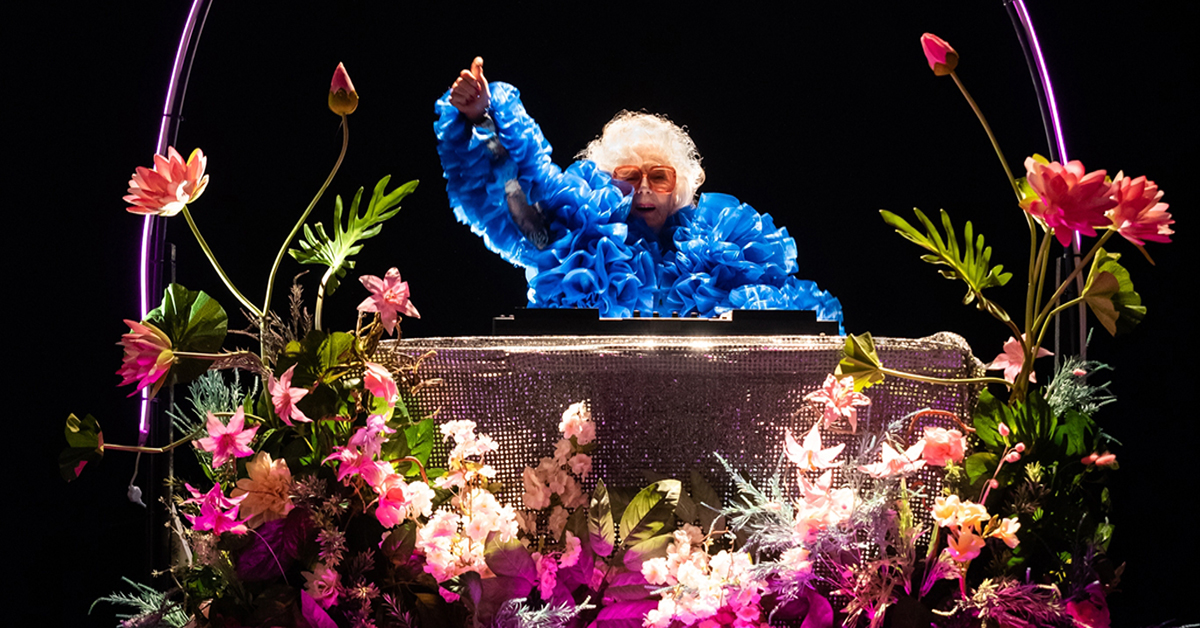 |
| Vika! (2023) |
As usual taking place at Fabryka Sztuki and other venues in Łódź across 10 days in August, Teatr CHOREA's Retroperspektywy International Theatre Festival (RPS) this year took as its theme the subject of "Generations," exploring conflicts, correspondences, and, in the words of Artistic Director Tomasz Rodowicz, "attempts to find oneself in intergenerational relationships." (Evidently the topic is of particular concern to Polish creatives and curators at present, since this year's Hommage a Kieślowski festival, which happened in Sokołowsko concurrently with RPS, also chose "Generations" as its theme.) Given the festival's focus, the appearance of DJ Vika at the RPS final Friday party was perfect; the DJ brought the youngest and oldest attendees to the dance floor with a fun, eclectic set that spanned styles and decades.
I've attended Retroperspektywy for the past 5 years, always finding it among the most multifaceted, inclusive and carefully curated of festivals. If anything, those qualities seemed enhanced this year - perhaps appropriately, given the festival's theme. This 12th edition was one of the strongest yet, as the programme encompassed plays, puppetry, concerts, dance, an exhibition of work by young artists from Jola Królicka's studio at the MSK Art Centre, a series of intergenerational ecological workshops, and meetings with creatives after each event. (Sadly, one much anticipated performance, Łukasz Kos's new take on An-ski's Dybuk, had to be cancelled due to an accident.)
 |
| Księgi niepokoju. Stanisław / Antoni / Fernando |
The opening premiere, Księgi niepokoju. Stanisław / Antoni / Fernando (Books of Disquiet. Stanislaw / Antoni / Fernando), directed by and starring Rodowicz alongside two charismatic young performers, Antoni Wójcik-Urbaniak and Stanisław Ginalski, perfectly established the Festival theme, using a sustained chess metaphor to dramatise intergenerational tensions and moments of complicity.
 |
| Księgi niepokoju. Stanisław / Antoni / Fernando |
Lower-keyed and more distilled than some CHOREA opening shows, the piece nonetheless proved stimulating, incorporating translated text by Fernando Pessoa, clever set and costume design by Królicka, and - perhaps inevitably - a Seventh Seal homage, as well as benefiting hugely from Rodowicz, Wójcik-Urbaniak and Ginalski's evident rapport.
 |
| I am OK |
Like last year's edition, the Festival again boasted a significant Ukrainian presence, presenting two shows by Kharkiv State Academic Puppet Theatre. These productions were both directed by Oksana Dmitrieva, and each was finely attuned to the very different demands of the material.
I am OK was raw, direct and immediate in its focus on the diverging fates of four teenage friends (played by Liliia Osieichuk, Serhii Smerechuk, Oleksandra Kolesnichenko, and Yakiv Ozerovin) in Bucha from the first days of the Russian invasion; it wasn't surprising to see some audience members openly weeping by the show's climax.
 |
| Vertep |
Vertep, by contrast, tapped into a deep well of ritual and tradition. Named in reference to the Ukrainian portable puppet theatre which presents the nativity story and mystery plays, and which was suppressed by the Soviet state, the performance was full of rich symbolism, soulful singing and creative design.
 |
| Ściana z widokiem |
Teenage experience in a contemporary context was also explored in Grupa Coincidentia's Ściana z widokiem (Wall with a View), an idiosyncratic, wild but tender portrait of teenage lockdown loneliness. The prize-winner of the Artistic Event for Children and Youth Project, the show was undertaken in collaboration with Children's Art Centre in Poznań under the auspices of the 23rd Biennale of the Art for Children, but doesn't shy away from darker emotions. Still, the show placed emphasis on the saving possibilities of creativity and imagination.
Staged in traverse, with well-incorporated multimedia elements, and director and designer Konrad Dworakowski on stage to add musical accompaniment alongside composer Robert Jurčo, the performance boasted a great central "duet" by the briskly multi-roling Dagmara Sowa and by Paweł Chomczyk as the troubled teen.
 |
| IV RP Snów |
Several ambitious pieces in the programme used dance to express and meditate on existential anxieties. I wasn't convinced by Stowarzyszenie Sztuka Nowa's IV RP Snów (4th Republic of Dreams), directed by Dawid Żakowski and choreographed by Wojciech Grudziński. Despite the clear commitment of its supple trio of performers (Ewelina Sobieraj, Borys Jaźnicki, Michał Tokarski), the production teetered between arresting and risible, and succumbed to the latter in a key section scored to Diana Krall's uniquely painful rendition of "Cry Me a River."
 |
| BUD (Photo: Øystein Haara)* |
On the other hand, BUD, presented on the large stage at Teatr Pinokio by the Bergen-based Carte Blanche - Norwegian National Company of Contemporary Dance as part of the ongoing ACT IN_OUT collaborative project, was explosively effective.
Directed and choreographed by Roza Moshtagi, the gripping piece combined elements of dance and installation art to explore the condition of waiting and suspended time - its performers (Irene Vesterhus Theisen, Ole Martin Meland, Aslak Aune Nygård, Anne Lise Rønne, Trine Lise Moe) variously sitting, laying, convulsing, or racing in the space. Enhanced by a soundscape that veered from otherworldly chants to pounding industrial noise (music is by Lykorgous Porfyris), BUD is a major, original piece of work that deserves wide international attention.
 |
| Full Measures |
Also highly distinctive was Full Measures by Finland's Livsmedlet director/ choreographer/puppeteer/performer duo Sandrina Lindgren and Ishmael Falke, which examined the human compulsion to quantify and measure sundry aspects of life experience as a form of control.
Initially I was reminded a bit of the great central section of Martin Crimp's unloved play In the Republic of Happiness, as Lindgren and Falke communicated through a volley of exchanged averages, stats and percentages, delivered in an amusingly deadpan fashion that gestured at social critique. But the piece evolves into something quite other in its frenzied, frantic later section. Throughout, a multitude of measuring sticks are employed as versatile and expressive aids and props, finally forming a forest that might, perhaps, be a space for our beleaguered protagonists to begin anew.
 |
| Morze ∞ możliwości |
 |
| Morze ∞ możliwości |
Freely adapted from Kobi Yamada's book Maybe, this was a calming, beautiful family show that offered pure Sunday lunchtime enchantment, following its enterprising, wide-eyed protagonist (designed by Justyna Bernadetta Banasiak) through various tasks and attempts, as they learn the value of trying again, and develop their potential. With a twinkling soundscape, and a simple video camera projecting elements of the set, the design conjures forest, ocean and mountainside up to to a final flight, and the show charmed audience members of all ages from beginning to end.
 |
| Rejs |
 |
| Rejs |
 |
| Marja Mortenssen in Livet. Suita dla Ziemi |
 |
| Livet. Suita dla Ziemi |
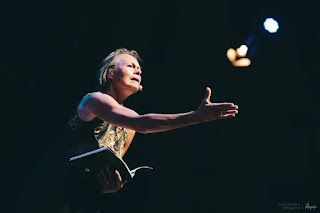 |
| Juni Dahr in Livet. Suita dla Ziemi |
 |
| Piotr Klimek in Livet. Suita dla Ziemi |
 |
| Zoriana Dybovska in Livet. Suita dla Ziemi |
With voices soaring in lament or exaltation, complemented by some atmospheric lighting design, the effect was overwhelmingly powerful; the performers also radiated a mutual warmth, respect and love that was heart-warming to witness. As Dahr remarked in an interview: "We are in a very difficult moment in Europe. This is the right moment to join forces, create music, poetry, art together and thus give each other a little faith in the future."
 |
| Elina Toneva in Livet. Suita dla Ziemi |
 |
| Livet. Suita dla Ziemi |
With the exception of the image of BUD by Øystein Haara, all performance photos are by AGNIESZKA CYTACKA FOTOGRAFIA

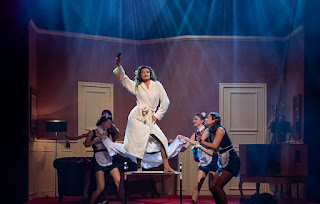 |
| Pretty Woman: The Musical © Teatr Muzyczny w Łodzi, Michał Matuszak |
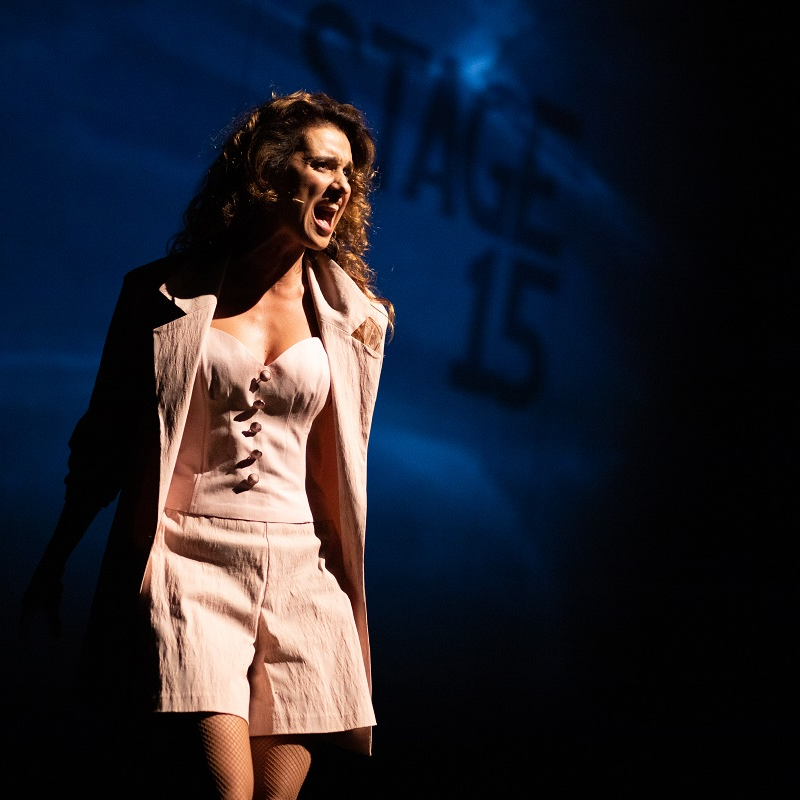 |
| Pretty Woman: The Musical © Teatr Muzyczny w Łodzi, Justyna Tomczak |

