Showing posts with label Chorea. Show all posts

Tuesday, 3 September 2024

Awake, Arise: A Report on Awakenings (Przebudzenia) - the 13th Retroperspektywy Festival (Łódź, 23/8 - 1/9 2024)


Culminating in the sublime LIVET: Suite for the Earth concert, which brought together performers from Poland, Ukraine, Norway and Bulgaria, last year's Retroperspektywy proved an unforgettable edition of the international theatre festival, which is invariably a highlight of summertime in Łódź. And Retroperspektywy returned this year with a just-concluded edition marking a milestone: the 20th anniversary of its founder, Teatr CHOREA, whose activities encompass workshops with and training of diverse community groups, and, of course, the staging of its own inimitably creative concerts and shows.  

Tomasz Rodowicz... and the CHOREA birthday cake

Based at Fabryka Sztuki in Łódź since 2007, CHOREA's defining feature (or one of them) has been its merging of ancient traditions with practices associated with the 20th century avant garde (taking particular inspiration from the work of Grotowski) and cutting-edge contemporary physical theatre, generating dynamic performances combining song, text, movement, and dance.

The group's ethos has never been one of slavish reconstruction of past models. Rather, CHOREA has been all about exploring how ancient theatre forms can be mobilised to speak to current concerns (and enduring existential ones). As a company they're bridge-builders, alchemists, risk-takers, empowerers, and creators of unique theatrical experiences that attune audiences to the expressive capabilities of the human body and voice, providing a fusion of sensual and intellectual pleasures - also accomplished with a spirit of play.

Exhibition:
Evocations - 20 Years of CHOREA

Under the title "Przebudzenia" ("Awakenings"), this year's edition found CHOREA in a mood both reflective and celebratory. This was evident, for one, in the theme of the festival's accompanying exhibition, "Evocations: 20 Years of CHOREA," curated by Magda Milewski and Janusz Adam Biedrzycki, which presented a narrative of the group's activities accompanied by photos and a well-chosen physical "trace" of each live event through the display of a prop or costume. On Monday and Tuesday there was also the rare opportunity to watch filmed shows from the CHOREA archive.

Ola Shaya opening What's Demeter?

What's more, the opening show of this year's edition, punningly titled What's Demeter?, offered an exhilarating rollercoaster ride through a diverse selection of songs and scenes from CHOREA's performance history - a bit like 2013's "50 Years on Stage" event by the British National Theatre, but much more excitingly done. With artistic supervision by CHOREA co-founder Tomasz Rodowicz and "interventions" by director Łukasz Kos adding a fresh eye, the evening was no mere cobbled together "Greatest Hits" package. 


Elina Toneva and the company in What's Demeter?

Instead, What's Demeter? worked as a profound, playful and cohesive experience in its own right, with a strong flow and meaningful transitions but also loose, improvisatory elements, as artists from the company's past and present took to the stage or joined in and sang from the audience.

Po Ptakach (After the Birds) in What's Demeter?

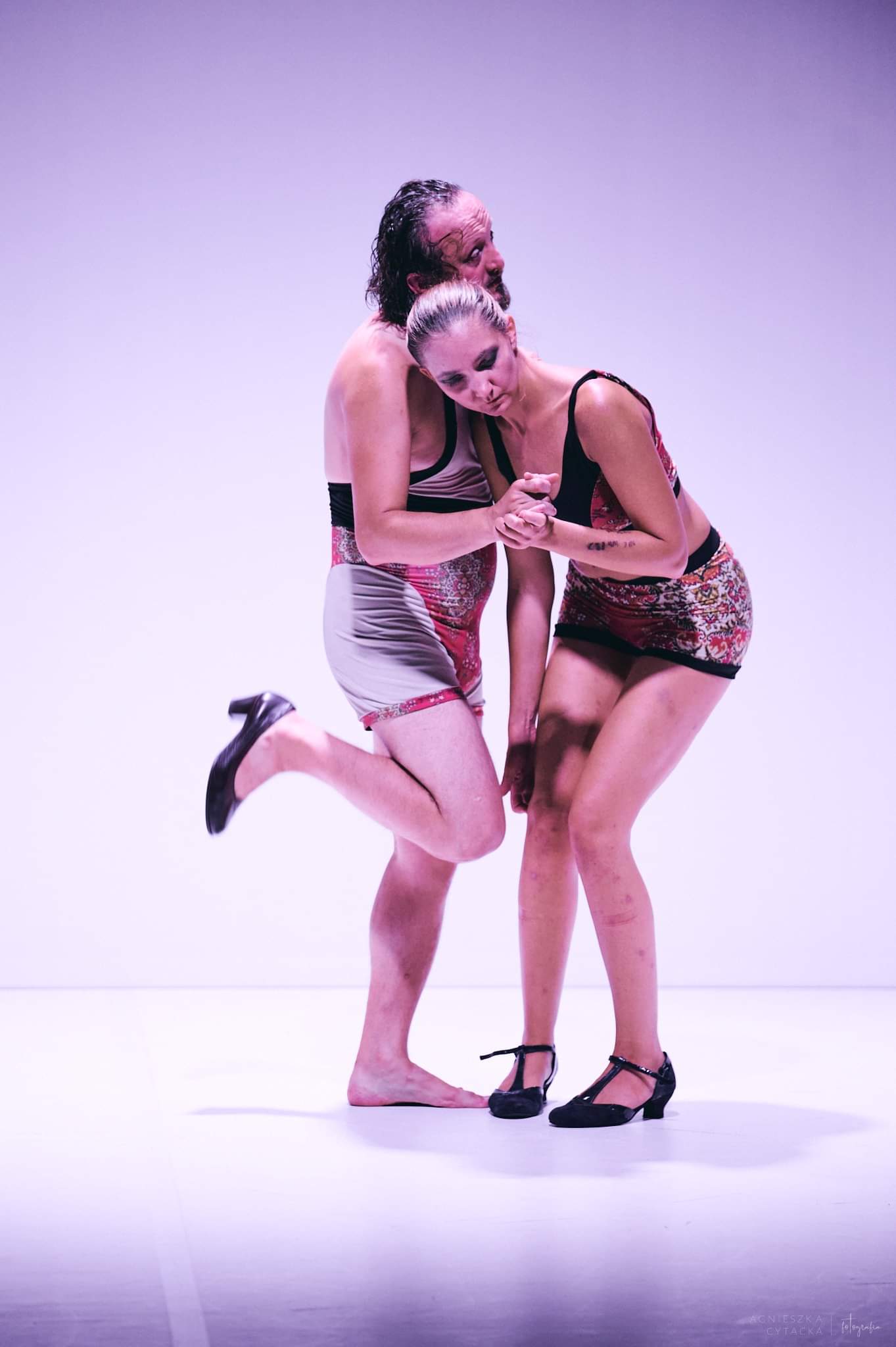
Highlights were plentiful, from Ola Shaya opening the proceedings in cabaret style to quiz audience members on favourite productions and deliver a number from 2011's The Blue Parrot concert, to Sean Palmer unleashing his gorgeous gritty growl ("CHOREA in the house!") to score Rodowicz and Dorota Porowska's super-sensual pas de deux from 2005's After the Birds (Po Ptakach) - incidentally the first CHOREA performance I saw. 

Ragnarok in What's Demeter?

And even if you had seen some of the featured extracts before you would perforce experience them afresh here, since a major component of the event was the live filming of most of the performances by Kamil Wallace, with the images relayed on a large screen to achieve some startling juxtapositions. 

Particularly overwhelming in this regard was the opening sequence of 2022's Ragnarok. This was already a uniquely haunting spectacle that seems to distill all human suffering and striving, fear and fortitude, as, to the celestial sound of Arvo Pärt's Stabat Mater, the performers slowly make their way across the stage towards the light as a tangled, straining collective. This time, with the variously pained or hopeful faces also presented in close-up on the screen, the piece combined the power of physical theatre with that of silent cinema, and reduced this viewer, for one, to tears.


Joanna Chmielecka in What's Demeter?

On the solo side, Joanna Chmielecka delivered a physical and vocal Bruno Schulz-derived tour de force atop, under and whilst taking the legs off of a table, while Małgorzata Lipczyńska, Anna Maszewska (who is also the festival's indefatigable coordinator), and Julia Jakubowska reassembled for a scene from the latter's witty 2020 feminist fairytale revision Księżniczki (Princesses). 

Dzień Dobry Pinky Mouse! in What's Demeter?

A number from 2021's Dzień Dobry Pinky Mouse! took the already anarchic children's musical to a new level of hilarious mania. And the company's versatility is such that the next moment they could morph into the protagonists of 2015's Derby.Biało.Czerwoni (Derby. Red and White): rapping football fans ready for a ruck.

Maciej Maciaszek in What's Demeter?

Threaded throughout were some soul-stirring interludes of choral singing that spoke to the group's deep roots, while the final section, from 2014's Vidomi - a piece originally developed in collaboration with visually impaired performers - was a delicious last tango in which the audience was invited to the stage to dance, bringing the performance to a perfect, bonding close as we then headed outside to the CHOREA birthday party. The whole evening was an invigorating and inspiring experience. 

Zjem twój dżem

The organisers also took the opportunity in this anniversary year to significantly spotlight the work of CHOREA's Intergenerational Group and its Older and Younger Children's Groups. Among several shows for family audiences, the Older Group presented the endearingly berserk Zjem twój dżem (I'll Eat Your Jam) which brought songs, some film noir spirit and a dose of well-judged social commentary to its tale of food, crime and cross-generational relations set in the Łódź district of Bałuty.

Eden:
A Scenical Fairy Tale in Several Pictures

Made up of participants from ages 16 to 80, the all-female Intergenerational Group presented two shows: Pauza, and Eden: A Scenical Fairy Tale in Several Pictures. Pauza didn't come together for me, but Eden, directed by Biedrzycki, Magdalena Paszkiewicz, and Wiktor Moraczewski, proved a magical experience - something of a companion piece to the same team's also ecologically-minded Rój. Sekretne życie społeczne ("The Hive: Secret Social Life") from 2018. 

Starting with a disarming scene of chat and comedy (look out for the troublesome deckchair), the piece evolved into an ambient evening of physical theatre, one that - through brilliant lighting (green and blue washes turning fiery red), sound, costumes and performances from the 13-strong cast - conveyed the kind of deep care for and attention to nature that Teatr Nowy's witless recent musical adaptation of The Secret Garden sorely lacked. 

Eden:
A Scenical Fairy Tale in Several Pictures

Each different section of Eden was clearly designed and delineated, but the show felt cohesive, and developed a very tender, affirmative tone, with the bodies of the cast eventually becoming the garden plants, blooming by night in a gorgeous final sequence. With audience members given seeds on our way out, the show offered a cleansing and restorative celebration of nature in the feminine. 

Teraz wiesz, jak się czuję

The invited companies this year included Grupa Performatywna Chłopaki, who presented Teraz wiesz, jak się czuję (Now You Know How I Feel), a lively, crowd-pleasing exploration of contemporary Polish masculinity that combined quiet heart-on-sleeve confessional moments with wild elements of stand-up, game show and porn-parody to interrogate social expectations and stereotypes, and point to possibilities of moving beyond them.


Hic Sunt Dracones

The Czech company Teatr Divadlo Continuo provided one of the festival's most startling experiences with Hic Sunt Dracones, directed by Pavel Štourač. This piece probed the darker corners of consciousness and  corporeality, creating some jaw-dropping images of dismemberment and bodily fragmentation, though not without a dose of absurdist black humour that Tim Burton or Terry Gilliam might enjoy, very much operating in the bold surrealist Czech tradition of Jan Švankmajer. The physical panache of the four performers - Sara Bocchini, Kateřina Šobáňová, Granada Gallego and Diana Khwaja - was enhanced by fantastic music and sound performed live by Jakub Štourač.

Magda Kuraś Quintet / Bilgoraj Triptych

Two terrific concerts by female-fronted Polish bands also spoke to the CHOREA ethos of combining tradition with experimentation. With repertoires based on Konin-area melodies and South-Eastern Polish traditions respectively, the Tuleje trio (Gosia Zagajewska,  Wojtek Kurek and Ksawery Wojcinski) and the Magda Kuraś Quintet (featuring Kuraś, Maciej Świniarski, Ziemowit Klimek, Tomasz Chyła, and Kuba Krzanowski) both took folk music in fresh directions, with jazz, rock, art song and improvised elements, to create rich, immersive sounds that felt totally organic. 

Eine Winterreise. A Winter Journey.
Schubert/ Müller/ Baczyński

The festival's final show also centred music, this time from the classical canon. Contrasting with the expansiveness of What's Demeter?,  the Festival closed with an intimate piece for three performers: an interpretation of Schubert's seminal 1827 song-cycle, Winterreise. Eine Winterreise. A Winter Journey. Schubert/ Müller/ Baczyński was co-directed by singer Łukasz Konieczny and dancer/choreographer Boris Randzio who also performed the piece, alongside accomplished pianist Nikolaus Rexroth. 

The performance's innovations included Randzio's danced contribution  - and the incorporation of poems by the great Polish poet Krzysztof Kamil Baczyński, who was killed in the Warsaw Uprising. The use of Baczyński's verse alongside the original Wilhelm Müller poems that Schubert based the work around developed a powerful counter narrative that suggested the building of a Polish-German cultural bridge in the context of the work's themes of alienation, melancholia and mortality.


Summing up CHOREA's achievements at the time of the company's 15th anniversary five years ago, the critic Piotr Olkusz described them as "the wealth of Łódź," crediting the group with forging "a new form of participation in culture and new responsibility for culture. They've slightly changed us." That definition still stands, and Awakenings was another edition of RPS that opened viewers' eyes, ears, minds and hearts to a rich variety of performances and expressions. As CHOREA enters its next decade I continue to wish that the company would push the "international" element of Retroperspektywy further in terms of audiences as well as performances, broadening out to be more accessible to non-Polish speakers and to ensure that their world-class work is more widely seen than ever. Still, as it is, this year's Festival offered some beautiful ways of celebrating CHOREA's past, being in the present, and looking to the future. 


The 2024 Retroperspektywy Festival took place at Fabryka Sztuki in Łódź between 23 August - 1 September.

All performance images by Agnieszka Cytacka fotografia.


Tuesday, 30 August 2022

The Beginning of a New World - Reflections on Retroperspektywy Theatre Festival 2022, Łódź


With a striking poster design evoking the cosmic, sci fi and futurology, the just-concluded 11th international Theatre Festival Retroperspektywy (RPS), curated and organised by Teatr CHOREA at Fabryka Sztuki between 19-28 August, took as its title "The Beginning of a New World." 


A potent post-pandemic (sic) topic if ever there was one, this was a theme explored in typically diverse and idiosyncratic ways across the Festival's carefully curated programme. As usual, RPS encompassed theatre and dance performances, concerts, exhibitions, workshops and discussions - as well as, this time, the launch of the new book Rodowicz-Teatr-Droga (Rodowicz-Theatre-Road): a collection of interviews with CHOREA co-founder and RPS artistic director To­masz Ro­do­wicz, edited by Da­riusz Ko­siń­ski.  


From feminist deconstructions of classic 19th century literature (director Joanna Lewicka's Bovary) to a bespoke children's show (Jo­an­na Fi­lar­ska and Pa­weł Gło­wa­ty's Sklep z dobrym humorem/A Good Humour Shop); a performance about inter-generational contact developed with the company's senior and youth groups (Złota Nić/Golden Thread); and a superb abstract art exhibition featuring the work of over 20 artists, the Festival's inclusive ethos and high standards were maintained, making for 10 days of artistic experimentation, intellectual and sensual stimulation, mischief, political subversiveness, surprises, and pure joy at 3 Ty­mie­niec­kie­go Stre­et. 


Ragnarok


The explosive opening show of last year's Festival, Łukasz Kos and CHOREA's adaptation of Witold Wandurski's 1925 satire Śmierć na gruszy (Death on a Pear Tree), was such an unforgettable, wild riot that it seemed tough to top. But though substantially more streamlined, Ragnarok, this year's opener, proved more than daring enough. Directed and choreographed by Ad­rian Bart­czak, this collaboration between CHOREA and Carte Blanche National Dance Theatre of Norway was slightly reminiscent of previous CHOREA shows based on Bruno Schulz's texts, Skrawki (Scraps) (2020) and Pętla (Loop) (2021), with a strong emphasis on ensemble movement, a fascination with repeated rituals, and several of the same performers featured.

Ragnarok

Ragnarok, with its "Twilight of the Gods" title, develops its own aesthetic and attitude, though. Its hypnotic, dialogue-free 30 minute opening sequence presented Rodowicz, Janusz Adam Biedrzycki, Maja Caban, Joanna Chmielecka, Michał Jóźwik, Małgorzata Lipczyńska, and Anna Maszewska slowly making their way around the carpeted stage, as a tangled knot of pain: their bodies contorted, crawling, reaching out, mouths sometimes agape in silent screams. 

Ragnarok

If this haunting vision of collective distress gestured towards the horrors of the past two years - and those that are still ongoing - the show's evocation of a post-apocalyptic scenario remained intimate, interior and quite abstract. Clearly divided into differently toned sections, Ragnarok went on to show a social world being established (sandwiches made on stage were handed out to the audience) then fragmented, while a delirious dance interlude stripped set and performers, suggesting a bizarrely deconstructed club night. Tomasz Krzyżanowski's music, ranging from classical requiem to twitchy electronics, enhanced the immersive richness and unpredictability of the performance, which implicated the audience right up to the conclusion - and beyond, as bits of Marta Góźdź - El Bruzda's set - a carpet, a cup - greeted us at the exit.

Romans

While ensemble work often defines CHOREA's performances and collaborations, solo shows by female performers also have an important place in the Festival, and have often proved particularly powerful. Following Akty (RPS 2019) and W zawieszeniu (Suspended) (RPS 2020), this year's programme included Romans (Love Affair), a monodrama performed and directed by Natalia Sakowicz from a script by Zuzanna Bojda. 


Romans


I say "monodrama," but Romans is actually better described as a dialogue or duet, since the piece is based on Sakowicz's manipulations (both senses of the word seem appropriate here) of an extremely expressive human-sized puppet: one "Marta". The interactions of this pair allow Romans to pitilessly chart the arc of a relationship, from curiosity and exuberant erotic exploration through overlapping identities to coercive control and abuse - a bit reminiscent of Leos Carax's use of puppetry to interrogate the darker corners of parent/child dynamics in Annette (2021). Sound and music are central in Romans too, from tautly sustained moments of total silence to a startling interlude of synth-scored operatic vocalising. The set design is spare but carefully detailed (take a close look inside the wine glasses dotting the stage), leaving plenty of space for Sakowicz's fearless, expertly controlled performance. 


KON­GRES FU­TU­RO­LO­GICZ­NY

Given the main theme of this year's Festival, the presence of Sta­ni­sław Lem in two of the programme's productions was not unexpected. Ma­te­usz Pa­ku­ła's Lem vs. P.K. Dick explored the relationship between the two pioneering authors, while director Da­niel Adam­czyk and playwright Ma­ciej Gor­czyń­ski offered a compelling theatrical take on Lem's 1971 satirical novel KON­GRES FU­TU­RO­LO­GICZ­NY (THE FUTUROLOGICAL CONGRESS), which, like Lem vs. P.K. Dick,  was also constructed as a two-hander for male performers.


KON­GRES FU­TU­RO­LO­GICZ­NY

The versatile Michał Jóźwik featured again here as Lem's iconic recurrent hero Ijon Tichy, alongside a dynamically multi-roling Ja­ro­sław To­mi­ca for a hallucinatory journey blurring reality and fantasy, one that was ludic but also freshly urgent in its thematic concerns, ranging from  ecological disaster to war. Alongside Adamczyk and Miłosz Wójciuk's lighting, the contributions of on-stage musicians Jan Ja­wor­ski, Szcze­pan Po­spie­szal­ski, Jo­an­na Szczę­sno­wicz, and Jan Tar­kow­ski on strings, trumpet, and electronic instruments added substantially to the atmosphere, complementing Jóźwik and Tomica's great rapport. 

Po dru­giej stro­nie

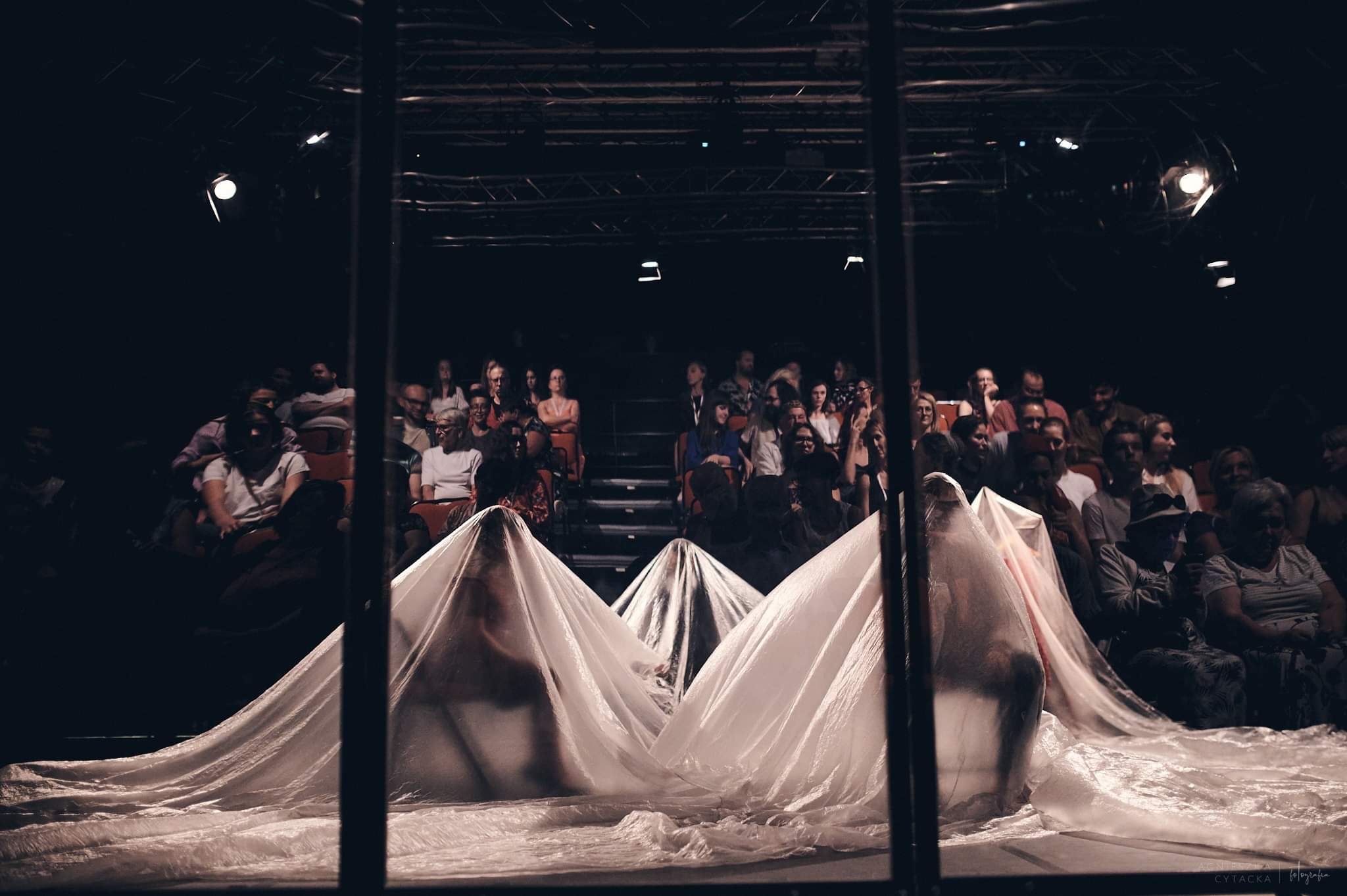
Created from literary texts, interviews with migrants, and writings by the performers themselves, Po drugiej stronie (On the Other Side) by Wrocław's Jubilo Foundation theatre group was another arresting piece, this time combining movement and audience address along with video projections and art installation elements. Directed by Diego Pillegi, the show began with its trio of performers - Alessia Romano, Marek Idzikowski, Michał Murawski - hidden under sheets; it went on to present their interactions through and around six see-through panels which functioned variously as screens, mirrors and cages. 


Po dru­giej stro­nie

Philosophical statements delivered in rapid-fire direct address focused on issues ranging from freedom and seclusion to the audience's position in the theatrical event: "You are not individuals here. You are a plurality of persons...You are breathing in one and the same rhythm...the rhythm in which we are speaking." A particularly disturbing sequence evoked the dementing effects of random screen culture, but this dark night of the soul led to a cathartic coda, with the performers finally joining the audience for a shared moment of quiet contemplation of the natural world. 


Oratnitza

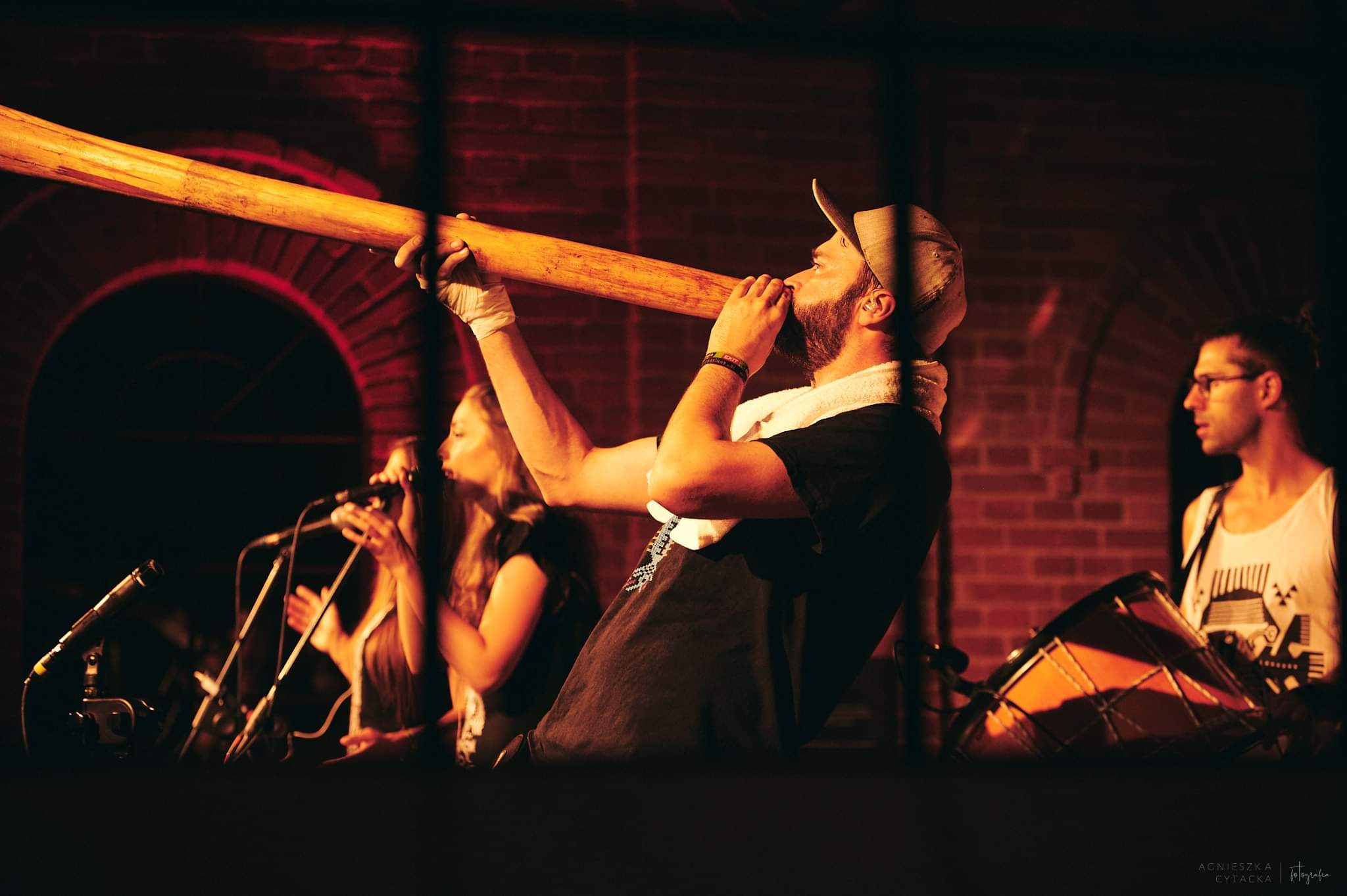
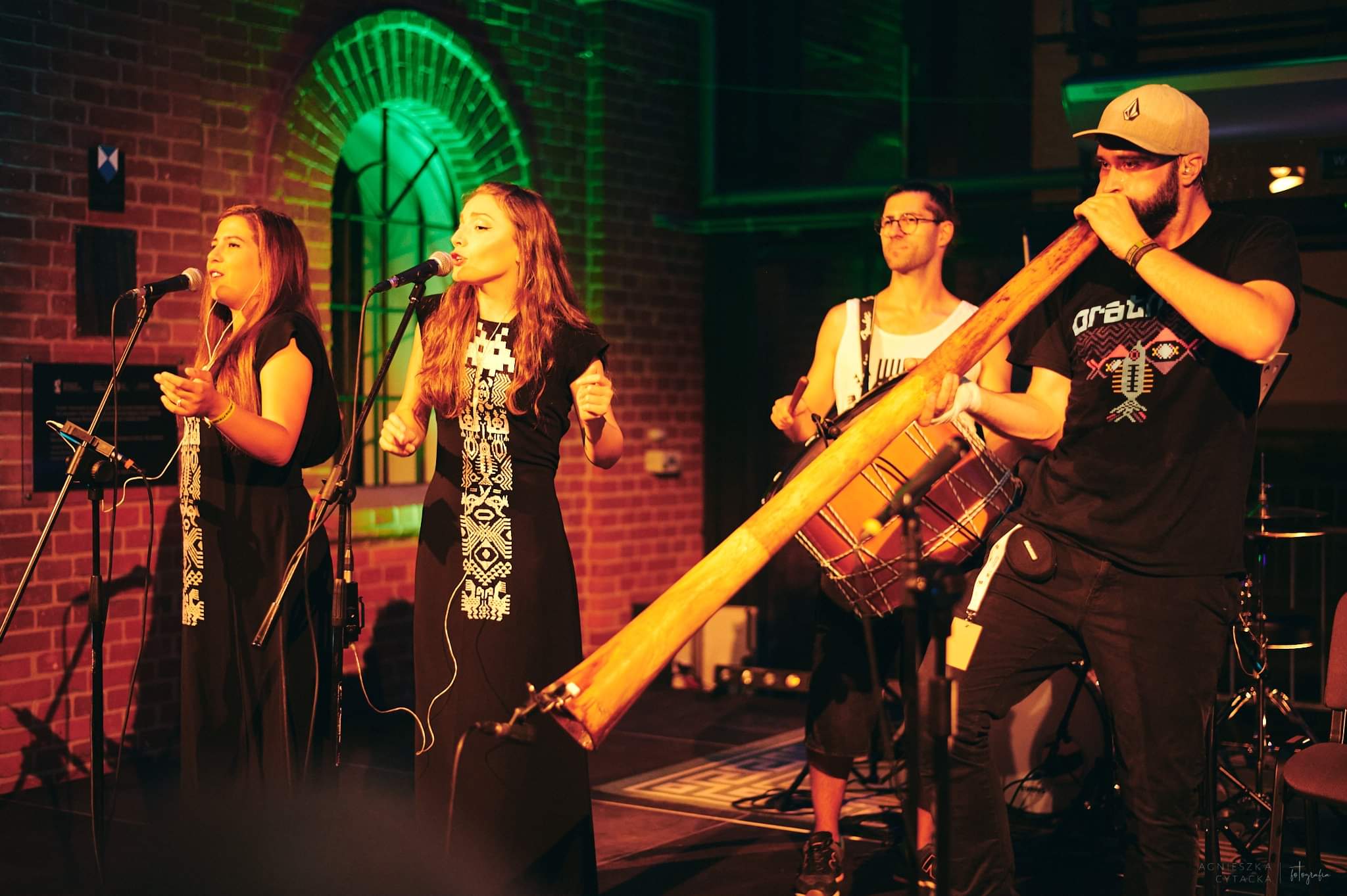
Of the several concerts featured in the programme, the two I saw, both performed in Fabryka Sztuki's Glass Hall, were highlights of the Festival. For those of us whose primary acquaintance with Bulgarian music is the contributions of Trio Bulgarka to Kate Bush records, the Saturday night concert by Oratnitza was nothing short of revelatory. Though reduced to four from their usual six-strong line-up (singer Ivan “Popa” Go­spo­di­nov and keyboardist Hri­stiy­an Geo­r­giev were absent due to illness), this superb band of young Bulgarian musicians gave their all in a thrilling performance combining tradition and modernity. 

Oratnitza

With extraordinary, earthy and ethereal vocal harmonies from Diy­ana Vas­si­le­vav and Asya Pin­che­va, drums heartily thwacked by Ste­fan Ce­kov, and Geo­r­gi Ma­ri­nov establishing the did­ge­ri­doo and bagpipes as the coolest, funkiest instruments on the block, Oratnitza rocked like a tempest (appropriately, given the storm that started up during the show, with lightening flashes visible through the window behind the band). With Ma­ri­nov constantly urging the audience to "come closer!",  it didn't take long for the crowd to loosen up and dance, buoyed by the band's charisma and the infectious, cleansing energy of their music. 


IMPE­RIUM DE­LEN­DA EST

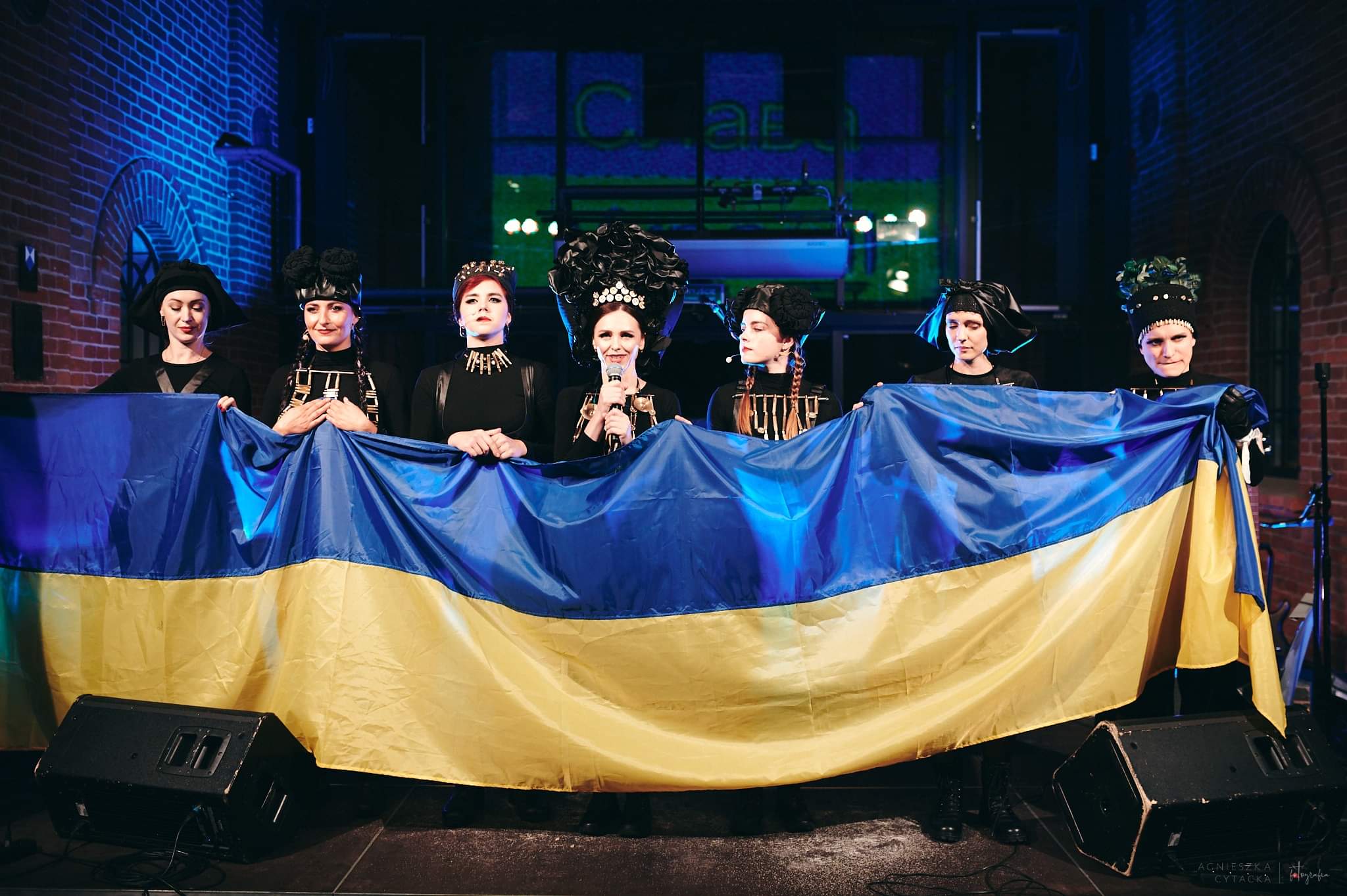
The following evening found an equally remarkable concert taking place in the Glass Hall. As a company, CHOREA  has always maintained strong links with Ukrainian artists and these connections have only been  strengthed throughout the ongoing war resulting from Russia's invasion. With a title referencing the Roman politician Cato the Censor's famed phrase "Carthago delenda est" ("Carthage must be destroyed"), Le­sia Ukra­in­ka The­atre's IM­PE­RIUM DE­LEN­DA EST, directed by Dmy­tro Za­kho­zhen­ko, combined songs, poetry, projections, testimony and reportage in a viscerally  powerful performance, the first large-scale work that the company have presented since the invasion and one which they have performed in bomb shelters in their home country. The tone was fierce, urgent and defiant, culminating in the proud unfurling of the Ukrainian flag. 


IMPE­RIUM DE­LEN­DA EST

In sum, the "New World" inaugurated and explored at Retroperspektywy 2022 was a brave one, avoiding cosy utopianism for more complex, questioning visions - and also offering a vital reminder of the vibrant richness of European cultural expressions still so often sidelined and suppressed by US cultural dominance. 

As Rodowicz told Dariusz Pawlowski in interview: "Theatre, like few artistic activities, has a meeting space inscribed in it. It is a constant dialogue...In my opinion it has huge obligations...to protect the human in a person, to rebuild relationships between people. The most important thing today is that after leaving the theatre I want to take care of myself and the world at least a little." In their diverse ways, the best performances at RPS 2022 achieved that goal. Allowing "a plurality persons...to breathe in one and the same rhythm," the Festival opened its audience up to fresh ways of being, seeing, connecting and creating in our personal and collective futures.


Retroperspektywy Festival 2022 took place at Fabryka Sztuki between 19 - 28  August. Full details of the Festival programme are here. 


Performance photos by: AGNIESZKA CYTACKA FOTOGRAFIA


Related reading:

Review of Powinniśmy być…Impresja na kilka czasowników (We Should Be...Impression on a Few Verbs

Review of Pretty Woman: The Musical (Teatr Muzyczny)


Saturday, 15 February 2020

Theatre Review: Rój. Sekretne życie społeczne (Teatr CHOREA)


Named for the Ancient Greek circular dance accompanied by singing, the Łódź-based CHOREA theatre company mobilises the bodies of its performers on stage in totally distinctive, explosive, unpredictable ways, creating dynamic shows that establish a deep connection with the audience as they awaken us freshly to the human body's expressive capabilities. 

Still, to call the company a "physical theatre" troupe seems reductive: rather, an important aspect of the group's work lies in its synthesis of classical models - the unity of singing, words and movement - with contemporary concerns and techniques derived from the experimental methods of Grotowski and beyond. As the company's Artistic Director, Tomasz Rodowicz, explains: "chorea is a kind of a model, which we try to partly recreate and, in a way, overcome, thus building a new chorea."

I first discovered the company thanks to last year's exciting Retroperspektywy Festival which presented the group's work alongside that of a wide range of international artists. A highlight of the Festival was Po Ptakach (After the Birds), a collaboration with the Welsh company Earthfall, which took off from Aristophanes's comedy to develop its own idiosyncratic take on community-building.


The influence of that show can be felt in the more recent piece Rój. Sekretne życie społeczne ("The Hive: Secret Social Life") which was presented yesterday as a festive Valentine's Day treat at the company's HQ of Art_Inkubator. The show uses movement, music, song and projections to explore the interactions of a species often employed by theorists and philosophers as a model for human society - and it comes with an urgent environmental message to boot. In short, having brought us "The Birds", CHOREA now brings us "The Bees."


Directed by Janusz Adam Biedrzycki from Wiktor Moraczewski's script, the show is in keeping with CHOREA's ethos of inclusivity in its appeal to kids and adults equally and isn't in any way dumbed down. Paweł Odorowicz's music, Jolanta Królicka's set, Karolina Burakowska's costumes, Tomasz Krukowski's lighting, Marcin Dobijański's sound design and Paweł Klepacz's projections synthesise to take us inside a beekeeper's dream and, from there, into a bees' nest. Here we're introduced first to the industrious workers, then to three sedentary drones philosophising in their "congregation zone" and, finally, to the Queen herself, sumptuously played by Dorota Porowska. 

With a startling array of movements and sounds, and then a sultry torch song, the brilliant Porowska stands out, but Rój is ultimately an ensemble enterprise in which the whole company - Joanna Chmielecka, Anna Chojnacka, Barbara Cieślewicz, Ewa Otomańska, Aleksandra Szałek, Aleksandra Ziomek, Antoni Kowarski, Odorowicz and Rodowicz - participates in rendering the bees' sophisticated "dance" language through the sophisticated language of Magdalena Paszkiewicz's choreography.

The notion of collective participation is, of course, a theme in itself, one that's apparent from the show's prologue in which Moraczewski appears with a large cardboard sheet containing an "ecological manifesto" for the assembled kids in the audience to sign - creating their own "swarm" as they do so. These opening moments connect with an ending which firmly confronts human responsibility for bees' decline due to industrial agriculture and climate change.

Some may find such preachiness problematic but it provides the show with an urgent edge - a necessary sting in the tale - and prevents the proceedings from becoming too cosy (as does an earlier scene of brutal "worker policing"). Seriousness of intent doesn't diminish the show's charm, and the didacticism dissolves in a gleeful coda celebrating nature's joys. Lyrical, playful, poignant and political, this pleasing show deserves to be widely seen.

Photos: HaWa

Further information here.